Every time I look at my long yellow socks with the pattern of the Rooster of Barcelos, a cherished symbol of Portugal, my face lights up with a smile.
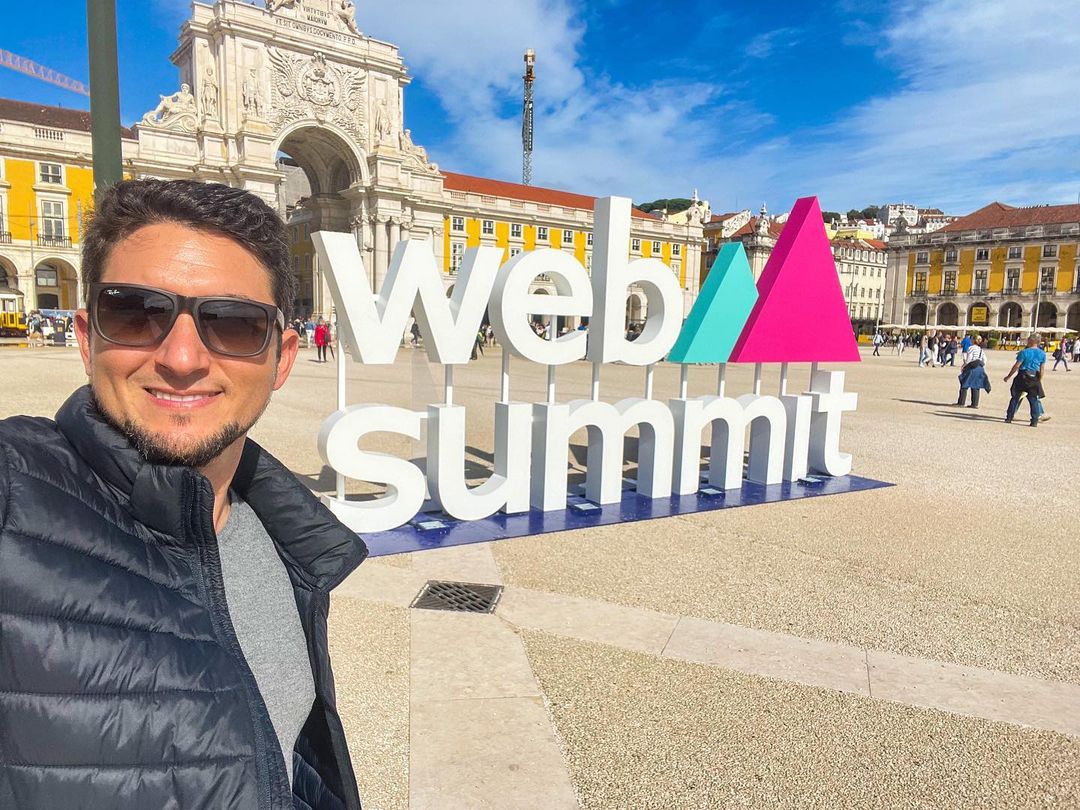
It takes me back to Web Summit 2022, when Savio Meireles and I first met and were looking for a place to chat at the startup exhibition at the Altice Arena in Lisbon.
We found seats in the back of an area where a presentation was taking place, but shortly after we sat down, we were asked to leave because the event was over. However, the organizers sent us away with a nice gift: a pair of socks.
“Let’s go outside. I’ll bring us coffee and cookies from the Media Village,” I said to Savio, playfully referencing the perks that come with having a media pass.
A few minutes later, we were sitting on a bench, talking about our life stories and what had brought us to Portugal.
What impressed me most about his journey was that he had turned something that was once his greatest weakness into the foundation of a successful career: the English language.
Savio, a native of Brazil, arrived in Sydney, Australia, in early 2011 and joined a demolition team working on a construction site. By his own admission, his English skills were even worse than those of a 3-year-old Australian.
He was able to pass the job interview by rehearsing some sample questions and memorizing the answers to questions that he expected to be asked and was fortunate enough to be asked.
After he started his work, he had to pay extra attention when his Iraqi boss spoke and pretend that he understood everything. In reality, he had to guess the instructions and use the words he understood here and there to complete the tasks.
By 2015, Savio had mastered the English language so well that he decided to teach it professionally to people like him who could benefit from knowing the international language. So he took a course in Chiang Mai, Thailand, to earn a CELTA certificate from Cambridge, which is considered the gold standard for teaching English as a foreign language.
His new qualification, combined with his pursuit of a mobile lifestyle inspired by his background as a travel consultant, opened a new chapter in his life. He began teaching English to students in different parts of the world, including his hometown of Fortaleza, and expanding his understanding of other cultures.
Savio looks back on this choice as “one of the best decisions” he ever made. Not only did it enrich his career and worldview, but it also led to the publication of his first book in 2018, which has since sold more than 1,000 copies. Titled “A Jornada: Histórias e reflexões de uma viagem sem volta,” the book reflects on the challenges and rewards of his travels, mainly through Australia, New Zealand, Spain, Portugal, Indonesia, Vietnam, Thailand, and Brazil.
That same year, Savio returned to Australia with a backpack full of work and travel experiences. To his delight, he got a job teaching at Greenwich College in Sydney in just 10 days and didn’t even have to fall back on the barista skills he’d learned in Fortaleza as a backup plan.
Later in 2018, inspired by the quote “Who dares to teach must never cease to learn,” Savio attended an innovation course at the Sydney Startup Hub. There, he learned more about the world of entrepreneurship and was introduced to “storytelling,” which became the cornerstone of who he is today as a person and as a professional.
Intrigued by this concept, he began to study storytelling more deeply and incorporated some of its elements into his teaching, with remarkable results. Two years later, he quit his job at the school to focus entirely on his copywriting business. But things didn’t go as he had planned. Just a week after his resignation, the world was turned upside down by the coronavirus pandemic.
As a result, he lost his clients, most of whom were in the hard-hit hospitality industry. But as one of Savio’s favorite quotes goes, “Knowledge is a wealth that cannot be stolen.”
His passion for, knowledge of, and experience in communication—particularly through storytelling—and the help of his friends helped him overcome the challenges of the pandemic and make a career change that led him to establish himself as a story coach and strategic advisor to entrepreneurs and executives.
Savio now lives in Portugal, where he ventured into the unknown again in early 2022, offering his services to personal and corporate brands from various countries who, like him, believe in the magic of stories.
Drawing on design thinking, data storytelling, copywriting, and psychology, as well as his background in marketing and social media management, he describes himself as a “problem solver” who helps clients craft their message to attract better clients, investors, and talent to their business.
He does this mainly by teaching them how to write a memorable founder story, create LinkedIn content that generates leads, and design an effective elevator pitch.
He also offers his services as a pitch trainer and storytelling consultant to well-known organizations such as the collaborative innovation consultancy Beta-i and has had the experience of accompanying foreign delegates at Web Summit, helping them make the most of the event through effective communication.
Since our first meeting at Web Summit, I’ve met and brainstormed with Savio several times, whether over virtual or real coffee. Each time I get to know him better, my appreciation for him grows and I feel fortunate to have crossed paths with him.
What I admire and respect most about Savio are his positive outlook on life, professionalism, active listening skills, respectful manners, desire for constant learning, openness to new ideas, networking abilities, his emphasis on human touch, generosity in making recommendations, sharing of knowledge with other immigrants, and, most of all, his commitment to positively contributing to the startup community—especially in rural areas—by sharing his expertise through workshops and other forms of events and content.
Read the following 70-question interview with Savio if you want to know what he has to say about topics like storytelling and its future in the age of artificial intelligence, Web Summit, solo travel, solopreneurship, networking, his time in Australia, his travels, his book, open leadership, habits that have helped him successfully maintain a location-independent lifestyle for years, the next milestone he’s aiming for, a must-see place in Fortaleza, and tips for buying books, which, along with coffee, are among his favorite things in the world.
Enjoy!
1- You help your clients craft a compelling elevator pitch. What’s your own elevator pitch, Savio?
Today’s business landscape is flooded with distractions, irrelevant information and fierce competition. Without communicating effectively, we won’t be remembered, will be ignored, and eventually become irrelevant. I don’t want that to happen.
So, I decided to set up my consulting business to help entrepreneurs who need to improve the way they communicate, so that they connect to their ideal audiences (customers, investors, team members, and strategic partners) to drive results.
That’s why I studied, tested myself in different environments, and crafted storytelling and strategic communication frameworks to allow others overcome this enormous obstacle—communicating effectively in a world marked by information overload and distractions.
2- You believe in the concept “You are not for everyone.” Who are you for?
I’m for people who are purpose-driven and have a desire to hone in their communication skills so that they’re able to connect effectively with the right audience and make a difference in this world.
3- You say, “People don’t buy products or services. People buy a story told about those products and services.” How would you sum up the story behind your products and services in one sentence?
I help purpose-driven entrepreneurs communicate to inspire action because I believe everybody deserves to have a passion that translates into results.
4- When the pandemic broke out in Australia, you faced some setbacks in your personal and professional life that you were able to overcome by “asking for help.” How do you think we can ask for help in the right way?
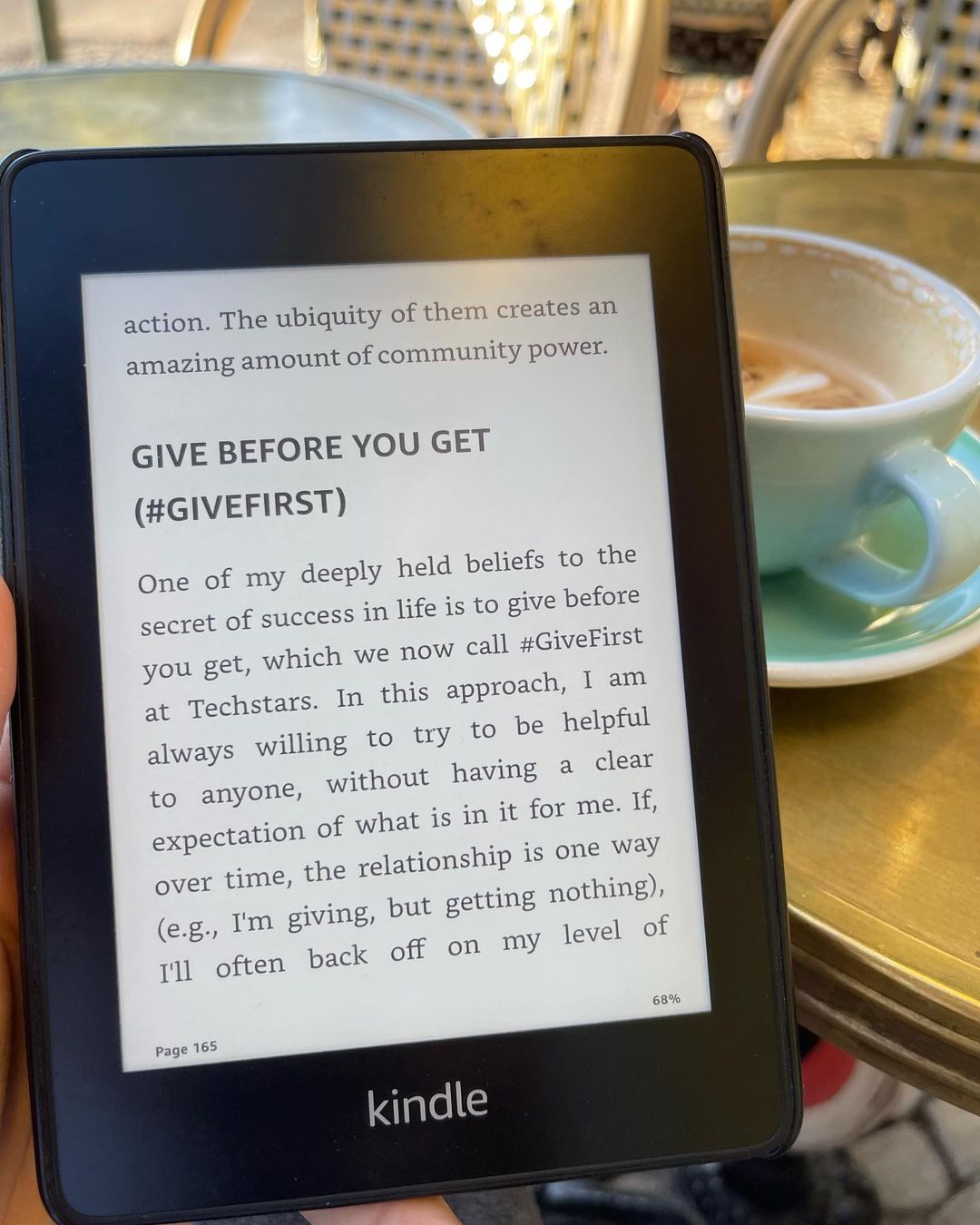
We are often afraid of asking for help, but if you’re a good person, people will see it as a privilege to help you. Also, by adopting a #givefirst mentality, we create a foundation for mutual support.
As an example, for years in Australia, I focused on assisting others, especially fellow Brazilians, in any way I could. As we know, the immigrant journey isn’t easy, and there’s no shortage of problems and challenges to overcome.
When it came time for me to ask for help, I simply called two friends and told them about my challenges—I had lost my job and my business was shut down by the pandemic. I had been studying copywriting for a while and believed in my ability to provide value to companies who needed that service.
They simply recommended me to some of their connections and bingo—in a very short time I had two copywriting gigs. So, the right way to ask for help is by ideally offering help as a common practice. People in general are willing to offer help.
5- Something you would never have learned about yourself without the pandemic?
My ability to plan, film, and promote an online course, and sell it during that challenging year.
6- The three biggest challenges entrepreneurs and solopreneurs face when it comes to effective communication, especially in the beginning?
- Active listening. A lot of people talk about active listening these days, but a very small number really practice it. Without active listening it’s difficult to communicate well. That’s one of the most common and obvious challenges entrepreneurs face.
- Lack of understanding of their niche or segment. Without knowing to whom we are talking, it’s difficult to connect to a certain audience. We end up speaking at them, which causes a disconnect, rather than a strong connection.
- Understand the silent language that occurs when someone is speaking. Listening to what hasn’t been said, body language, and cultural nuances. Very few people intentionally care about this.
7- Three storytelling terms every founder should know, and their definitions?
1. Story loop, which is basically when we start a conversation, a presentation or any interaction by saying something that requires more information to be entirely understood—to close the loop. Appealing to the curiosity element of human nature, we keep people engaged in our story until the end, when the loop is closed.
2. Narrative traction is the ability of a story or narrative to capture and maintain the attention and interest of its audience. In a broader sense, narrative traction can be seen in how compelling a story is in drawing its audience, keeping them engaged, and influencing their thoughts and actions.
3. The curse of knowledge is a cognitive bias that occurs when an individual, who is better informed or more knowledgeable about a specific subject, finds it difficult to think about the subject from the perspective of lesser-informed or less knowledgeable individuals.
This bias can lead to a communication gap where the more knowledgeable individual struggles to effectively convey information in a way that is easily understandable to those with less background knowledge. We all have “the curse of knowledge” to some degree. The less we have it, the better the connection our communication is able to build.
8- The most important characteristics of an engaging LinkedIn post?
I usually highlight the following three aspects of a LinkedIn post:
- Tell a personal story, but leave a relevant message to the reader;
- Format your text so that it’s easily scannable by readers;
- Include a “call to conversation” at the end, to give people a chance to express their opinions.
9- I remember you mentioning in one of our conversations that you prefer “call to conversation” to “call to action.” How would you describe the “call to conversation” and why do you think it’s important?
A call to conversation invites people to share their opinions, which is not only much more fun but also provides space for mutual learning and engagement. The sale will happen organically as we build these relationships. I don’t believe in toxic and overly promotional calls to action for long-term sustainable growth of the business, especially if it’s a specialized service like mine.
10- A one-liner that exemplifies a call to conversation?
How do you, as a founder, apply storytelling to your communication?
11- They say that the stories we tell ourselves matter. What’s the story you are currently telling yourself about yourself?
That’s a great question. For the sake of combating lack of clarity and impostor syndrome, I often tell myself a combination of an “origin story” + a “vision of the future story.”
In other words, the story of where I came from, what I’ve achieved so far, and where I’m heading to. This reminds me of who I am, what my abilities are, and what I’m looking forward to.
12- Two ways you use psychology to help your clients achieve their brand storytelling goals?
The first thing I ask clients is “why” they started their business. This question opens up a new avenue for reflection and unearths some fundamental details about the way they think and what they believe in. It makes them feel proud of their story, just by retelling it.
Another psychological element I tend to bring to the table in my conversations with clients is the role their ego plays in their communication style and approach as a whole.
I often recommend the book “Ego Is the Enemy” by Ryan Holiday to clients who want to understand how our ego works and what we can do to improve this relationship.
13- Four things you hope readers will take away from your book, “A Jornada: Histórias e reflexões de uma viagem sem volta”?
- We can benefit a lot from enjoying the journey, instead of only obsessing about the destination.
- Traveling solo is the best therapy one can have. Because it puts us in front of our fears and allows space for self-awareness, learning, and growth.
- In this constantly connected and social media world, we are too self-absorbed and often don’t have time to appreciate both the simple moments in life and other people’s perspectives on things. Traveling solo puts our ego in check and helps us enjoy life in a less egotistical manner.
- The biggest risk in life is the temptation to try to avoid all risks.
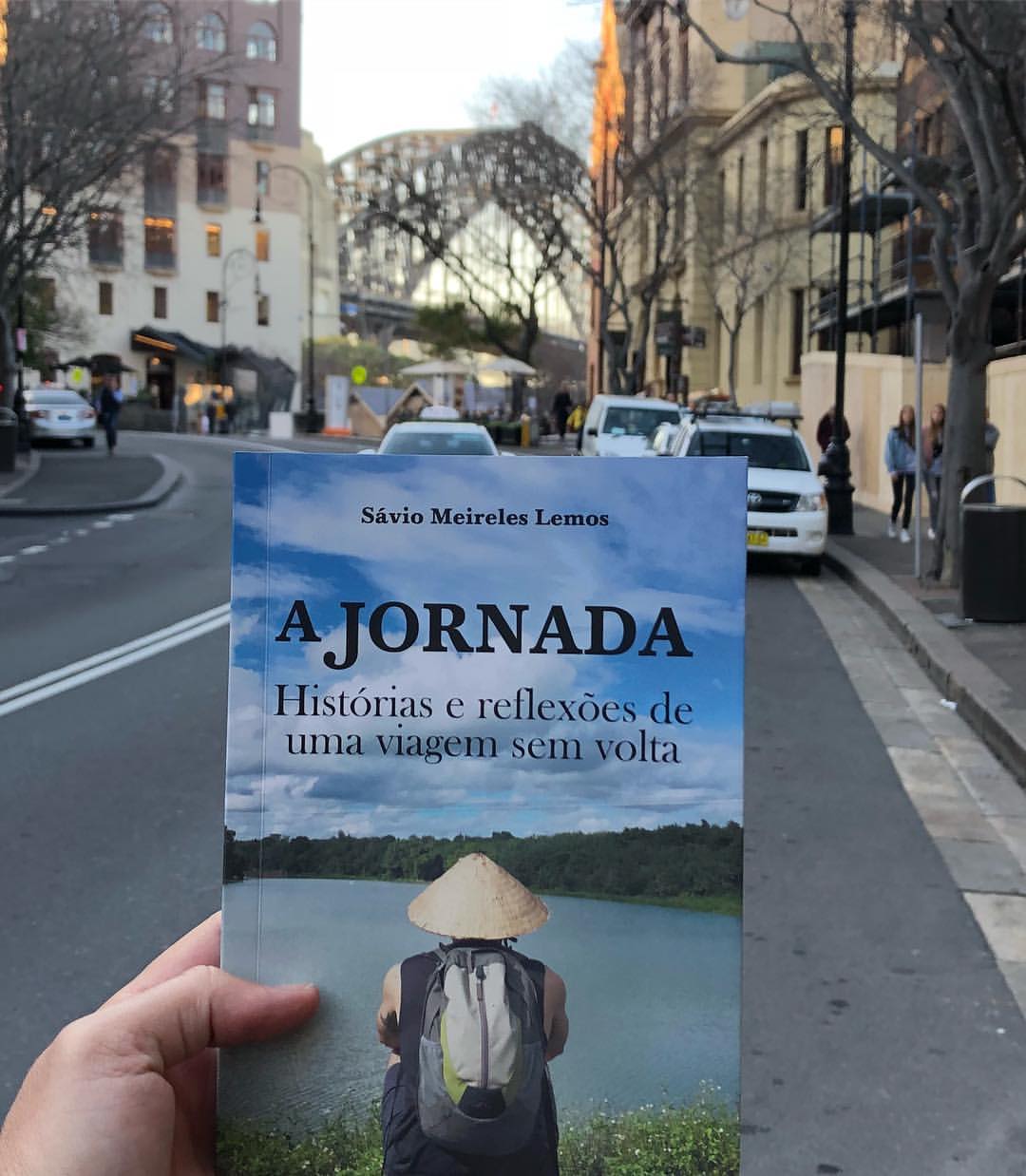
14- Why did you choose that particular photo for your book cover?
That photo represents countless moments of deep introspection I experienced throughout eight years of traveling solo.
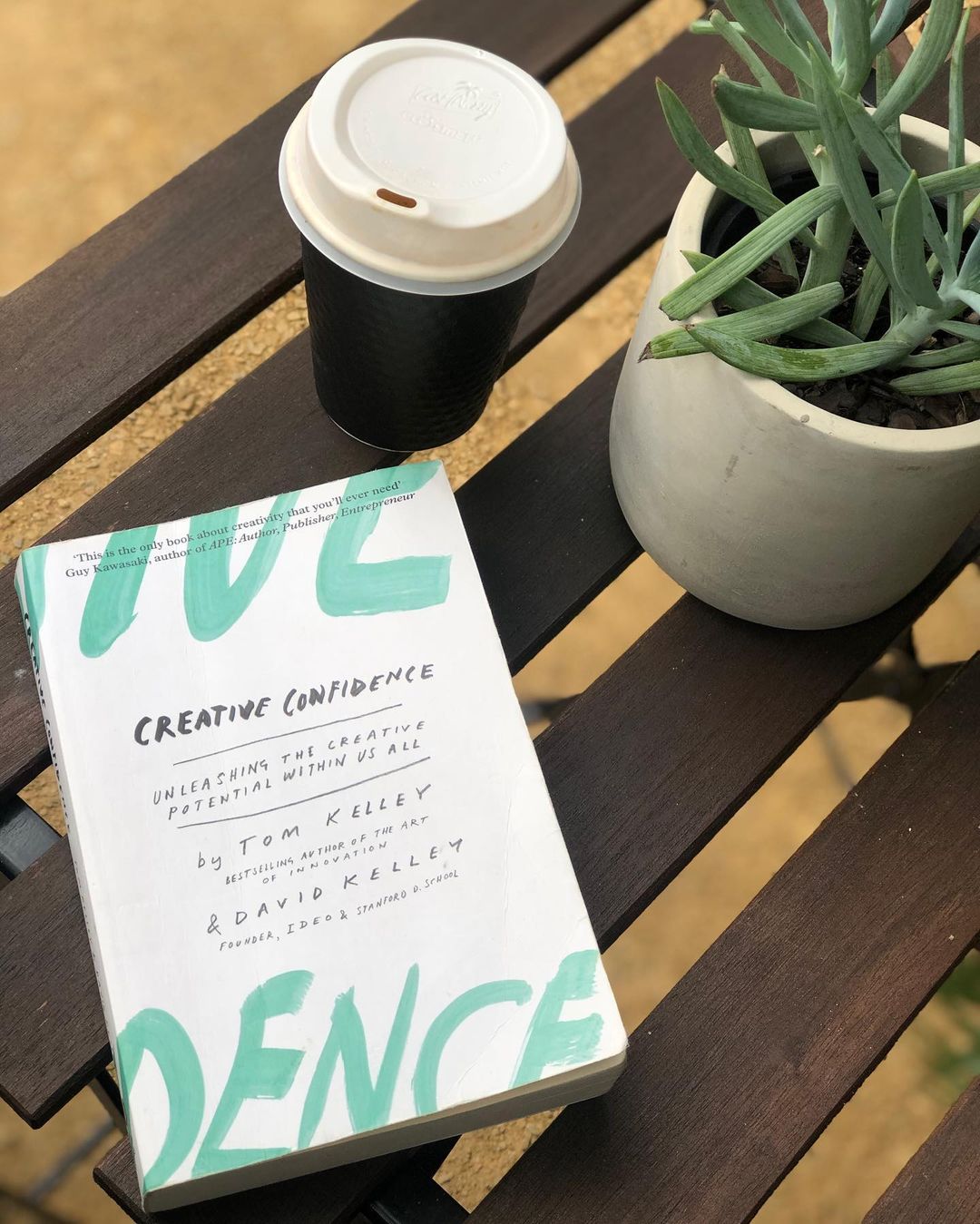
15- “Creative Confidence” is one of the books that inspired you. What’s your definition of “creative confidence”?
Having creative confidence starts with allowing ourselves to make mistakes. While making mistakes can be scary, it’s also a key step towards improving our lives. Being comfortable with mistakes helps us be authentic and creates a safe space for ourselves and others. This is the foundation of self-confidence.
Empathy, leadership, the ability to take risks and experiment with new ideas are the other components of creative confidence.
Brothers David Kelley and Tom Kelley wrote this book to prove to people that every single one of us have the ability to be creative and accomplish amazing things in life.
16- Your five no-nos in a conversation?
- Interrupting people when they’re explaining something or expressing an opinion.
- Talking about yourself without demonstrating interest in the other person’s views.
- Not allowing silence.
- Making assumptions instead of asking questions.
- Being judgmental, instead of being genuinely curious.
17- The most important lessons you took away from your years in Australia?
When I moved to Sydney, Australia, in February 2011, I couldn’t speak English, had no connections or friends, and had little money—about AUD 1,200 in total—in my pocket.
My self-esteem was crushed due to the failure of my previous entrepreneurial journey.
At 27, I was unsure of my next steps.
Thus, resetting my life and starting from scratch in a different country seemed to be the only viable option.
At least if I failed again, I was so far away from home, nobody would take notice of it.
I was willing to take the risk.
I wouldn’t recommend such a kamikaze strategy to anyone, but I did learn a few lessons from that experience.
- Believing in oneself, although it may sound like vague advice, is the only thing that doesn’t depend on others. And the confidence we build by trusting our abilities a little more each day is empowering. This momentum can save us from tough situations, as it did for me, and it can certainly do the same for others.
- Learning a new language is one of the most challenging endeavors a person can undertake. It makes us as vulnerable as a child learning to speak, but with an added challenge: as adults, we are judged every minute. Knowing this, intensifies the pain of the learning process. Despite this, learning a new language in a new country enabled me to expand my comfort zone in ways I never thought possible. It also taught me about cultural nuances that now help me navigate multicultural environments and connect with people in ways I wouldn’t be able to, otherwise.
- Lastly, my nearly a decade-long stay in Australia (2011-2021), living in major cities like Sydney and Adelaide, allowed me to make friends worldwide and work in roles I never imagined possible. These experiences shaped my personality and made me who I am today. Reflecting on these experiences is a story I often revisit. It reinforces my self-trust and ignites a positive momentum whenever I need reassurance.
So, overall, that was the most valuable experience of my life.
18- You were mentored by Tony Bulmer, who is considered one of the best presentation skills coaches in Australia. What are the most valuable words of wisdom you have heard from him?
Tony is one of the most impressive human beings I have met in my entire life. Bear in mind, I’m 41 now.
I met Tony back in 2019 while sharing the same office space at a coworking space, in Sydney, Australia. After having lots of coffee and interesting conversations, one day he invited me to work with him. Over the course of two years, the lessons I learned from Tony were invaluable, but if I could pick one, it would definitely be this:
“When you’re talking to people at a meeting on Monday morning or any other day of the week, try to feel and make them feel like you’re sharing a table with friends on a Sunday afternoon.”
19- How do you use AI in your own work?
Basically for idea generation and proofreading.
20- Three ways you think AI is changing the landscape of brand storytelling?
- AI provides new avenues of possibilities by giving people options.
- It speeds up some of the processes that otherwise would take too long to finish.
- It helps humans apply their creative ability in ways impossible otherwise.
21- Two AI tools you find useful for storytelling?
I like DALL-E to generate images from textual descriptions. Also, ChatGPT for daily proofreading and idea generation.
22- How do you think content creators, especially writers like you and me, can reskill or upskill in the age of AI?
I believe instead of fighting against AI, we should learn as much as we can, but most importantly, let our human factor play a role. The more our world becomes digitalized, the more our human skills will gain relevance.
23- Three financial tips you wish you had learned earlier?
- Be careful about the hype of every new financial solution people try to present to you. Invest in assets as soon as you can.
- Learn how to calculate the opportunity cost of not making certain decisions.
24- You read both e-books and printed books. What do you find appealing about each format?
Having a selection of printed books can be great for both home decoration and social interactions. Additionally, bringing them along to coffee shops can be a great conversation starter, often leading to meeting new people.
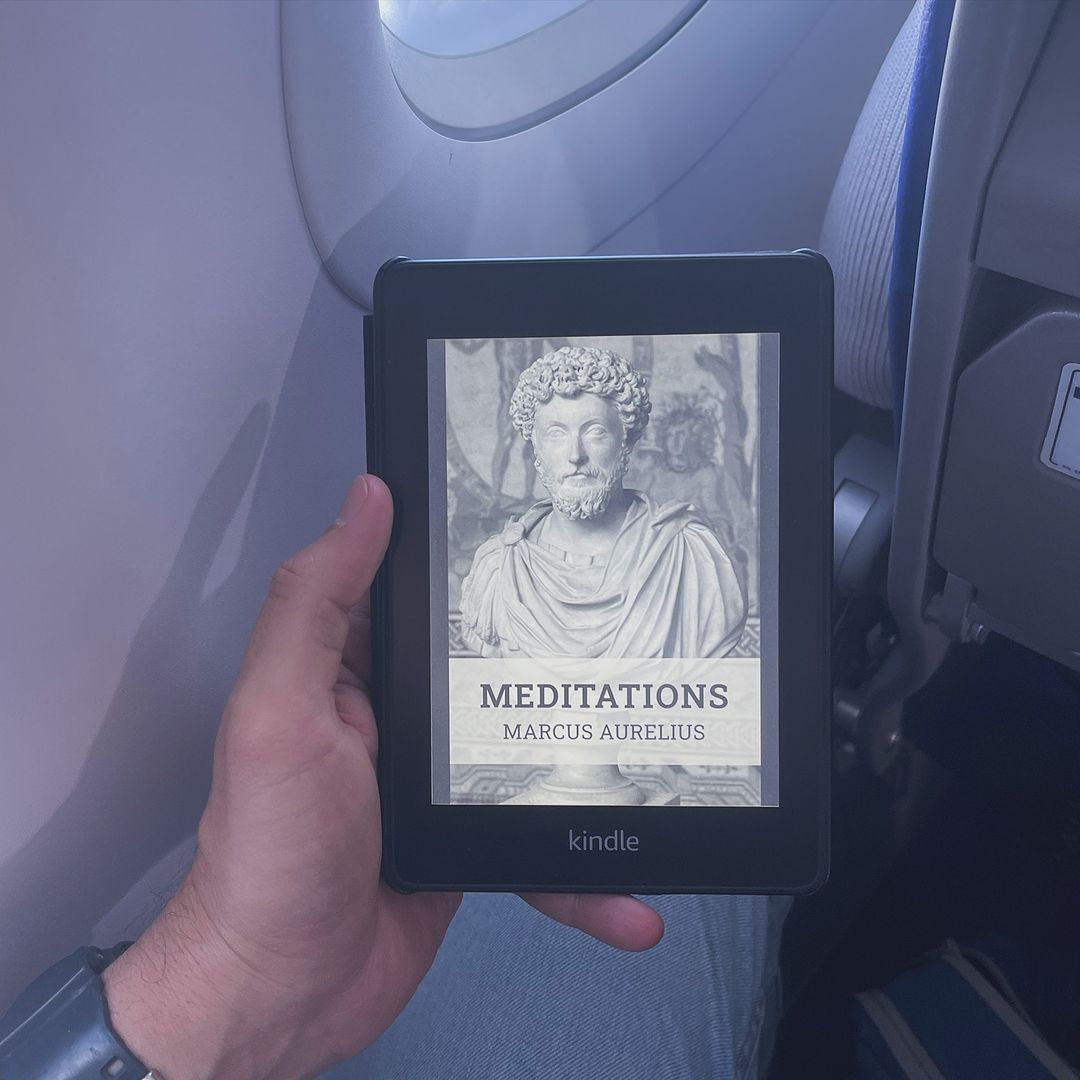
As for e-books, it’s just more convenient. To give you an example, I carry 70 books on my Kindle. It would be impossible to travel with so many printed books.
25- Your decision-making process when it comes to buying books?
It’s a 3-step process: I ask friends I trust for recommendations, check out the author on YouTube, and then decide whether or not to buy the book.
26- From the photos you post, I can see that you are a good photographer. What two photography tips do you find most useful?
We’ll disagree on that. :)
I don’t think I’m a good photographer, I simply like taking spontaneous photos and am a curious person.
As far as tips go, I think trying to capture meaningful moments is more important than waiting for the perfect photo. What’s more, I like what I call “work in progress” photos, over posing photos. They convey a lot more credibility. Spontaneity is key for me!

27- What do you like best about Web Summit?
The conversion of people, cultures, and ideas. There’s nothing more attractive to me than an event or activity where I can mingle with people from all over the world and learn from them.
28- What would you change about Web Summit?
To be honest, I wouldn’t change anything. I think there are enough critics out there and most of them might not be good at leveraging such opportunities, so they prefer to criticize the event, instead of changing or refining their approach. I’m perfectly fine with the way Web Summit is organized.
29- The most important networking tip that has never let you down?
Stay in the moment when talking to someone. Do not fall into the trap of FOMO.
30- Your advice to those who want to make the most of every event?
Take a step back, relax, stay in the moment and try to provide value to others.
Everything else is secondary.
Most people are rushing, interrupting, multitasking, and unloading lots of information on others. If you don’t do that, by contrast you’ll stand out from the crowd.
31- You’re an advocate of “open leadership.” How do you personally define that?
Open leadership encourages transparency, engagement, and team autonomy to achieve better results. It’s the total opposite to the rigid and toxic leadership command-and-control style.
OPERA, one of my partners, is bringing to Portugal this leadership training, which I believe will revolutionize the way people lead and generate results for their business.
32- The top quality of the leaders you’ve liked working with the most?
They’re trusting people, they do not micromanage, they’re risk takers, and they believe in empowering their teams to also become great leaders.
33- The main difference between the Portuguese and Australian startup communities?
I have a feeling the startup community in Australia has more money available, either from investors or from the government. On the other hand, the startup community in Portugal is connected to other ecosystems in Europe, which is a huge advantage, and has a strong startup association–351 Startup, which promotes and fosters collaboration and media exposure.
34- Three suggestions for startup community stakeholders in rural areas?
- Do not waste time and energy complaining about what’s missing. Focus on what you already have and believe in yourselves. Here in Portugal, for instance, although all the hype is geared towards Lisbon and Porto, there are impressive entrepreneurial communities in the countryside, including Fundão, Amarante, Viana do Castelo, Guimarães, Braga, Aveiro, and many others.
- Build relationships with people who are willing to support and be a part of your community, especially if they’re foreigners. These individuals can bring a tremendous set of skills, perspectives, and support to your local community.
- Be specific about the problem you solve. This will strengthen your message and help you connect with the ideal people (partners, customers, investors, etc).
35- What’s the story behind the tattoo you have on your right arm?
Back in 2017, I was writing a book and spent some time in Salamanca, Spain. Every day, I used to go and look for a coffee shop where I could stay for a few hours, drinking, eating, and writing. And I love one of the streets where I used to go, so I tattooed it on my right arm as a reminder of those inspiring times.
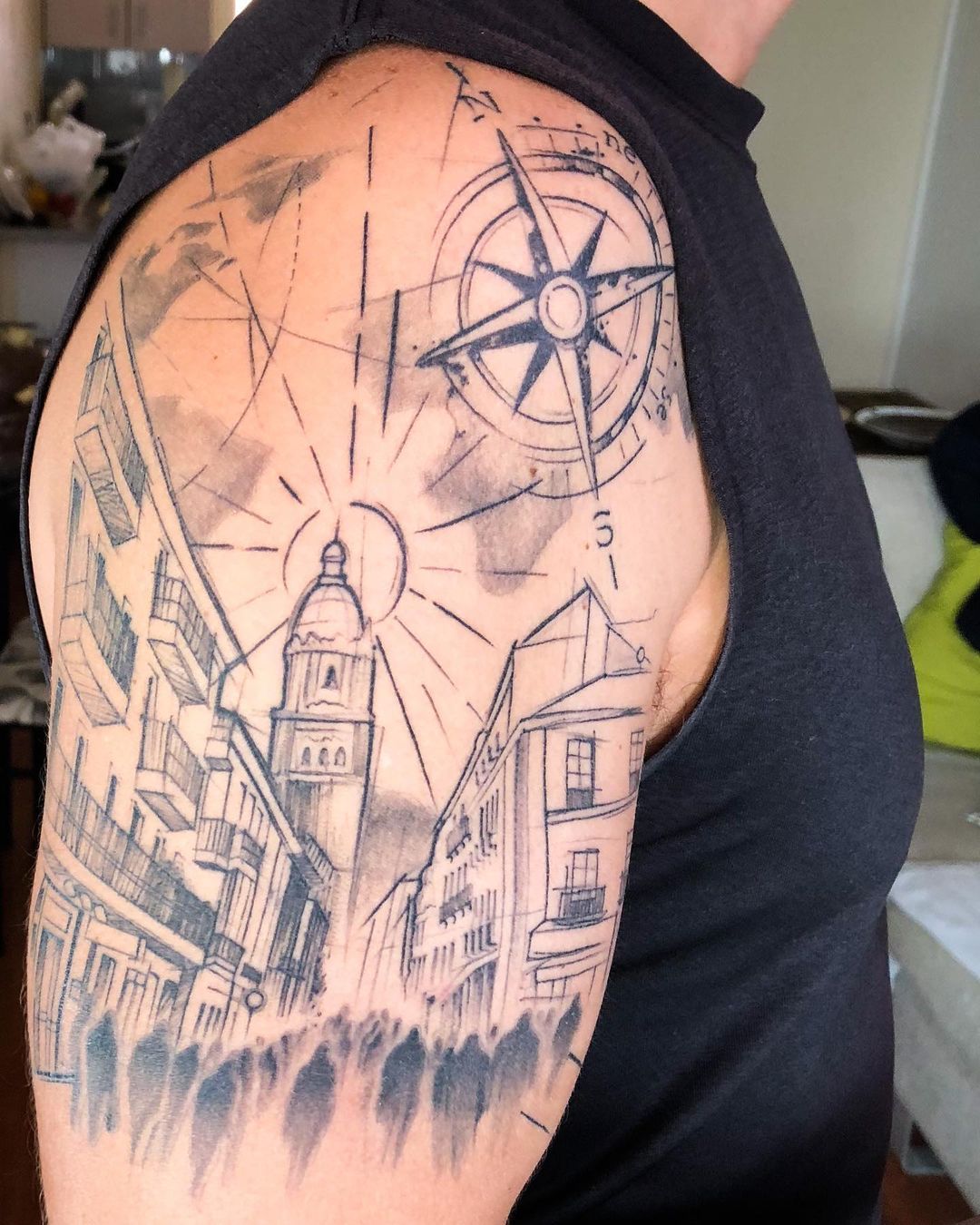
36- Flying Tiger sells a bag labeled “Things that make you smile.” What three things would you put in this bag?
A photo of my parents, the book “The Hero with a Thousand Faces” by Joseph Campbell, and a bottle of organic wine from the Adelaide Hills, Australia.
37- You once took a barista course to have that skill as a Plan B. What memory of that experience is still fresh in your mind?
I was planning my return to Australia, after being away for two years. At the time I had become an English teacher and aimed at teaching this amazing language in Australia.
The challenge was huge, so as a Plan B, I decided to learn how to make coffee. Just in case if I couldn’t find a job as an English teacher in Australia, I could become a barista.
Thankfully, I did not need to use my Plan B. Two weeks after my arrival, I landed a job in one of the biggest and most reputable English schools in Sydney. The rest is history.

38- A unique chapter in your travels that has greatly enriched your life and career?
We only grow in the tough moments. In 2011, I arrived in Australia. I had no friends, no connections, very little money, and couldn’t speak English. The challenges I faced in the first four years in that country shaped who I am and helped me build an unbreakable sense of resilience in myself, which makes everything else after those years, fairly easy and simple.
39- Complete this sentence. “If you’re not a native English speaker…”
Learn to speak English to such a level that every native speaker on the planet will respect your proficiency because you’re able to convey your skills and opinions clearly and confidently.
40- You have been traveling alone for years. What advice do you have for those planning their first solo trip?
Do not overthink. Allow the risk-taker inside of you to flourish and try new things. Go and explore the road less traveled, instead of getting caught up in the hype of touristic destinations.
Listen less to others, and more to yourself. Use your moments of introspection to reconnect to yourself, reinvent who you are, and grow.
Learn from mistakes, instead of investing your energy complaining about them. Move forward with a curious attitude. The world is too big, and life’s too short. Give yourself permission to travel solo while designing your ideal future.

41- You started your location-independent lifestyle in 2015, when it wasn’t as popular as it is today. How would you say this lifestyle has changed around the world since then?
It has definitely become a trend. Positive in some instances, but not so healthy in other instances. With the possibility of showing off your travels on Instagram, for example, the personal experience of traveling solo and growing as a person has given place to a popularity contest based on algorithm rules and vanity metrics.
I believe it’s still possible to travel, live your ideal lifestyle, and document your experiences on social media without losing the essence of solo traveling, but it’s becoming harder than ever.
42- The top three habits that have helped you maintain your remote work lifestyle for so many years?
Be transparent with stakeholders, overdeliver, and say “no” to good opportunities, so that I have time and attention to dedicate to great opportunities.
Implementing these three strategies has significantly improved my life and attracted various opportunities to me.
43- A golden etiquette rule to follow in a coworking space?
Don’t be loud. Be aware of your surroundings and respect other people’s time and space.
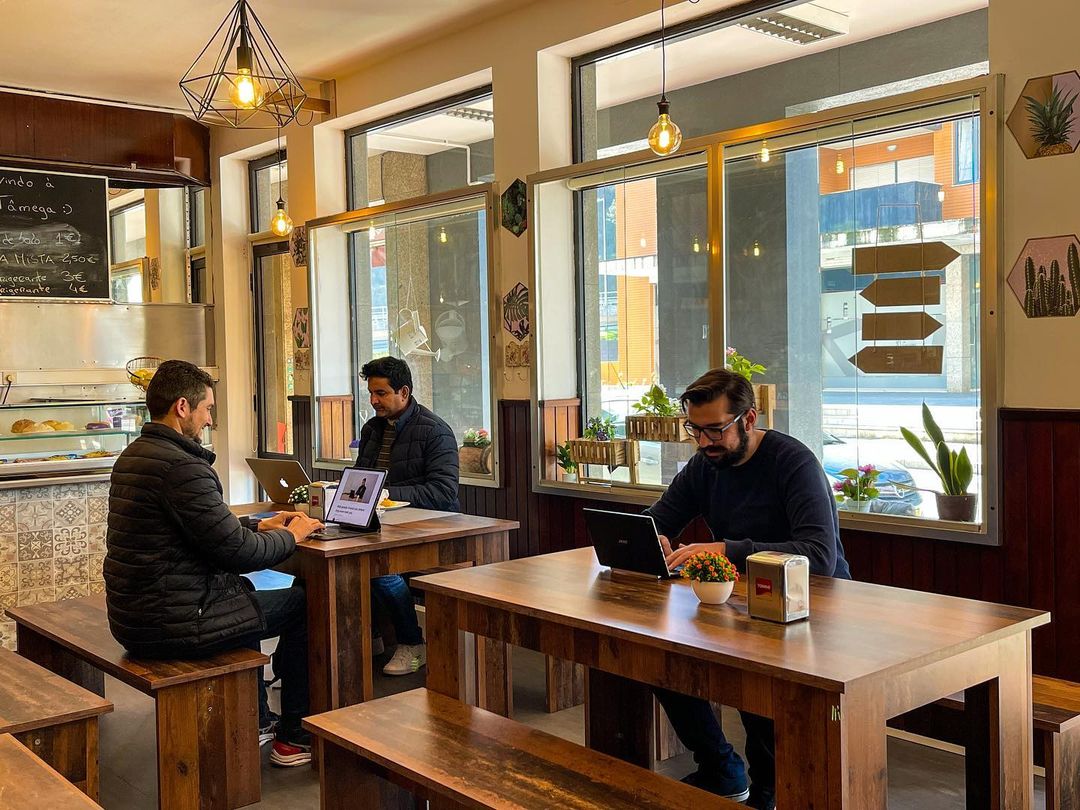
44- You call yourself an “introvert” But that hasn’t stopped you from public speaking or engaging in social interactions that require more extroversion and could benefit you in one way or another. How do you balance these two things?
Over the years, putting myself in uncomfortable situations made me develop social skills as a survival mechanism and, as you said, allowed me to speak in public, run workshops, etc. even though I am an introvert.
I believe meditation has played a crucial role in balancing these things. Since I am usually in an “energy-saving mode,” meditation ensures that extra energy is readily available for those moments when I need it most.
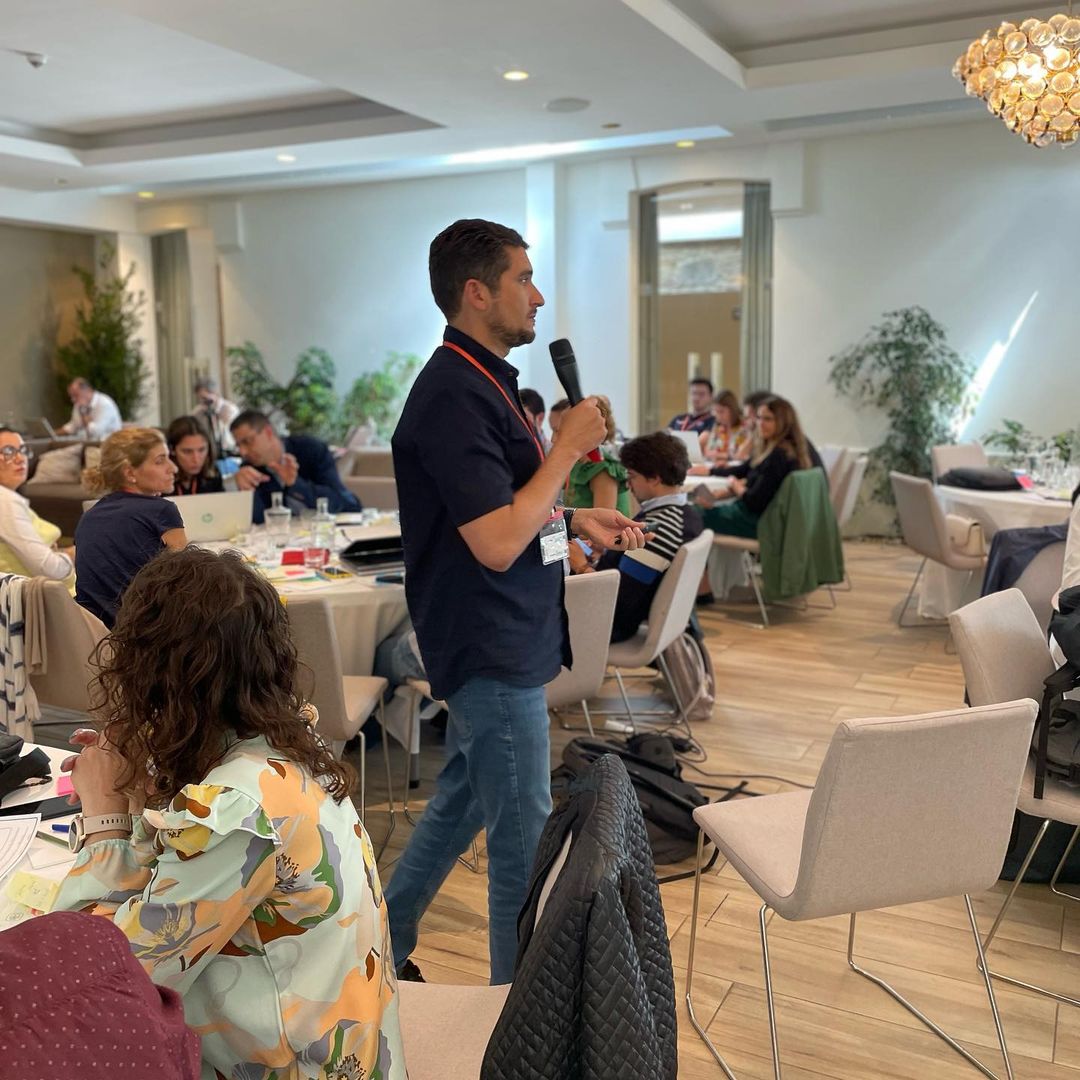
45- A question that helps you learn a lot about a person almost immediately?
Why did you set up your business/choose this job?
46- A question you’d like to be asked first thing in a discovery call that potential clients book with you?
What’s the problem your business solves?
47- A book you’d recommend to people who want to tell more effective stories about themselves and their work?
“Building a StoryBrand” by Donald Miller.
48- How would you describe your experience of working with Beta-i, which is considered one of the leading and most respected innovation consultancies not only in Europe but globally?
I have a good relationship with Ricardo Marvão, the CEO of Beta-i, and other members of the team.
As a consultant rather than a full-time employee, I’m hired by the company for specific projects, with a primary focus on helping startups refine their elevator pitches and improve their communication strategies.
It’s a genuine honor to collaborate with an organization of such high caliber, and it’s incredibly rewarding to contribute to the development of their clients.
My most recent project involved a collaboration with JETRO, Japan’s external trade organization. For this project, facilitated by Beta-i, my role was to oversee and support 14 startups as they prepared for Web Summit Lisbon 2023.
This experience not only provided an opportunity to work with a diverse range of innovative startups but also allowed me to engage with the dynamic landscape of global trade and entrepreneurship.

49- The next milestone you’re looking forward to?
I am looking forward to launching my online course (in Portuguese first) about networking and content creation for LinkedIn.
50- Couchsurfing?
Although I like the philosophy behind it and have done it many times before, I don’t do it anymore, for convenience reasons.
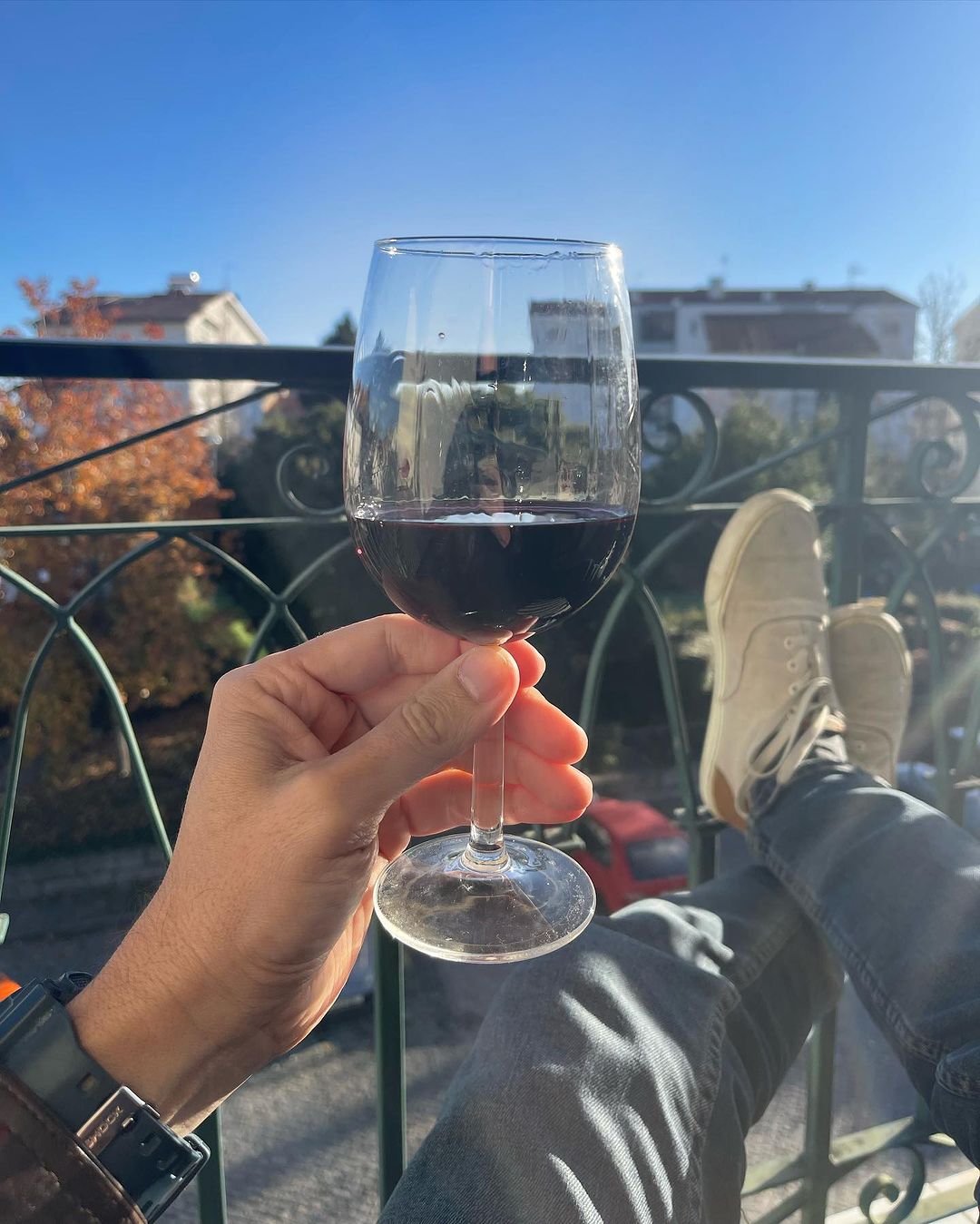
51- Wine?
A passion of mine. Something I’ll always be around, either drinking, talking about it, studying it, traveling to visit wineries…
52- Football?
Not my thing anymore, but I still like watching it from time to time.
53- LinkedIn Premium?
The biggest ROI in terms of time invested on social media.
54- Emotional intelligence?
Paramount for a healthy life.
55- Design thinking?
Essential mindset for problem-solving.
56- Simon Sinek?
A great mentor.
57- Social media?
A tool.
58- Mindfulness?
Essential.
59- Uncertainty?
Part of life.
60- Portugal?
A special place I’m privileged to call home now.
61- A myth about Brazil?
Life is easy, and people are happy all the time.
62- Plan B?
There’s no Plan B.
63- Into the Wild?
One of the most beautiful movies/books I’ve ever watched/read.

64- Success?
Each person has their own version. Pick yours wisely, otherwise others will dictate what’s your version of success and that might cost your health and sanity.
65- A must-see place in your hometown of Fortaleza?
Beira Mar de Fortaleza.

66- Story?
Our message to the world.
67- Savio Meireles in three years?
Living somewhere in Portugal or Europe, leading a simple, yet meaningful lifestyle, impacting people’s lives by helping them to tell their stories.
68- How do you want to be remembered?
As someone honest, real, and who helped others thrive.
69- Is there a question that you wished had been asked during this interview but wasn’t?
You’re such a great interviewer, I wouldn’t think of anything else you could’ve asked me. I am super happy with your, always thoughtful, questions. I’m just grateful for being invited to do this interview.
70- Any final thoughts, Savio?
During this conversation, you helped me reflect on my own journey as never before. Thank you for the insightful interview, Elham. I consider you a dear friend and someone whose energy and intention have always added meaning to our conversations.
It’s been a privilege to share my story with you and your readers.
And for anyone reading this interview, I only have one more thing to say—No matter what other people say, believe in yourselves, because your story matters!
Thank you.
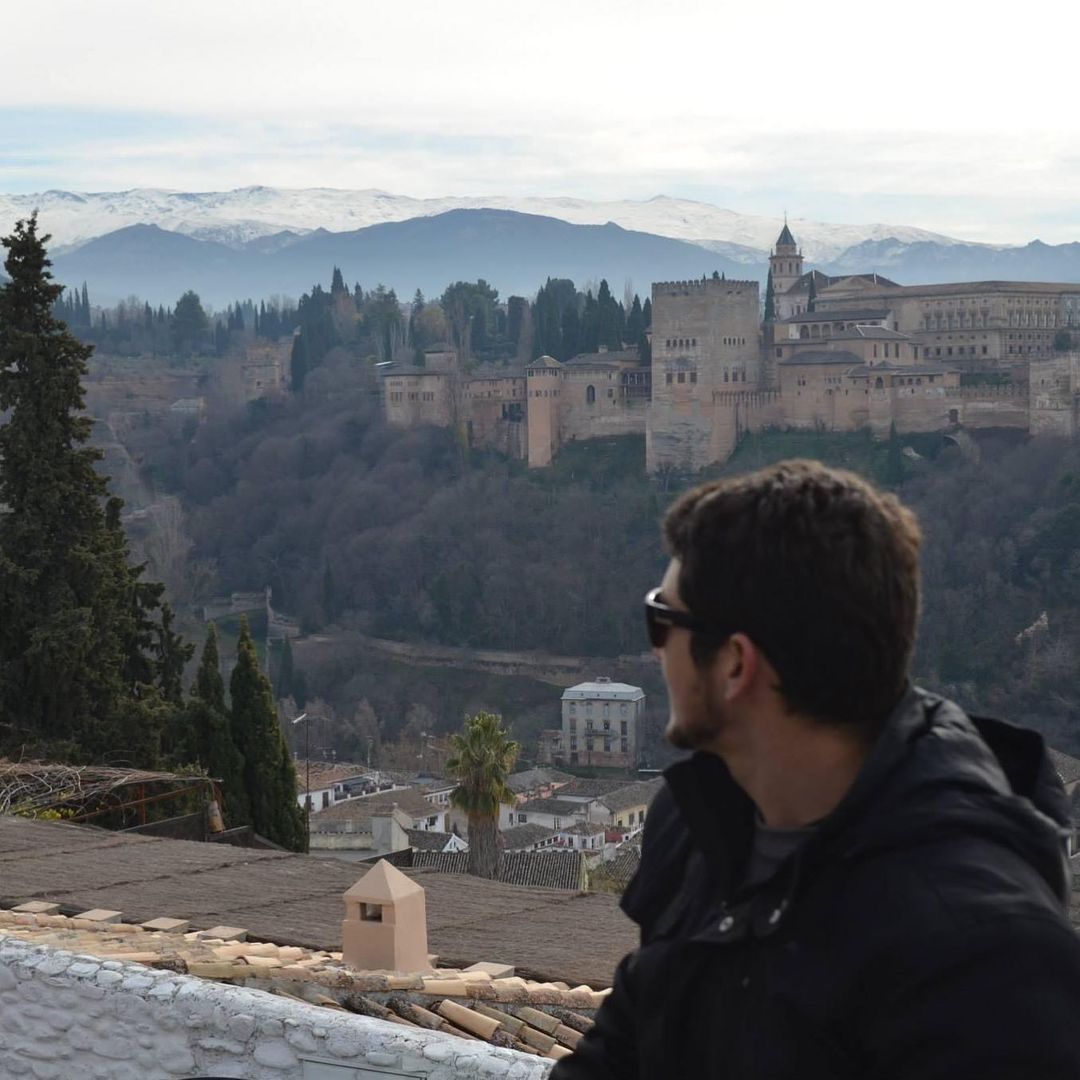
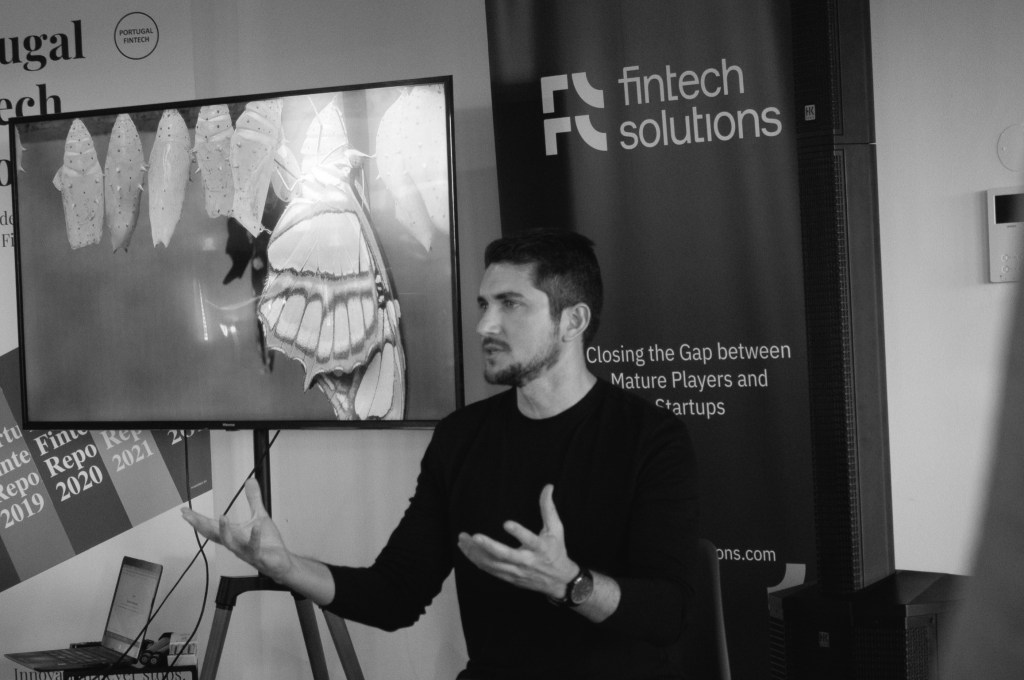
Featured image [cropped]: Savio Meireles, a story coach and startup advisor (Photo source: Savio Meireles/LinkedIn)

 Portugal Startup News