
Reluctantly, I clicked on the link that Vitor Soares, co-founder and CEO of AskCory.ai, had sent me. “Check if some of these marketing tactics can help you promote your platform,” he said.
Marketing is an area I’ve struggled with a lot as a solopreneur for years, to the point that, as many writers may relate, I’ve developed an aversion to the term.
So, while I was grateful that Vitor generously took the time to share marketing tips with a journalist he barely knew—and without me even asking—I couldn’t help but think I was about to see either the same general tips I’d seen a thousand times before or technical information I wouldn’t understand.
But it was neither.
Vitor had created a series of personalized marketing tactics for me using AskCory, their AI-powered marketing assistant, which were noticeably different from the ideas I had previously generated with other tools like ChatGPT.
The suggestions were well-organized, practical, and easy to implement with my current resources. Each tactic came with clear explanations, budget requirements, examples of businesses that had benefited from it, action plans, metrics to track, and many other helpful details.
The tactics were an interesting mix of digital promotions and offline events. And the fact that I wasn’t shown all the details of each tactic at once didn’t overwhelm or scare me away.
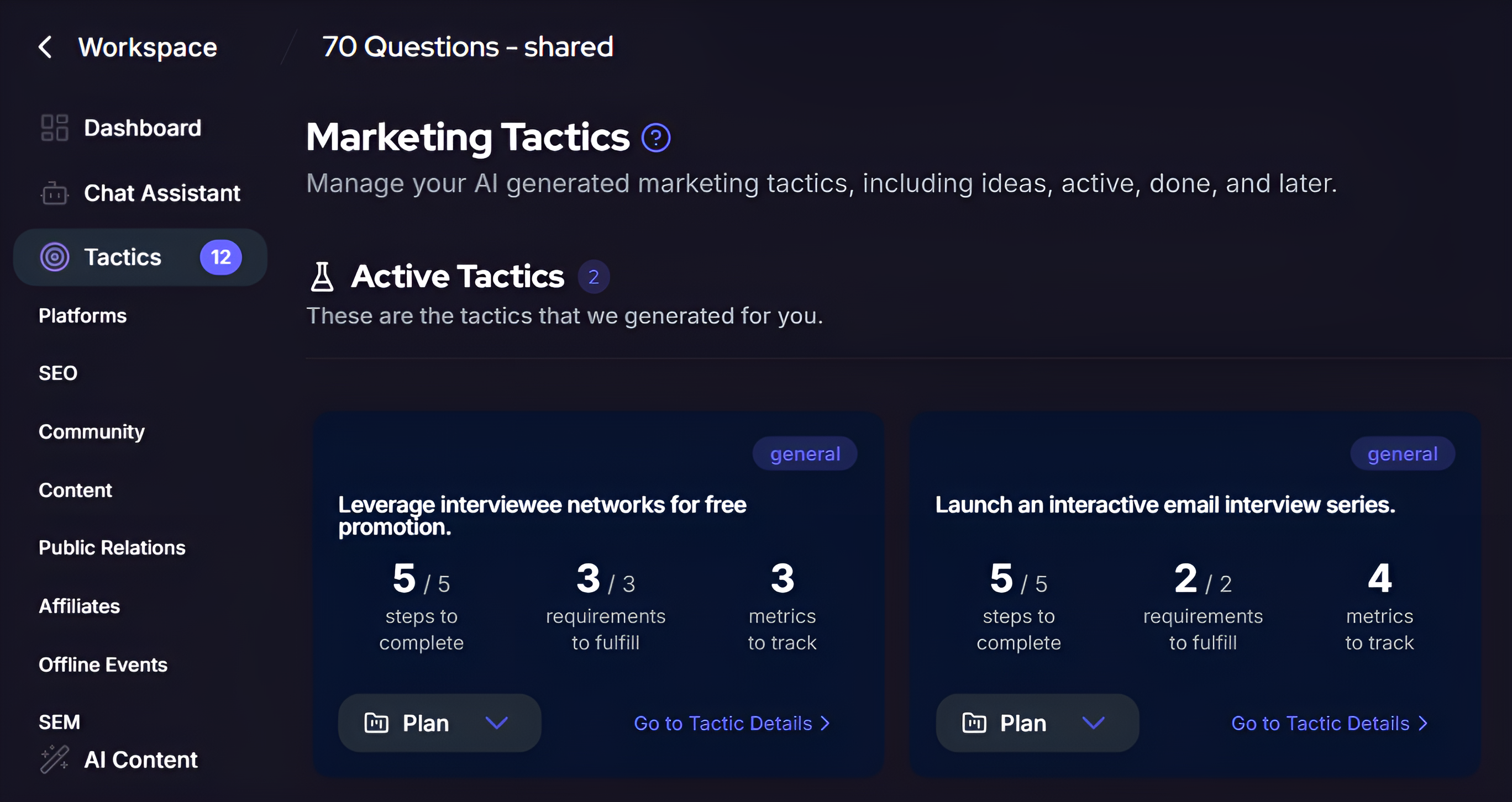
I once heard that the true test of a tool’s intuitiveness is when you ask a person who isn’t highly tech-savvy to try it and share their experience. That’s exactly what happened to me, a non-marketing expert who is actually averse to this area, and I found AskCory quite intuitive.
While I can’t claim that the AskCory free trial experience turned me into an enthusiastic, efficient marketer overnight, it certainly chipped away at some of my long-held beliefs about marketing.
The simplicity of the platform, despite its advanced features, made marketing planning feel more accessible and easier for me to understand. It also made improving my marketing skills seem more achievable.
Another aspect that stood out to me is that AskCory goes beyond strategic marketing planning. It also generates content, such as social media posts, ads, and SEO-optimized blog posts to support your marketing efforts.
Whether we like it or not, the reality is that there’s no getting around marketing in any professional endeavor, as we’re always selling value, whether in the form of an idea, a product, or a service. And we might as well leverage technology for this purpose, which allows us to become more efficient and free up our mental load and time to experience more of life.
If you’re a solopreneur, startup founder, or leading a larger business and want to step up your marketing game using artificial intelligence, why not learn the best approach from Vitor?
He’s a seasoned entrepreneur who has launched two online marketplaces and three subscription products. Vitor also accomplished a successful exit with the sale of Tap My Back, an employee recognition and feedback platform, to a Texas-based company in 2023.
As an Entrepreneur in Residence at Build Up Labs—a Lisbon-based venture studio and startup incubator where both Tap My Back and AskCory were developed—Vitor has valuable insights into entrepreneurship, AI, and digital marketing.
Read his answers to 70 questions to find out more about him and his work, particularly his unique perspective on the intersection of technology and business growth. Enjoy!
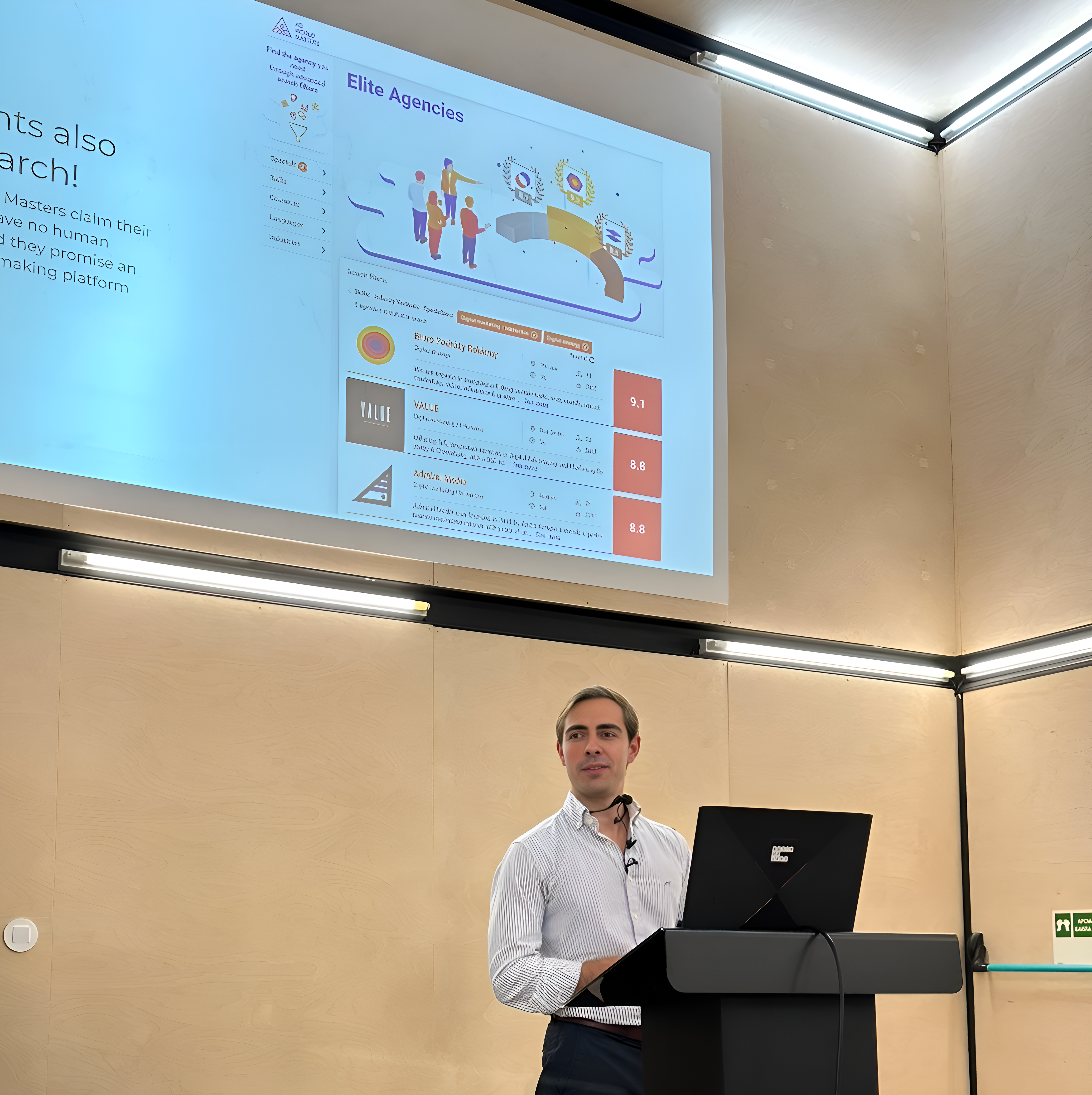
1- Who is Cory, Vitor?
Cory is an AI-powered marketing assistant designed to simplify strategy creation and execution for marketers and entrepreneurs. It’s like having a reliable marketing consultant in your pocket, always ready to assist.
2- Why would someone ask “Cory” when they can ask “ChatGPT”?
Cory offers more than generic AI responses. It’s tailored for marketers, with a focus on actionable strategies, real-world benchmarks (it uses Google Search API), and an intuitive interface that doesn’t require prompting or marketing expertise.
3- If AskCory does not work with user prompts, how does it work, then?
It provides structured inputs for marketers to define their goals, context, and audience, generating tailored strategies and assets automatically. The prompting happens in the platform’s backend.
4- What AskCory is not?
It’s not a replacement for human creativity and decision-making. Cory enhances your marketing efforts but doesn’t replace the insight and intuition marketers bring to the table.
5- Where do human creativity, insight, and intuition fit into marketing when using AskCory?
They guide the strategic vision and refine AI-generated outputs, ensuring campaigns resonate authentically with the target audience, for example.
6- Who is AskCory specifically designed to help?
Right now, our target personas are freelancers, small agency owners, and marketers from small to medium-sized businesses (SMBs) who struggle with time-consuming research, planning, blank page syndrome, and high client expectations on tight budgets.
7- The Bullseye Framework is at the core of AskCory. In simple terms, what are the three most important things we should know about it?
The Bullseye Framework is about identifying the most effective channels through testing, concentrating resources on what delivers the best results, and minimizing guesswork to maximize efficiency.
8- What do you think will intrigue users the most when they try AskCory for the first time?
How quickly it transforms vague marketing goals into a clear, actionable plan with specific, meaningful Key Performance Indicators (KPIs) and ready-to-use content.
9- What’s your definition of “meaningful KPIs” that AskCory helps users develop?
KPIs that align with business goals, adhere to the SMART framework (Specific, Measurable, Achievable, Relevant, and Time-bound), and provide actionable insights. AskCory.ai applies this logic in the backend, ensuring users generate tailored, impactful metrics visible in their Marketing Plan PowerPoint presentations.
10- Will non-technical users also feel welcome and comfortable on AskCory?
Absolutely. Cory’s intuitive interface ensures anyone can create effective marketing strategies without technical expertise.
11- Does AskCory only support digital businesses, or can businesses with a physical focus also benefit from it?
Both! Cory adapts strategies to suit digital and brick-and-mortar businesses, ensuring relevance across industries.
12- In your opinion, what’s the most innovative feature of AskCory, aside from its use of the Bullseye Framework?
Its real-time research capabilities, generating a Marketing Plan PowerPoint presentation with up-to-date data and full context of the business or project–all in a matter of minutes!
13- What’s unique about the content assets—such as blog posts, social media posts, images, and ads—that users can generate with AskCory?
Each asset is customized to align with the brand or personal’s voice, goals, and audience, contributing to relevance and engagement in every piece.
14- Are there specific industries where AskCory is particularly great at serving, or can businesses in all fields benefit from it?
While designed for broad applicability, it’s particularly impactful when used by marketing service providers, like freelancers, consultants, and agencies.
15- How do you see emotional AI shaping the future of marketing?
Emotional AI will redefine personalization, allowing brands to authentically connect with audiences by analyzing real-time emotional cues and tailoring experiences that resonate deeply with individual sentiments. This approach can significantly enhance Return on Attention (ROA) by ensuring marketing efforts are more impactful and engaging for the target audience.
16- What three tips would you give solopreneurs to make the most of AskCory?
1- Define clear goals before using the tool.
2- Start with one or two key tactics. (The Bullseye Framework suggests experimenting with three tactics at once, but if you’re working solo, that can be overwhelming.)
3- Regularly review and optimize results.
17- What two tips would you give to larger businesses to get the most out of your platform?
Larger businesses can maximize AskCory.ai by integrating it into their strategic planning sessions for quick, data-driven marketing strategies.
Additionally, it’s an effective tool to upskill junior team members, accelerating their learning curve with structured insights and actionable guidance to enhance their contributions.
18- AskCory has the ability to develop “out-of-the-box” marketing tactics. Can you share a recent creative marketing tactic you used to promote your platform that worked?
We used AskCory.ai to prepare a Google Search Ads campaign targeting small marketing agencies in Minneapolis, as part of a USA second-tier marketing cities strategy.
It also helped us craft LinkedIn drip messages for outreach to small marketing agency owners in Minnesota, Iowa, and nearby states, aligning the campaign with regional opportunities.
This wasn’t completely out of the box, but it was our most recent experiment sprint. Success can come out of the box, but it doesn’t necessarily have to!
19- Has any user surprised you with an unconventional way of using AskCory or an unconventional outcome?
One US-based user utilized Cory to prepare creative proposals instead of marketing services, showcasing its versatility. This was before the Marketing Plan PPT generator feature was introduced, highlighting the platform’s flexibility in supporting varied use cases.
20- We’ve all heard that marketing can’t overcome poor product quality. How can we ensure both go hand in hand, especially in the early stages of product or service development?
Discovery interviews are crucial to align your product with genuine user needs from the start, avoiding costly missteps. But the process doesn’t end after launch–continuously gathering feedback ensures your product evolves with user expectations, enhances quality, and strengthens its value proposition. Pairing this iterative approach with marketing ensures both the product and its promotion remain compelling and relevant.
21- What has been the most surprising aspect of running AskCory so far?
How a prototype we put together in less than one week was already helping marketers present marketing plans to their clients. This early adoption highlighted the platform’s immediate value, even before advanced features like the Marketing Plan PPT generator were introduced.
22- What are the most important personal and professional lessons you’ve brought from Tap My Back, your first exit, to AskCory?
Focus on identifying a real unique selling proposition (USP) and finding your niche. Achieving a clear product-market fit is essential to build momentum.
Use your gut feeling and understand that you can run one-month experiments, but some channels take more time to work. Product-market fit is not necessarily black and white. Stay flexible and persistent, iterating based on insights to find what resonates.
23- What are the three most common misconceptions about AI in marketing?
- AI replaces creativity.
- It’s only for large enterprises.
- It guarantees overnight success.
24- Do you have any unpopular opinions about the use of AI in marketing?
AI won’t replace marketing agencies but will empower those who leverage it, enabling them to scale creativity, streamline operations, and deliver more value to their clients.
25- If a business, whether small or large, has never used AI for marketing, what’s the first practical step you recommend they take to get started?
The first task is understanding the problem you need to solve. Focus on what’s consuming the most time every week and explore how it can be automated. For example, identify repetitive processes such as email campaign setup and then use AI tools to streamline them. You don’t need (and shouldn’t) try to solve and implement everything at once.
26- What’s the right mindset for integrating AI into marketing efforts?
AI isn’t about replacing your expertise but enhancing it. Approach AI as a tool to make smarter decisions and free your team to focus on creative, high-impact efforts that drive results.
27- What are the four most common mistakes businesses make, regardless of size, when integrating AI into their marketing efforts?
Many businesses fail to integrate AI effectively because they lack clear goals, overcomplicate the implementation process, neglect data quality, and overlook the importance of the human touch in their marketing strategies.
28- With industries evolving so quickly, marketers may feel the pressure to constantly try new strategies without fully evaluating past tactics. What time frame do you recommend for implementing and assessing action plans?
The answer depends on the business stage, type, and goals. Early-stage startups might need shorter cycles like 30 days to iterate quickly, while established businesses can afford 90-day cycles to gather meaningful data. The key is understanding your context and ensuring strategies are assessed thoroughly before pivoting or scaling efforts.
29- What are three key technical terms in AI marketing and their definitions that everyone should know?
- Machine learning (ML) is a subset of AI enabling systems to learn from experience without explicit programming. In marketing, it’s used for analytics and targeting.
- Natural Language Processing (NLP) helps computers interpret and manipulate human language for chatbots and content creation.
- Predictive analytics analyzes data to forecast trends and behaviors, guiding data-driven decisions. These terms highlight how AI transforms data analysis, customer interaction, and strategy optimization.
30- There are debates about AI bias in marketing. What should we know about this topic?
Bias in AI often has its root in the limitations and inconsistencies in training data. To mitigate this, it’s crucial to conduct regular audits, employ diverse datasets, and actively refine algorithms to identify and reduce skewed outputs.
31- What do you think is the most underutilized marketing channel today?
For startups and indie hackers, the most underutilized channel might be the old-school sales tactics, like cold calling. Though more related to sales than marketing, these methods can still deliver results. Or even traditional marketing like flyers.
32- Many content creators find selling challenging or outside their skill set. If someone wants to improve their sales and marketing skills using AI, what are three key areas they should focus on?
- AI-powered market research and persona development: Learn to use AI tools to gather market insights, automate audience research, and build data-driven personas (as a starting point of your research).
- AI-enhanced content optimization: Master the use of AI tools for content creation and optimization. AI tools can be used to create blogs, social media posts, and other marketing materials while maintaining brand voice.
- AI-driven analytics and strategy: Understanding how to use AI tools for SEO optimization, keyword research, and performance analysis is crucial for improving marketing effectiveness.
33- If you could change one thing about AI in marketing, what would it be and why?
I think it’s all about being open and honest. The more transparent we are about how AI works and the data it uses, the more people can trust and adopt it ethically.
34- What do you find most fascinating about AI?
Its potential to augment human creativity and tackle complex challenges in science, such as finding cures for diseases or driving breakthroughs in energy production.
35- With so many AI tools available, choosing the right ones for our needs and preferences can be overwhelming. What are the four key factors to consider when choosing a tool?
On the GenAI Revolution Podcast, I shared a tip: choosing tools isn’t just about features; it’s about understanding what aligns best with your specific needs and goals.
Usability, customization, scalability, and strong support resources are key factors to cut through the noise and make decisions that are right for you.
36- Do you recommend investing in and mastering a single niche AI tool, or can optimal results still be achieved by combining several more general-purpose tools?
It depends on your goals and resources. Starting with a niche AI tool lets you focus and gain results more quickly, often at a lower cost. General-purpose tools can work, but they may require more effort to customize and integrate into your processes. Begin where the impact is clearest, then expand as your strategy evolves and needs grow.
37- How can an effective balance between quality and quantity be achieved now that AI makes content generation so easy?
I believe it requires a strategic approach. Focus on creating high-quality content that resonates with your audience while leveraging AI to streamline production. Maintain human oversight to refine and ensure authenticity.
38- What’s your take on AI humanizers, AI detectors, or similar tools that are supposedly meant to moderate AI-generated content?
AI humanizers and detectors can play a valuable role, but only when applied thoughtfully. If overused or misapplied, they risk stifling creativity and limiting the natural flow of ideas.
39- What three pieces of advice would you give to those who want to benefit from AI without becoming over-reliant on it or losing important soft skills like communication, creativity, and critical thinking?
Use it as a tool to enhance, not replace, your abilities. It’s easy to rely too much on AI, but remember that communication, creativity, and critical thinking need constant practice. Stay aware of how much you’re outsourcing to AI and consciously engage in activities that challenge your soft skills.
40- What are the top five soft skills every entrepreneur should have, no matter how advanced technology becomes?
- Communication
- Adaptability
- Emotional intelligence
- The ability to act really fast
- Leadership

41- Can you tell us a lesser-known interesting fact about AI?
I don’t know if all the readers are aware of Artificial general intelligence (AGI), which hasn’t been achieved yet. The next potential advancement in AI after AGI is said to be Artificial superintelligence (ASI).
ASI represents a form of AI that surpasses human intellect, capable of outperforming humans in every task. It’s a fascinating and speculative area of research, offering both incredible possibilities and significant risks.
42- What’s agentic AI?
Agentic AI refers to systems that act autonomously with decision-making authority, simulating human-like behavior.
43- What does the agentic web look like?
For enterprise SaaS, this could look like customer service chatbots that not only answer questions but anticipate customer needs–like rebooking a flight or suggesting upgrades–without waiting for human input. Internally, it might replace manual approval workflows by making decisions on budgets or hiring based on predefined criteria, saving time and boosting efficiency.
44- Will AI agents kill authenticity?
AI agents won’t kill authenticity but could risk it if overused (as with everything, right?). They can handle repetitive tasks, freeing humans to focus on more creative, genuine connections. The key is to use AI as a tool to enhance, not replace, authentic interactions.
45- What are your thoughts on the open-source AI debate?
Open-source AI offers transparency, enabling researchers and developers to ensure fairness and security while driving innovation through collaboration, at a lower price. However, it also raises safety risks, such as misuse by bad actors.
46- Which founder or company in the field of AI do you find most inspiring, and why?
The CEO of OpenAI, Sam Altman, is a visionary leader characterized by his ability to combine technology and ambition. His work with OpenAI shows that he wants to shape the future with AI. Despite controversies, his leadership is an example of foresight when it comes to tackling complex challenges and inspiring a broader conversation about the potential impact of AI on society.
47- AI is redefining data privacy and protection. What’s the biggest change you’ve observed?
The biggest change is the scale and complexity of data collection and analysis. AI can process large amounts of personal data and make predictions about behavior, often without clear consent. This creates concerns about opaque decision-making and data privacy.
48- For those feeling guilty about using AI at work, what advice would you give?
That’s an outdated way of thinking. Your duty is to be more efficient. Using AI isn’t about laziness, but working smarter. Or should we stop using Google and go back to libraries for every question?
49- What message do you have for those experiencing AI anxiety, whether it’s about the potential impact on their job or feeling inadequate no matter how hard they try to keep up with technology?
AI is a tool, not a competitor. It’s meant to enhance your skills, not replace them. Staying curious and adaptable is more important than mastering everything at once. Still feeling anxious? Do what Naval Ravikant recommends: meditate. It can make a big difference.
50- I, for one, am overwhelmed and confused by endless tips on how to influence search engine algorithms. How can we achieve a balance between creating content for humans and optimizing for search engines?
Focus on user intent. Create high-quality, relevant content that genuinely addresses your audience’s needs and let SEO techniques support-not dictate-your strategy. If you don’t have amazing content, SEO won’t save you.
51- In the age of AI, does it still make sense for professionals to be paid by the hour as we become more efficient? I think measuring by the hour may reduce the motivation for efficiency. How can someone negotiate a shift to pay-per-task or project-based rates with clients or employers?
It makes sense for professionals to seek pay structures beyond hourly rates, especially as efficiency increases. Transitioning to pay-per-task or project-based rates can help professionals better reflect their value.
When negotiating this shift, focus on highlighting the results and impact of your work, rather than time spent. However, there are certain roles where output isn’t easily measurable, as well as contributions to company culture and motivation.
In such cases, it’s crucial to emphasize the long-term value that these roles bring to the organization. Showcase how these contributions help drive overall success, even if they aren’t easily quantifiable.
52- If someone’s job involves hands-on work—such as social work, craftsmanship, or healthcare—and they’re unsure how AI can help them professionally, what’s a good starting point to explore its value?
Look at tools that automate administrative tasks, like scheduling or record keeping. This frees up time for more impactful, hands-on work.
53- What do you think is the best way to incorporate and leverage AI in education while maintaining academic integrity?
Educators should focus on key strategies: set clear objectives for using AI tools to align with educational goals, promote AI literacy to teach students its strengths and limitations, and design assignments requiring higher-order thinking skills. I believe AI, after a certain age (probably after elementary school) can support learning, not the opposite.
54- How do you educate yourself about technology and stay informed without losing your sanity?
I focus on curated content sources, like specific people I follow on social media, our own team meetings and interactions, and podcasts like the All-In Podcast, while limiting time spent on information overload. Staying focused on areas that support my goals helps.
55- You’ve mentioned that you still attend in-person professional events about once a month. What would you say to people who aren’t sure in-person events are still valuable in today’s digital world?
In-person events create connections that digital interactions can’t replicate. The spontaneity of face-to-face conversations builds trust and deeper relationships, often leading to unexpected collaborations.
Unlike online interactions, they allow for non-verbal cues and shared experiences, which strengthen bonds and open doors to opportunities that might never come about in a purely digital context.
56- From your experience of selling Tap My Back, what are the key characteristics of the right acquirer?
It’s important to consider whether you’ll need to work in the business post-acquisition. There’s typically a transition period of at least a few months, so liking how the acquirer collaborates with you can make a big difference. Of course, it’s crucial that the acquirer is someone who is upfront about their expectations and can commit to the timeline.
57- When should a business start considering their exit strategy if that’s the path they’d like to take?
It’s never too early to plan. For example, when I joined Tap My Back in January 2021, we mapped out a two-year roadmap with the end goal of an exit. Even if the timeline varies, setting clear objectives early ensures that decisions are consistent with long-term value creation and the eventual exit process is smooth and purposeful.
58- I’ve heard it’s not uncommon for business owners to struggle with the emotional impact of an exit. How was your experience, and what advice would you give to those in a similar situation?
That wasn’t the case for me with Tap My Back because the goal was clear from the start. It felt purposeful and aligned with our strategy.
On the other hand, IZIRepair, my first startup, was more of an emotional experience because I founded it, and it failed. Still, I knew it was the right decision, and that experience laid the foundation for my future ventures.
Reflecting on the lessons and long-term benefits of those experiences is key to moving forward.
59- Based on your entrepreneurial experience in the United States, what can Portugal’s startup ecosystem learn from that market?
The US stands out for its bold ambition and risk-taking. Europe, including Portugal, should prioritize learning from the US to encourage entrepreneurial growth and global competitiveness.
60- What is special about the entrepreneurial ecosystem in Portugal that other markets could learn from?
I don’t know if it’s the same in other regions, but Portugal’s sense of community and collaboration surprised me back in 2016 when I started my entrepreneurial journey. Startups here are genuinely willing to support each other, creating a unique environment for growth.
61- In what ways has “Build Up Labs” contributed to your growth as an entrepreneur, particularly during your first exit?
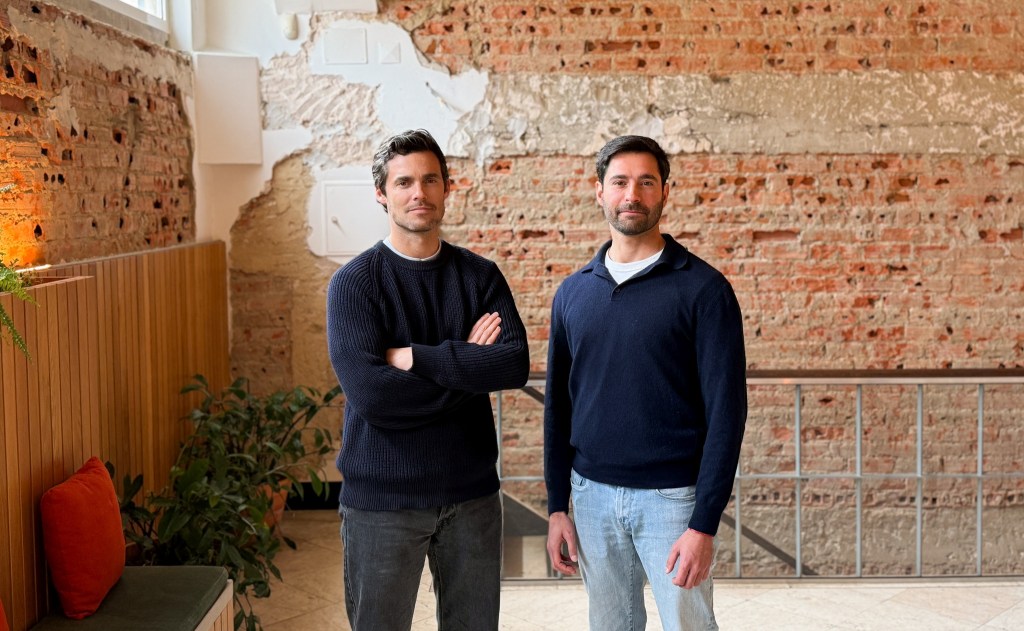
Build Up Labs provided a co-founding team, mentorship, shared services, office space (Hood) to solve problems in coffee breaks, opportunities to interact with peers, and a network that were instrumental in scaling Tap My Back and navigating the complexities of an exit.
It also played a key role in creating new products like GrantsFinder.eu and AskCory.ai, which I now run with the help of my co-founder and CTO, João Pereira.

62- If an international startup is considering Lisbon as its base, what are three important things they should keep in mind?
Leverage the talent pool, tap into the collaborative ecosystem, and understand the local grants dynamics to adapt effectively.
63- You offer mentorship services to entrepreneurs. If someone tells you they’re multi-passionate and multi-skilled and are uncertain which path to take, what’s one question you’d ask to help them gain clarity?
Well, I would ask several questions, but we can start with this one: What’s the one thing you’d regret not pursuing if you looked back 10 years from now?
64- How has being an entrepreneur shaped your perspective on life?
Deep question here! It’s taught me the value of consistency, a growth mindset, and, as cliché as it may sound, the importance of enjoying the journey rather than just focusing on the destination.
65- What’s something not many people know about you that you think would be interesting for them to learn?
I have doubts and fears like any other human being, and I’m an introvert by nature. But we cannot let that be an excuse for not working toward our goals and achieving success.

66- What have been your three proudest moments in life, personally or professionally, that you can give yourself a tap on the back for?
Achieving the exit with Tap My Back, which was a really difficult accomplishment, having so many good friends around me–which reflects the importance of meaningful connections–and recognizing my own ignorance with the maturity to keep learning are things I’m truly proud of.
67- If I asked you to share one thing with your family, what would you tell them?
I am deeply grateful to my mother, who endured many hardships to give me everything she could, and to my stepfather, who came into my life when I was about seven years old and played a crucial role in shaping the man I am today.
68- What would be a guiding mantra for Vitor Soares?
So many hard questions in one interview!
“Let’s make something that looks like us.” This might sound arrogant, but it was something my stepfather used to tell me about every small thing we did, like hammering a nail into the wall. The lesson is: if we are going to do something, let’s do it right!
69- Is there a question you wish had been asked during this interview that wasn’t? If so, what would your answer be?
What motivates you to accomplish tough milestones? If it doesn’t require effort, it’s not worth it–but that doesn’t mean working harder; it means working smarter.
70- Any final thoughts, Vitor?
Stay curious, stay adaptable, and never stop learning!

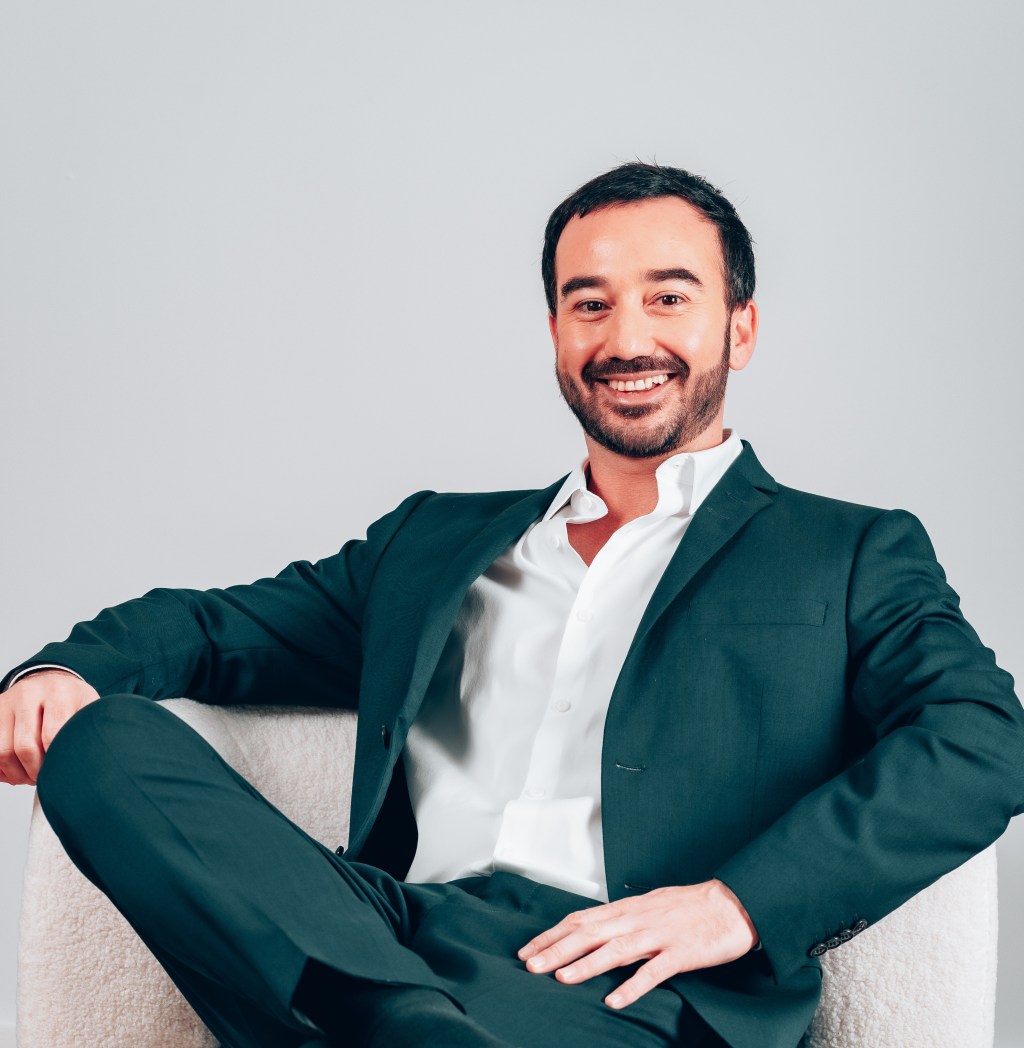
Featured image [cropped]: Vitor Soares, co-founder and CEO of AskCory (Photo source: AskCory)

 Portugal Startup News