
By Miguel Alves Ribeiro – Founder and CEO of sheerME
If there’s one thing I can say with confidence about 2025, it’s that Portugal is no longer just “on the map” when it comes to innovation. We’re building real companies, with real traction, real talent, and global ambitions. And as the founder of sheerME, I’ve been lucky to live and breathe this evolution over the past years, from Lisbon to Cascais, from Web Summit spotlights to late-night team calls across time zones.
But let’s be honest: while Portugal has done a lot right, there’s still work to do. 2025 can and should be the year we step things up.
The VC scene: Evolving, but still conservative
Portuguese VCs have matured. There’s more money in the ecosystem than a few years ago, and we’ve seen some bold bets paying off. But overall? Capital is still conservative, and risk appetite is way behind what we see in other European ecosystems like France, Spain, or the Nordics.
Where Portugal shines is in bridging public and private capital and here I need to call out one of the best levers we’ve had: SIFIDE. This tax incentive mechanism has quietly empowered a lot of innovation, giving startups the room to invest in R&D, hire smarter, and grow faster without giving up massive chunks of equity too soon.
This kind of structural support is gold. And it works.
Incentives work, but bureaucracy kills momentum
The Portuguese government has created several fantastic tools to support startups, from SIFIDE to Startup Portugal and even programs from Banco de Fomento. But let’s get real: accessing these programs is still a maze.
Deadlines are slow. Processes are rigid. The amount of paperwork required for a €50K incentive sometimes matches what you’d expect for a €5M investment. Founders don’t have time to chase documents. We’re busy chasing product-market fit, users, and global growth.
If Portugal wants to stay competitive and keep the startup hype alive, we need a full shift in how fast and frictionless these supports are delivered. We need startup-speed government.
What I would like to see in 2026
Here’s my wishlist for Portugal in 2026:
1- Faster, digital-first access to all startup incentives: Make applying as easy as booking with sheerME ;-)
The process for accessing startup incentives should be straightforward and hassle-free. Instead of complicated forms and long waits, founders want a smooth, digital-first experience that lets them apply quickly and confidently. Simplifying access this way helps startups focus on growth instead of paperwork.
2- More risk-taking VCs: We need VCs who are willing to back bold founders in the early stages, not just after traction is proven.
The startup ecosystem thrives on innovation, which requires bold, visionary founders willing to take risks. However, many venture capitalists prefer to invest only after a startup has shown significant traction, leaving early-stage founders underserved. We need more VCs who have the appetite to support ambitious ideas from day one, providing the capital and guidance necessary to turn nascent concepts into market leaders.
3- Tech education scaled up: There’s a need for more product managers, AI engineers, and growth hackers coming from local schools and bootcamps.
As the tech sector grows rapidly, so does the demand for specialized talent. Local education institutions and bootcamps must expand their offerings to produce more skilled professionals in key areas like product management, artificial intelligence engineering, and growth hacking. Scaling tech education will equip startups with the expertise they need to innovate faster and compete on a global level, creating a robust pipeline of homegrown talent.
4- Support for internationalization: Portugal is a great test market, but scaling globally is the game. Help us get there faster.
While Portugal offers an excellent environment for launching and testing products, true success lies in reaching global markets. Startups require support in navigating international regulations, building global partnerships, and accessing foreign capital. By providing dedicated resources and infrastructure for internationalization, we can accelerate the growth journey from a promising local startup to a global player.
5- Incentives tied to real growth outcomes: Not just paperwork milestones.
Current incentive programs often reward startups based on completing bureaucratic milestones like submitting documents or attending workshops, which don’t always translate into real progress. Instead, incentives should be aligned with measurable growth indicators such as revenue growth, customer acquisition, or market expansion. This outcome-driven approach ensures that resources are invested in startups that are genuinely scaling and creating economic impact.
Portugal is becoming one of the most exciting places to build, especially in terms of lifestyle, wellness, sustainability, and AI. We have the talent, the quality of life, and now increasingly, the ambition.
Let’s just not lose this momentum in a sea of bureaucracy or underpowered capital.
From my side, sheerME will keep doing what we do best, helping people take care of themselves, while building the next generation platform for wellness, powered by AI, community, and cashback. We’re betting big on Portugal. I just hope Portugal keeps betting big on its founders, too.
About the author:
Miguel Alves Ribeiro is the founder and CEO of sheerME, a fast-growing wellness super app connecting people to beauty and self-care services with ease, rewards, and community. After launching and exiting BestTables to TripAdvisor (now TheFork) and helping scale Zomato across Europe and LATAM, Ribeiro is now on a mission to make wellness digital, inclusive, and engaging. Under his leadership, sheerME has become a cashback-powered ecosystem where users thrive, partners grow, and technology truly simplifies life. In 2025, sheerME was named one of Southern Europe’s fastest-growing startups by Sifted.
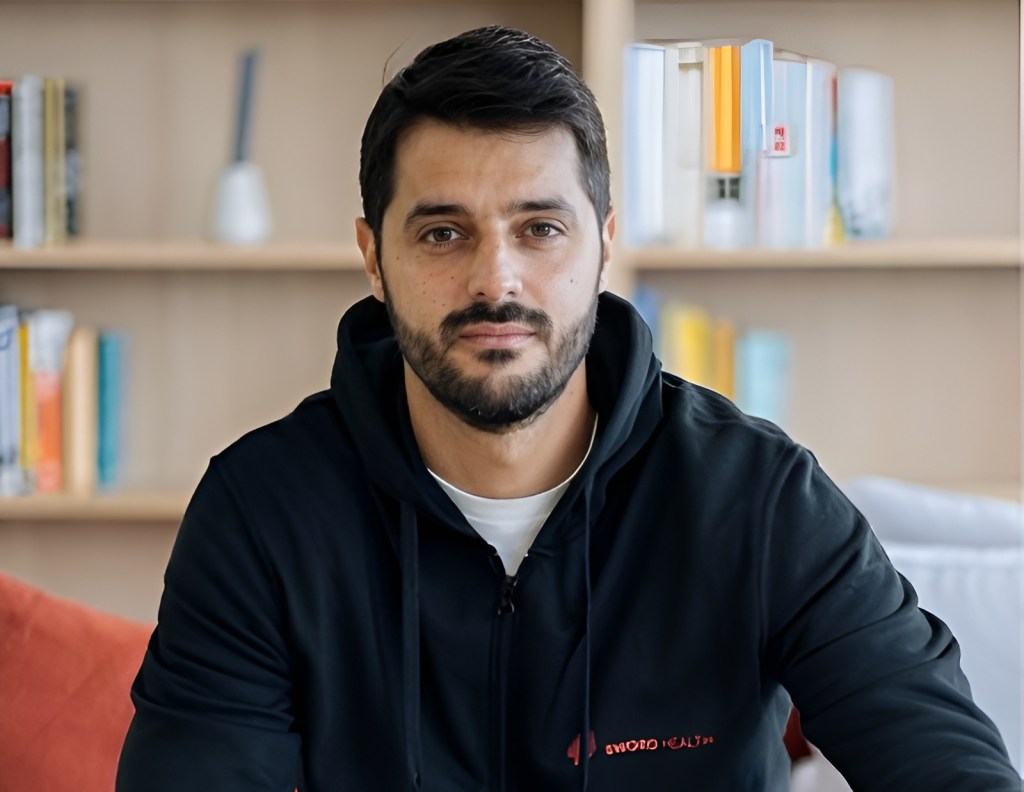
Featured image: Miguel Alves Ribeiro, founder and CEO of sheerME (Photo credit: sheerME)
Disclaimer: The opinions expressed in contributed opinion pieces are those of the authors and do not necessarily reflect the views of Portugal Startup News.


 Portugal Startup News