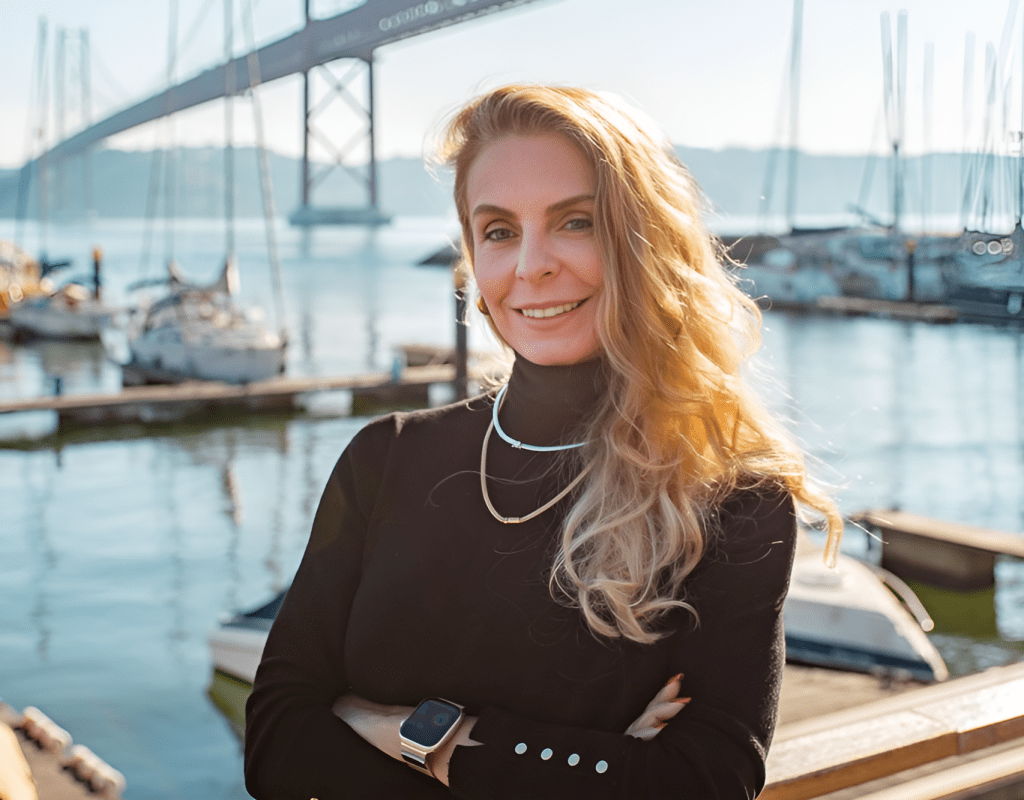
By Cristinna Araujo – Lawyer, investor, and CEO of MyEuroBusiness
I grew up with one foot in Brazil and the other in Portugal. Born in Rio de Janeiro and raised as the daughter of a Portuguese immigrant, I was surrounded by a mix of cultures, ways of thinking, and life experiences. My father came to Brazil to build his own construction company from scratch – and he succeeded, not just in business but in courage and vision.
From him, I learned early what it means to launch a business in a foreign country. I saw firsthand how culture influences business, why adaptation is essential, and how each strategic decision can shape a destiny.
This cultural bridge shaped my perspective and, years later, equipped me for a greater mission: helping companies cross borders with intelligence, strategy, and heart.
Over the years, I’ve witnessed many bright ideas take off and others crumble at the first barrier. And more often than not, it’s not the market that breaks them, it’s misguided expectations.
Many ventures arrive focused solely on securing a public grant. And when it’s rejected, their international journey ends. To me, that’s alarming.
Because internationalization isn’t and never was only about obtaining government incentives. It’s a natural growth phase. Research shows that companies that expand globally early have greater sustainability, more innovation, and better resilience through crises.
Treating internationalization as a one-off bet reliant on external approval wastes a company’s greatest asset: its ability to adapt, learn, and grow beyond borders.
Grant not approved? Fine. The strategic plan continues, with or without it, because foundations built well don’t collapse at the first closed door.
And if your company is doing its job, validating markets, creating value, building connections, it can reapply. Eventually, it will secure funding. It will be stronger, sharper, and more aligned with what the ecosystem demands.
Internationalization is a journey. Abandoning it because of one “no” means forfeiting a chance to become stronger.
That’s why our projects aren’t built just to win grants. They’re designed to drive strategic expansion. Because we know from experience that a company needs much more than financial support. It needs clear positioning, meaningful presence, and purposeful direction toward the market it aims to conquer.
Much is said about Portugal as a hub. But what does that mean in practice?
Portugal is one of the few countries that not only invites companies to internationalize, but also offers a solid structure for this to happen consistently. The geographic advantage is clear. The political and economic environment is stable. But the real difference lies in the country’s positioning as a bridge between continents, and especially, in the government’s commitment to business internationalization.
Portugal has created specific incentives for this purpose. One of the main examples is the R&D (Research and Development) support system, with funding lines aimed at innovation designed for the global market. In other words: the country wants to attract solutions that can scale beyond borders, not just solve local demands.
This vision contrasts with what we see in other contexts. In Brazil, for example, R&D incentives are generally designed to meet the country’s internal needs. They are important, of course. But they limit international ambition right from the start. In Portugal, the logic is the opposite: innovation must have a global vocation from the beginning.
And that is why Portugal functions as a true hub, because it is not just a place to set up, but an ecosystem designed to receive, accelerate, and expand businesses with international potential.
What really works are the projects that come in with vision – the ones that structure their entry into Portugal as part of a larger plan and benefit from:
- Tax and fiscal incentives designed for growing companies
- Integration into ecosystems aligned with their sector, with practical and institutional support
- Soft landing programs that respect the cultural, regulatory, and operational differences of each market
A practical example: whenever possible, we connect clients to Unicorn Factory Lisboa, an initiative by the City Council that, in addition to offering structure and mentorship, integrates companies into an innovation network with direct access to investors, European hubs, and strategic decisions. That changes everything.
Portugal wants, and supports, companies that aim to grow with impact. And when this structure is used intelligently, the results are exponential.
Lisbon is strategic, but Portugal’s potential goes beyond the capital
I completely understand those who arrive and think: “I need to be in the capital.” Especially coming from a continental country like Brazil, where infrastructure is so unequal that “interior” is often associated with “lack of opportunity.” But in Portugal, the logic is different.
The country is made up of regions with specific vocations, strong local support networks, and less saturation. I have seen projects take off in cities like Braga, Aveiro, and Évora because they were in the right places, connected to the right partners.
Establishing the company in an ecosystem that boosts its growth is one of the keys to success. Not only to attract grants, but to attract and retain qualified talent in its sector, develop strategic local partnerships, and truly integrate into the market.
Whenever possible, I advise that the company set up close to technical centers, universities, or hubs specialized in the company’s niche. These institutions are true talent factories and, at the same time, living showcases for potential clients and partners.
Internationalizing with intelligence also means knowing where to plant your roots in order to grow strong.
Culture weighs more than language
Speaking Portuguese helps, of course. But it is not enough.
In the business world, culture speaks louder than grammar. It is what defines how an idea is presented, how trust is built, how a deal is closed. A joke that makes sense in Brazil may sound strange in Portugal, not because of a lack of language comprehension, but because the cultural context is different.
The same logic applies globally. If someone thinks that just because they speak English they are ready to do business in Japan, they are mistaken. Without understanding the local culture, social codes, negotiation style, and even the silences, communication fails, even when speaking the “same” language.
I have seen approaches that delight Brazilian investors come across as exaggerated or unconvincing in Portugal. And the opposite also happens. What creates connection in one market can be noise in another.
On the other hand, I also see Portuguese companies wanting to attract foreign projects without preparing to understand the culture of those arriving. In my view, this greatly limits the potential of partnerships that could be transformative.
To internationalize with intelligence is, above all, a strategic exercise in empathy. It is about speaking less with an accent and more with context.
The CEO’s involvement changes the game
Internationalizing is not just about opening a new operation. It is about translating the essence of the business into another context, and no one does that better than the person who has carried that essence from the beginning.
When the CEO is present in the international expansion process, everything flows with more speed, coherence, and impact. It is not about micromanaging, but about leading with vision. It is he or she who understands the decisions that are not written in the business plan: how to adjust positioning, when to step back, how to pivot responsibly.
This active presence enables quick decisions, avoids strategic noise, and strengthens the institutional narrative in front of partners, investors, and clients. After all, entering a new market is not just a logistical operation, it is a movement of brand, culture, and purpose.
I have seen excellent projects lose momentum because the founder completely delegated the internationalization process to third parties. No matter how qualified the team is, there will always be missing elements that only those who built the business deeply understand and can adjust.
Being at the forefront at this moment does not mean doing everything alone. It means being available to represent, decide, and adjust. And in this context, leadership is not just desirable. It is indispensable.
European investors value consistency
My journey with venture capital began in Brazil, where I participated in funding rounds with firms that often bet on bold narratives, aggressive scalability, and the ability to “sell the dream.” That has its value. But when I started dealing with European investors, I quickly realized the game changes.
In Europe, especially in public programs and funds linked to strategic innovation, what really matters is consistency. Strategic clarity. Practical vision. Solid foundation.
Here, the pitch needs to be straightforward, with no detours. There is no room for exaggeration. What matters is whether your project aligns with real market priorities, current public policies, and solid trends, not just passing fads.
And I learned this intensely through practice. Through the experience of submitting projects, interpreting calls, reading between the lines of what is not written but is decisive. Some things only practice can teach you: the right tone, the required level of maturity, the elements that truly make a difference in the evaluation.
Because internationalizing through funding is not just about sending documents. It is about understanding the ecosystem. It is knowing that a technically sound proposal is not enough if it is not strategically embedded in what Europe wants to develop in that investment cycle.
Over time, my team and I adapted our communication. We built more structured narratives with solid data, validated solutions, clear monetization paths, and measurable impact. A five-minute pitch needs to prove, within three minutes, that it is technically ready and strategically grounded.
Moreover, European investors value the “how” as much as the “what.” They want to know if the team has execution capacity, if the business model complies with local regulations, and if there is a deep understanding of the target market.
My previous experience with venture capital in Brazil gave me flexibility. But it was in Europe that I developed more precision. And this combination, strategic boldness with technical consistency, has proven to be an important differentiator for building trust, especially in non-repayable funding contexts.
The partnerships that deliver the most value
Over the years, I have had the honor of meeting, listening to, and learning directly from leaders of institutions such as IAPMEI and AICEP. And I can say with conviction: the best partnerships are not the ones that look good on paper, but the ones that truly connect you with what matters for solid growth in a new market.
These entities, along with sectoral incubators, chambers of commerce, universities, and technology hubs, are strategic levers when activated intelligently. They know the behind-the-scenes of the ecosystem, the most suitable funding paths, the country’s priority sectors, and most importantly, the shortcuts that only experience reveals.
AICEP, for example, goes far beyond promoting Portugal abroad. It acts as a bridge between international companies and what the country has to offer at its most competitive. IAPMEI, in turn, is a true facilitator of innovation, focusing on training, technical support, and incentives designed to accelerate businesses with real potential.
I have seen projects gain structure, scale, and strength because they were strategically aligned with these actors. The secret is not just having access, but knowing how to position yourself, when to engage, and with what narrative.
These connections also open doors to distribution channels, qualified talent, strategic trade fairs, soft landing programs, and contacts with key decision-makers, all in a structured way with institutional legitimacy.
Partnership, in an internationalization context, is not about social networking. It is about strategic alliance. And Portugal offers fertile ground for that, especially when you arrive with humility to listen, intelligence to propose, and consistency to deliver.
How to successfully secure a grant?
Securing a grant successfully requires much more than having an innovative idea. You need to develop a project that precisely responds to the objectives of those who will fund it. This means aligning the proposal with the strategic goals of the program and, most importantly, understanding the impact logic behind each funding line.
Portugal, in this regard, has a clearly future-oriented mindset. The country not only supports local companies but also aims to attract scalable and globally relevant businesses that are ready to grow from Portuguese territory.
A concrete example I experienced: we supported a high-tech factory project that originated in another European country. Through the Productive Innovation Support line, Portugal provided infrastructure, financing, and incentives for this company to establish itself in the country. The goal was clear: attract productive capacity, generate qualified jobs, develop innovation, and position Portugal as a global export base.
This same company wants to expand to Brazil. But unlike Portugal, the support there is much more limited. In Brazil, public incentives are almost always aimed at companies already operating locally and with proven results. In other words, it is a model that supports those who are already established, not those looking to settle, innovate, and contribute to the country from the beginning.
Portugal, on the other hand, designs its programs precisely to attract this type of company. Here, the state acts as a catalyst for internationalization. There is support to install or expand production units, hire local and international talent, develop internal R&D centers, integrate with universities, test new technologies, and scale solutions globally from Portugal.
And the examples of how these grants are used are diverse: it is possible to secure funding to hire qualified professionals, build multicultural teams, create an internal research and development center, launch global-focused R&D projects, internationalize to as many countries as make sense for the business (not just Europe), and integrate operations into strategic innovation hubs.
Securing a grant successfully means aligning all of this: technical proposal, economic impact, social relevance, and global vision. And yes, it is possible to secure funding to create something new, start from scratch, set up a factory, build an operational base, or launch a research center. But this only happens when the company understands that the incentive is not a prize, but a driver for a larger project.
Portugal wants companies that dream big but are also ready to deliver with consistency. And when this alignment exists, the resources come. And with them comes the real chance to scale.
Not mistaking proximity for simplicity
Having grown up between Brazil and Portugal, I have always viewed these two markets with an integrated perspective, but I never underestimated what it means to position oneself professionally in each of them.
I am a practicing lawyer in both countries, and this legal experience has allowed me to clearly see something that few people notice: many legal differences are not just technical. They reflect very distinct cultural, social, and economic needs. What works as a contractual base or regulatory framework in one country may make no sense in the other, and understanding this is essential to internationalize with consistency.
Even with cultural familiarity and natural connections, I treated my practice in Portugal with the seriousness that any internationalization process requires. I did not mistake proximity for simplicity.
I structured a realistic plan. I set clear goals, tested hypotheses in a controlled way, and observed the market carefully. I adjusted the positioning, refined the value proposition, and created solid connections. Only then, based on real validation, did I scale.
This journey taught me something I carry into every project I lead: internationalizing with intelligence is not about copying what worked at home. It is about starting again with strategic humility. It is about observing, adapting, validating, and growing from solid ground.
If I were to start today…
- I would study the regional hubs and their specializations even more. Often, the best fits are not in the most visible centers, but in those with more structured support networks, strategic incentive programs and real opportunities to connect with relevant stakeholders.
- I would choose partners with even more care, looking for real alignment of vision, joint execution capability and openness to build something beyond the institutional. Partners who actively contribute to accessing opportunities, from securing public funding to crafting smart market entry strategies.
- I would seek, from the very beginning, to participate in a structured soft landing program. It is essential to understand the cultural and behavioral nuances of the new market while building a qualified network from the very first step. These programs offer much more than guidance. They help interpret the market deeply, adjust communication, connect with the right players and avoid strategic mistakes that are often invisible but costly.
From local to global with strategy
I have brought Portugal to every corner of Brazil, a Portugal that many Brazilians still do not truly know. A country that goes far beyond the touristic image and that, due to lack of knowledge, is often mistakenly compared with other entrepreneurship ecosystems. Portugal is a living, strategic hub – a country with targeted public policies, qualified networks, and consistent incentives for those who want to expand with intelligence and impact.
Unfortunately, this lack of awareness leads to concrete opportunities being underestimated. Many compare Portugal with models that do not share the same context and end up missing what is most valuable: the combination of innovation, stability, and global vision.
Today, I am also honored to serve as an ambassador for ALAS (Latin American Startup Alliance), where one of my missions is precisely this: to build bridges between Portugal and Latin America. At Web Summit Lisbon, for example, we see Brazilian startups occupying space and gaining visibility. But we still do not see, with the same strength, companies from Colombia, Mexico, Chile, or Argentina exploring the potential of this ecosystem.
I want to change that. I want to see more Latin American companies getting to know, understand, and take advantage of what Portugal offers, not only as a gateway to Europe, but as a platform for global growth. I am grateful for the opportunity to share these experiences. And I am here to support anyone who wants to follow this path with purpose, strategic vision, and real impact.
Let us turn borders into bridges. And use each one of them to build stronger, more connected, and sustainable companies on the global stage.
Companies that focus only inward grow only as far as the ceiling allows.
If you still see internationalization as a reward for after local success, you may be holding back your company’s true potential. Expanding early, with strategy, is what separates local businesses from global companies.
Internationalization is not a stage. It is a mindset.
About the author:
Cristinna Araújo is a Portuguese-Brazilian lawyer, investor, CEO of MyEuroBusiness, and ambassador for ALAS (Latin American Startup Alliance). She supports companies in expanding safely and strategically into Europe, with a focus on Portugal, specializing in securing public funding, legal structuring, and connecting to the European innovation ecosystem.
Featured image: Cristinna Araujo, CEO of MyEuroBusiness (Photo courtesy of Cristinna Araujo)
Disclaimer: The opinions expressed in contributed opinion pieces are those of the authors and do not necessarily reflect the views of Portugal Startup News.

 Portugal Startup News