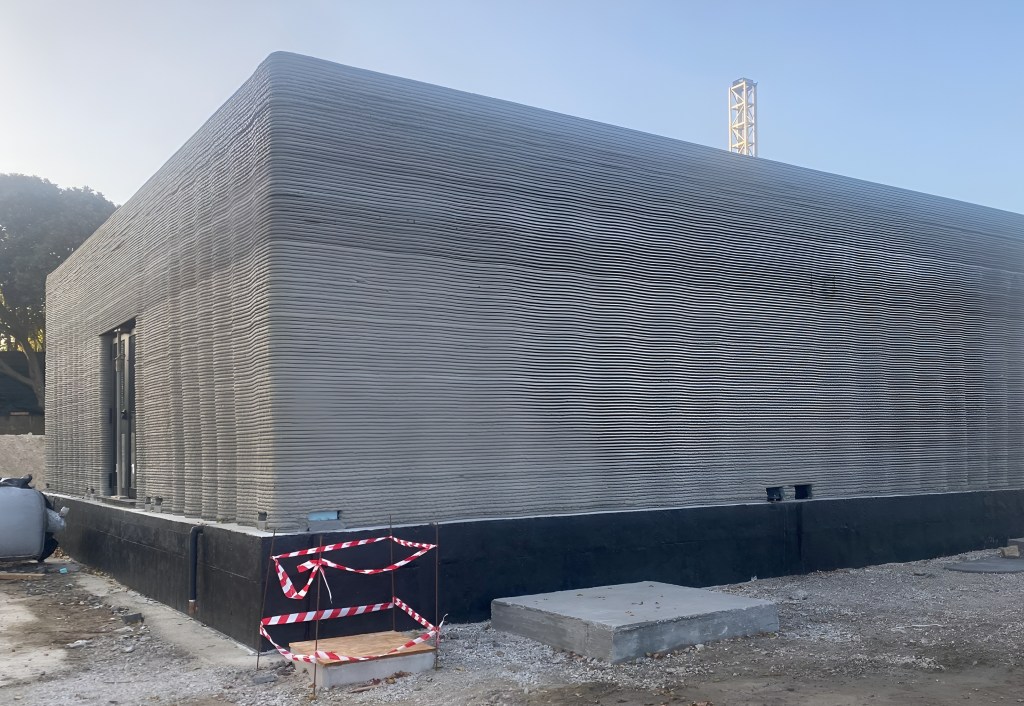
Portuguese startup Havelar is constructing the country’s first public building using 3D printing in Matosinhos, near the city of Porto, with completion expected in five months, according to a statement reported by Green Savers.
Selected through a public tender by the Municipality of Matosinhos, the work at Ecocentro de Perafita involves erecting a 500 m² building structure within one week, before moving into later construction phases.
The project is part of the ReCircular initiative, focused on recycling and reusing electronic waste and creating inclusive employment opportunities for people with disabilities. The total investment amounts to €800,000.
José Maria Ferreira, co-founder and CEO of Havelar, thanked the Municipality of Matosinhos for trusting the company with the project. “It is with great pride that we present the first public work using this technique that we believe is the construction of the future and that will allow us to complete this challenge in record time.”
He added that the project will serve the region, open doors to new solutions, and help address current housing shortages and limited resources.
“Faced with a context of housing crisis and scarcity of resources, we believe that we can be the solution, as the formula we use at Havelar allows us to build houses and buildings at less cost, in less time, and with a lower carbon footprint,” Ferreira noted.
According to him, the technology is both sustainable and versatile, offering municipalities a practical way to meet local needs while creating long-term impact in cities and communities.
Havelar provides turn-key solutions for developers, builders, and landowners, specializing in large-scale residential projects with additive construction technology, internationally awarded design, and 3D-certified services.
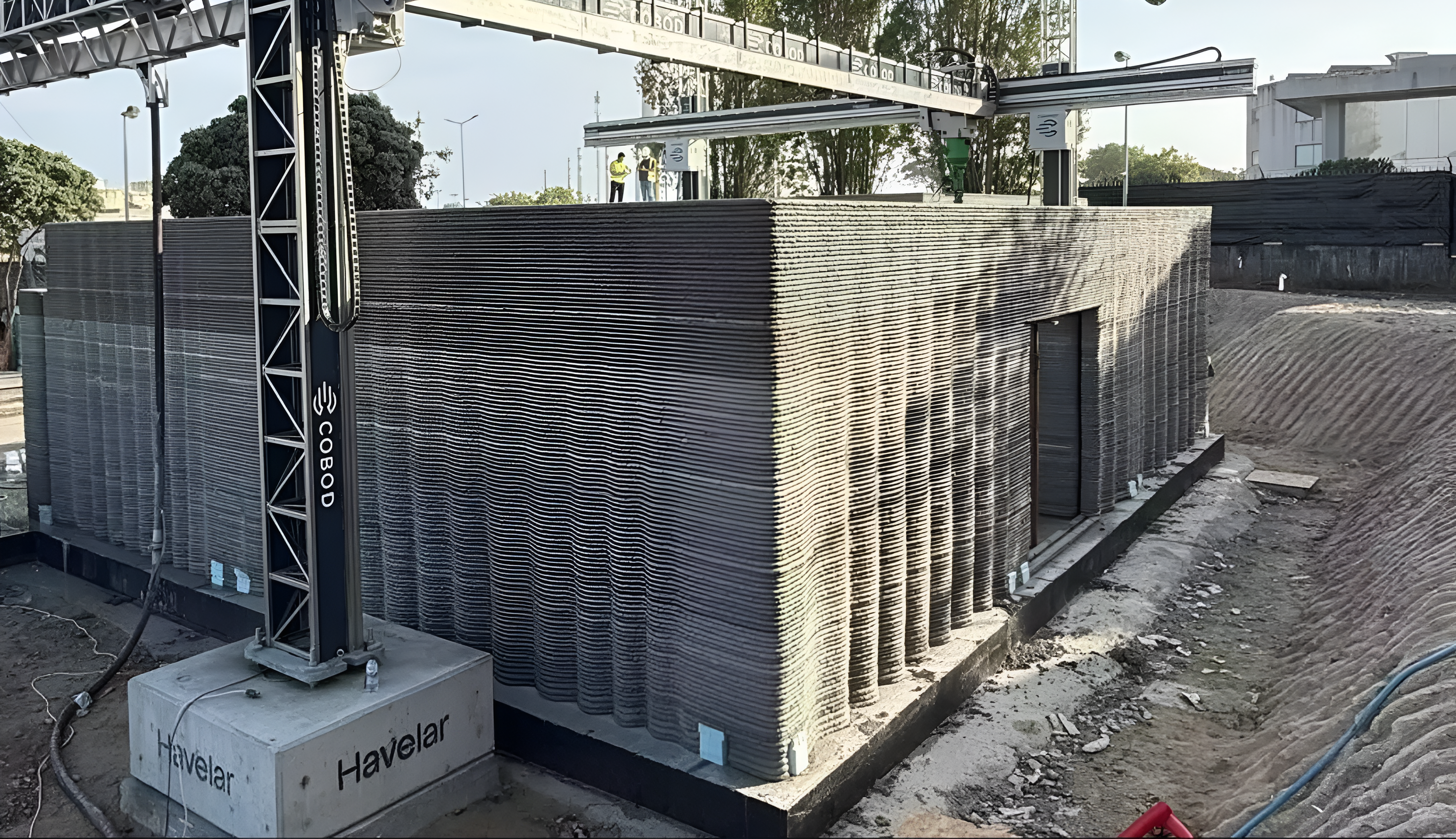
In 2024, the company built Portugal’s first 3D-printed house in just 18 hours. Through a partnership with Danish firm COBOD, its technique blends concrete with earth and clay – reducing both cement-related emissions and on-site accidents by requiring fewer workers.
Ferreira’s remarks come at a time when Portugal is facing strong pressure in the housing market. According to the Bank for International Settlements (BIS), house prices rose 13.7% in the first quarter of 2025 compared with the same period in 2024 – the highest rate among eurozone countries. Out of 60 markets reviewed, only North Macedonia recorded a larger increase.
Portugal’s housing price increase put it well ahead of Spain (9.3%), Slovakia (9%) and the Netherlands (6.8%), while several countries such as Austria, Finland, and Belgium saw prices decline. The BIS analysis was based on data from the National Statistics Institute (INE) and Confidencial Imobiliário.
The government is trying to ease the strain on the housing market by expanding affordable housing. It has announced that the European Investment Bank will finance the construction and renovation of 12,000 homes under the Programa Accessível (Accessible Program).
The €1.34 billion credit line – covering nearly 75% of the total investment of approximately €1.79 billion – is intended to increase the supply of housing at below-market rental prices across the country.
Featured image: Havelar is constructing a 500 m² public building in Matosinhos with 3D printing, as part of the ReCircular initiative, which promotes recycling and social inclusion. (Photo courtesy of Havelar/via Green Savers)




 Portugal Startup News