
Portuguese startup SpacEngineer is adapting space-grade technology for wider use, developing a cutting-edge gel that absorbs heavy impacts and protects critical structures from damage with applications across aviation, defense, and motorsport.
Impact2Space (I2S) was first engineered to withstand collisions with space debris traveling at more than 7 kilometers per second, a major challenge for satellites and other orbital structures, and has since been certified in the space sector for a protective shield tested at those velocities.
Building on that foundation, SpacEngineer is now adapting the same solution to other sectors where strong but lightweight protection is essential.
“I2S is a high-performance gel that can absorb the force of an impact and spread it across the surface, so the structure itself doesn’t break,” Eduardo Varandas, R&D engineer at SpacEngineer, told Portugal Startup News. “It has demonstrated encouraging performance not only in space structures but also against bird strikes, hail, and metallic fragments.”

Growing risks of debris and bird strikes
The context that drove SpacEngineer’s innovation is global. Space debris has become one of the most pressing challenges for agencies and private operators alike. The European Space Agency reports that more than 40,000 objects are now tracked in Earth orbit, with only about 11,000 still active satellites or payloads.
Millions of smaller, untracked fragments also circle the planet. Even tiny pieces can cause serious damage. NASA notes that orbital debris can reach speeds of about 29,000 kilometers per hour, almost seven times faster than a bullet and fast enough for a millimeter-sized particle to puncture spacecraft panels or shatter satellite components.
In aviation, the threat is different but no less significant. Bird strikes have long been recognized as a safety and economic risk. Global estimates put the annual cost of bird strikes to commercial aviation – including repairs, delays, and cancellations – at around $1.2.
While most bird strikes cause only minor damage, larger birds or encounters with flocks can cripple engines, shatter windshields, or severely damage wings. In rare but serious cases, they can threaten lives.
Several accidents show the level of risk. In 2009, the “Miracle on the Hudson” highlighted the danger when Captain Chesley “Sully” Sullenberger was forced to ditch U.S. Airways Flight 1549 in the Hudson River after both engines failed following a collision with geese shortly after takeoff from New York’s LaGuardia Airport.
More recently, in 2023, two Southwest Airlines Boeing 737 Max aircraft suffered bird strikes that led to smoke in the cockpit, prompting the Federal Aviation Administration (FAA) to open a review into the engines used on the jets.
On 29 December 2024, Jeju Air Flight 2216 crashed while attempting to land in South Korea, killing 179 people. Investigators later reported finding bird remains in both engines, suggesting a possible role in the accident, though the final cause is still under investigation.
Why I2S matters for aviation
Varandas explained that I2S outperforms traditional protective materials such as foams, metallic reinforcements, or rigid shields. The gel’s molecular structure is designed to dissipate the energy of an impact across a wider area, which reduces the risk of catastrophic failure.
At the same time, it offers the possibility of lowering overall weight by up to 10%, a gain that is particularly valuable in aviation where fuel efficiency is tied directly to aircraft weight. The material is also fire-resistant and can be integrated with carbon-fiber composites, which are increasingly used in new aircraft designs.
Certification for aviation use is a complex and time-intensive process, requiring exhaustive laboratory and field testing. SpacEngineer acknowledges the hurdles but says results so far have been “promising.” The company expects I2S could be approved for use on commercial fleets within the next few years, provided it continues to meet regulatory standards.
Tested under real conditions
Beyond laboratory demonstrations, SpacEngineer has sought to prove the gel’s performance in demanding real-world conditions. In collaboration with the Portuguese Army, it tested hybrid shields made of carbon fiber reinforced with I2S against 5.56 mm and 9 mm projectiles.
While the faster 5.56 mm rounds penetrated, the shields successfully absorbed the impact of the 9 mm bullets at close range. For SpacEngineer, the tests underscored the gel’s ability to reduce the force of impacts and limit damage to underlying structures.

According to Varandas, I2S has already been deployed in private aircraft, drones, military vehicles, and space structures. In conflict zones, it has been used to absorb shocks without compromising the integrity of vehicles or equipment.
More recently, the motorsport industry has approached SpacEngineer to explore its use in race car chassis and components, where collisions are frequent and safety margins tight. Early field trials in this sector have been “highly encouraging.”
Portugal’s growing role in aerospace and defense
SpacEngineer’s story also reflects a broader trend in Portugal’s innovation landscape. The company was originally founded in Coimbra and recently relocated to Braga, a city that has become a hub for technology companies and research institutions.
Portugal itself has been investing more in aerospace and defense. As a full member of the European Space Agency (ESA) since 2000, the country has expanded its role in satellite observation, Earth monitoring, and planetary defense through initiatives like the national Space 2030 Strategy.
Looking ahead
SpacEngineer has outlined a roadmap for expanding the technology, including lighter versions for aerospace and drones, integration with smart sensors for real-time structural monitoring, and environmental certifications.
The company is also building partnerships with manufacturers and operators across Europe, the United States, and the Middle East.
“SpacEngineer is open to strategic collaborations and firmly believes that sharing knowledge and technology is essential to accelerating innovation. The mission is clear: to develop solutions that protect structures and save lives,” Varandas noted.
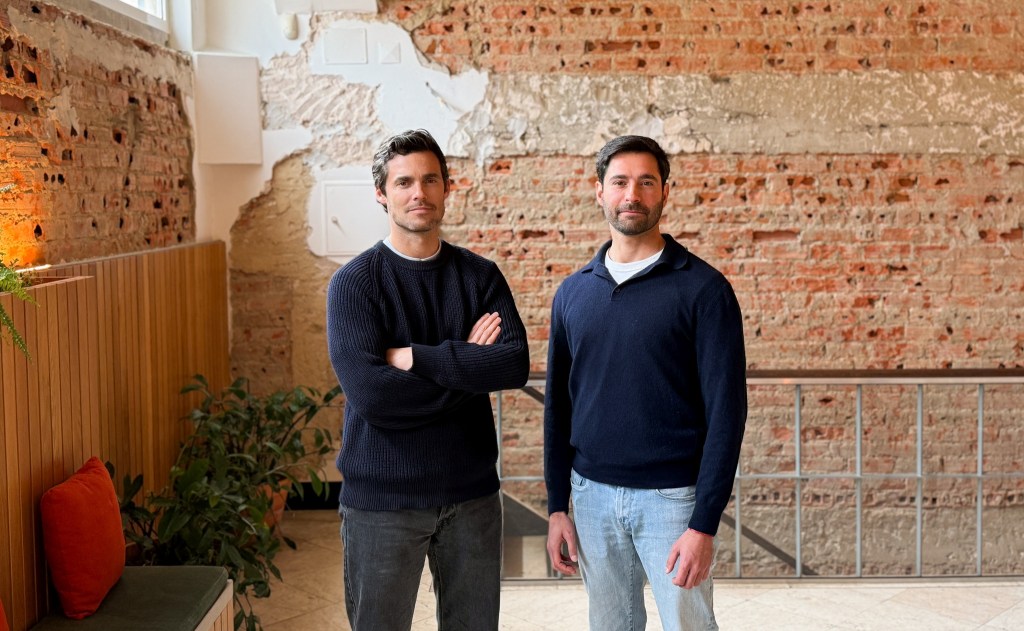
Featured image: From left: Eduardo Varandas, Mireia Esteve Rubio, and Nelson Oliveira, the team behind SpacEngineer, on a mission to make structures safer with space-grade protection. (Photo courtesy of SpacEngineer)

 Portugal Startup News