
Have you ever decided not to edit something you’ve written because you didn’t want it to come off, or be flagged, as AI-generated?
If so, you’re not alone, and I’d like to tell you there’s a third option: a middle ground between tools like ChatGPT and human writing that gives you both authenticity and a solid edit.
To understand that option, we need to recognize that not all AI is the same. Thanks to the popularity of ChatGPT, we tend to think of all online writing tools as generative AI.
But there are different types of AI, and while the scope of this technology is broad and complex, here’s a simplified way to look at it in the context of writing: generative vs. non-generative AI.
Generative AI, as the name suggests, is used for content generation and is the technology behind ChatGPT.
This is how generative AI writing tools work: you give them a prompt and they produce text accordingly. So when you hear that a piece of content is “AI-generated,” it means such tools were used in the process.
Tools that describe themselves with labels like “AI writer,” “AI text generator,” or “AI copywriter” fall into this category.
On the other hand, non-generative AI does not generate text from scratch. It only analyzes and processes existing text for the purpose the tool is designed for.
One great example is Google Translate. It doesn’t work with prompts like ChatGPT does. You simply enter the text, and it gives you the output as translated text.
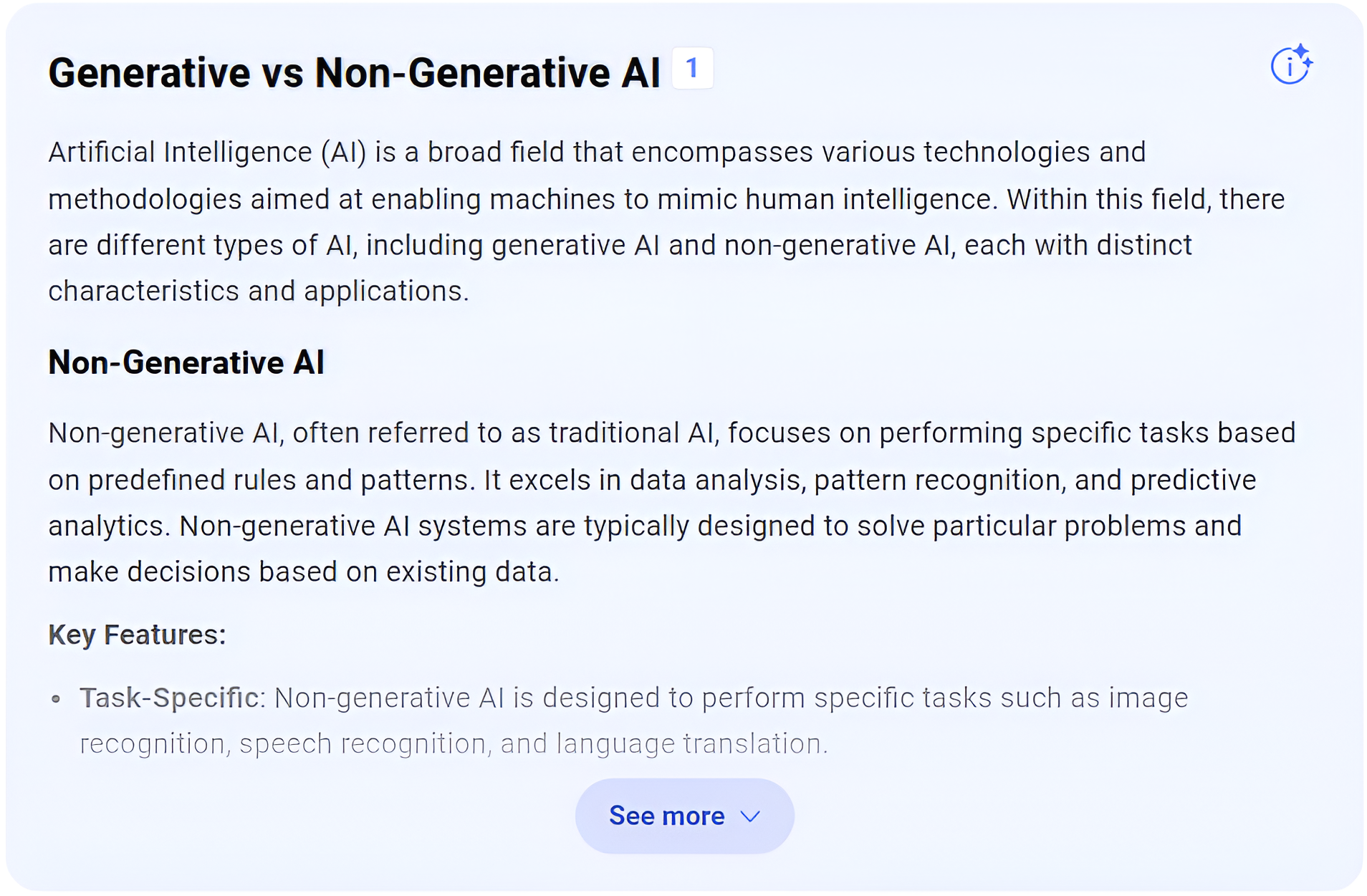
It’s also worth mentioning that many tools today combine generative and non-generative AI, with one type being more dominant depending on the specific feature being used.
For example, a tool like Grammarly uses generative AI for its AI writing functionality, but relies on non-generative AI for proofreading.
So why does this difference matter?
It’s important because it helps you choose the right tool for your writing needs, depending on the context.
Let’s imagine these scenarios:
You want to write an academic paper, and as you may know, most publications don’t allow the use of AI-generated content. So you need to write it manually to maintain academic integrity and improve your chances of publication. At the same time, you want to make sure your text is strong – not only in terms of spelling and grammar but also clarity, readability, and impact.
Maybe you’re writing an opinion piece for a top publication that clearly states in its guidelines that it doesn’t accept AI-generated content. But you’re not fully confident in your writing skills – whether you’re a native English speaker or not – so you’re looking for a way to properly edit your work without crossing any lines.
Or perhaps you’re preparing an email or social media post that you want to sound genuinely like you, not like a machine, but polished and impactful.
That’s where the trap lies if you don’t know the right tool for such contexts. You might leave your writing unedited in the name of authenticity and originality, or rely on proofreaders and grammar checkers that don’t provide the in-depth editing essential for effectively communicating your message.
So what’s the solution?
My go-to option is a tool that may not be as well-known as Grammarly or ChatGPT but offers one of the best, if not the best, middle grounds between generative AI and human writing. It’s called InstaText.
InstaText is an editing assistant, not an AI writer or content generator. It not only checks spelling and grammar but also enhances clarity, word choice, readability, and overall impact.

So it’s not ChatGPT because it does not use generative AI. It uses non-generative advanced language technologies, meaning it doesn’t write text from scratch but only edits what you provide – within a reasonable scope and never beyond recognition.
This not only preserves your voice, intent, and writing style but also helps you avoid plagiarism and hallucination issues typically associated with generative AI, since it doesn’t add new information and works only with your existing text.
And it’s not Grammarly – best known as a proofreader – because it goes beyond spelling and grammar checks to offer thorough editing.
This helps you properly edit your work while ensuring your text is not AI-generated, making it ideal for contexts where originality and authenticity matter.

In addition to dialect and tone adjustment, and an advanced personal dictionary – all available in a minimalist interface to reduce distractions – what truly sets InstaText apart is the interactive nature of its feedback.
This feature allows you to see suggestions and choose whether to accept or reject them, individually, in blocks, or all at once. Beyond putting you in control of the text, it also helps improve both your writing and cognitive skills over time.
That’s because if you pay attention to the edits and review them thoughtfully, you’ll expand your vocabulary and grammar knowledge, and learn how to make your writing more concise, clear, and effective. It’s like interacting with a human editor who provides real-time feedback, and this mindful engagement in the writing process offers well-documented cognitive benefits.

Research has long shown that writing actively has direct and indirect positive impacts on memory, critical thinking, creativity, verbal skills, and overall health – benefits we may lose if we over-rely on generative AI writing assistants and write passively.
In fact, a recent MIT study explored the potential impact of overusing ChatGPT in particular on cognitive abilities. Despite its acknowledged limitations, the authors found that dependence on this tool can negatively affect our ability to think, reason, and learn.
InstaText provides an antidote to these potential drawbacks by actively involving users through its unique editing experience, helping them improve their text, writing skills, and cognitive abilities while preserving their authenticity and originality.
It also integrates easily with over 20 popular apps and platforms such as Slack, Google Docs, Gmail, LinkedIn, Overleaf, and WhatsApp. This enables users to edit where they write, enhancing both speed and convenience.

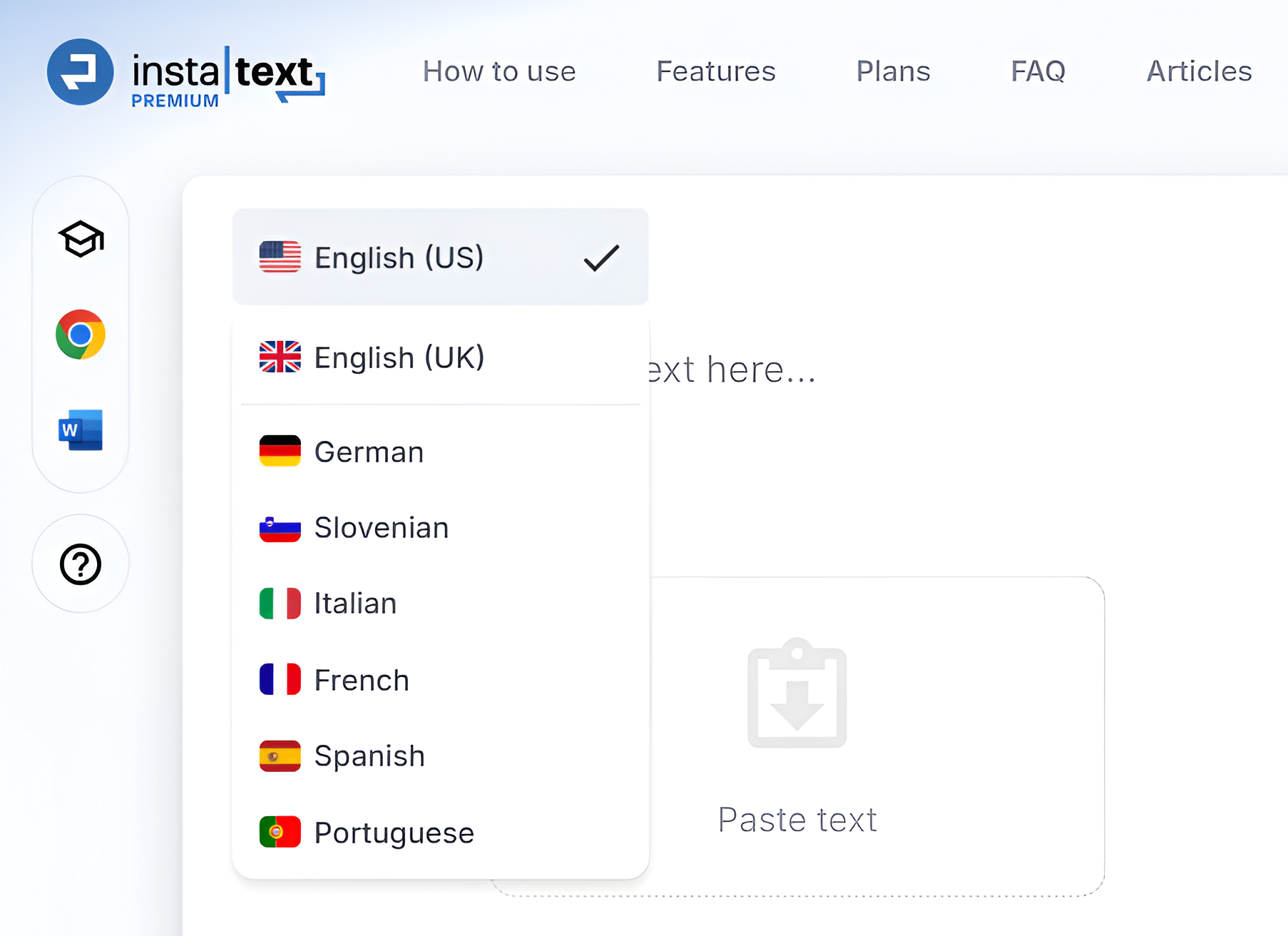
While English remains its professional-grade flagship service, InstaText now also supports editing in Portuguese, Spanish, Italian, French, and German.
So if you’re looking for an advanced editing tool that respects user privacy, authenticity, authorship, and originality while actively involving you in the writing process and offering language and cognitive improvement benefits, InstaText is the tool to try if you haven’t already.
Whether you’re a non-native or native speaker, you can use it to create content for any purpose that stands out from the generic writing we see everywhere today, while ensuring it’s polished and impactful.
It’s an investment that’s definitely worth it. But you don’t have to take my word for it – you can try it for free (no credit card required) in a few clicks on instatext.io and see for yourself how editing with InstaText looks and feels.
Having used InstaText for years myself, I believe you’ll find it like nothing else. For me, it’s the sweetest spot between human writing and AI that I’ve experienced so far, and I think you’ll see it as a whole new solution for your writing needs.
Disclosure: I currently work as a freelance writer for InstaText. I had been recommending the tool for years before joining the team, based on my own positive experience, and I expect to continue endorsing it in a personal capacity.




 Portugal Startup News