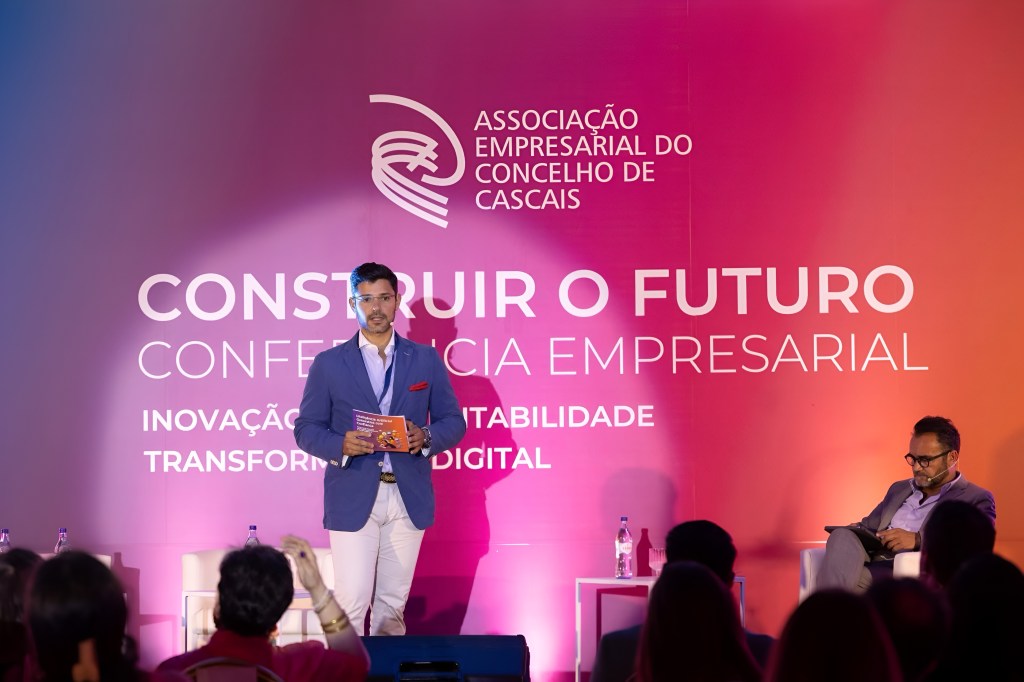
By Pedro Esteves – Author and product manager at Inteligência Artificial Hoje
The first thing I open every morning is a new, clean ChatGPT window. Sometimes I even end the previous day by leaving one ready, waiting for me to start typing again.
It’s funny because there are always two steps that mark the start of my day: typing my password to unlock the computer and immediately writing something inside ChatGPT. An idea, a note, a small question or a sentence I want to refine. It has become completely natural.
I don’t really think of it as using AI. For me, it’s just how I think now, through a kind of dialogue. ChatGPT isn’t a search engine or a productivity trick. It’s a personal assistant that listens, thinks with me, and helps me move from a vague idea to a concrete plan.
Generative AI is part of my daily rhythm. I use it to write, plan, prototype, teach, and build. It has changed how I create, not by replacing my work but by improving the way I reason. And I do all of this in Portuguese, because AI should adapt to our language and culture, not the other way around.
Where it all started
It all began on December 1, 2022, the day after ChatGPT was launched. I was in a master’s class in management. The topic was Research Methods and Data Analysis, and our professor was teaching us Python for processing large datasets.
That day he showed us something new, ChatGPT, and how it could instantly generate and explain Python code.
I was immediately hooked. That moment changed my path.
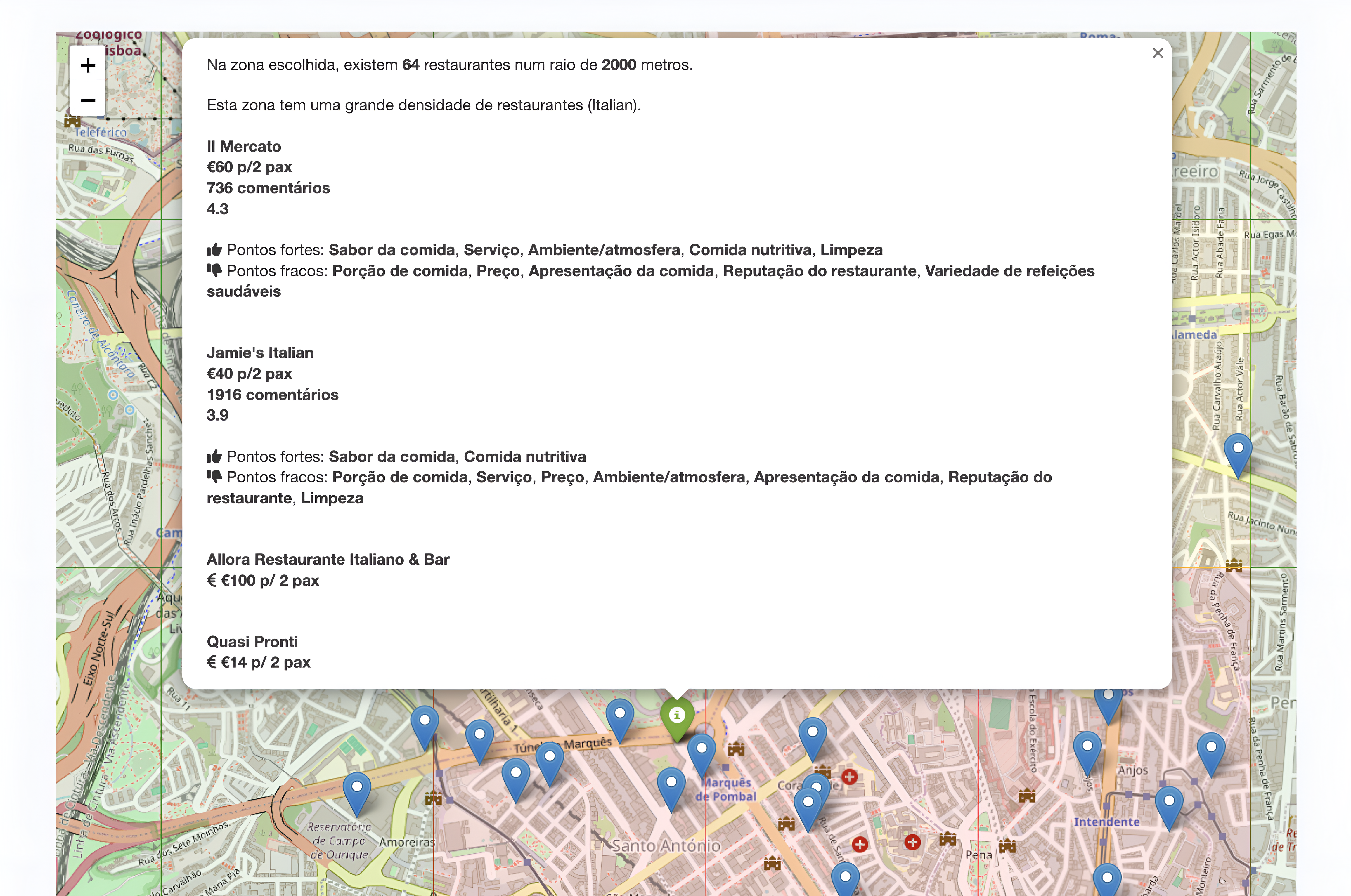
Later, this discovery became the foundation for my master’s dissertation, where I built a sentiment analysis prototype for restaurant reviews in Portugal. I used a dataset provided by a large platform and worked with a sample of that data to design, organise and test the system. ChatGPT helped me write and refine the code, which I ran in Google Colab using APIs from OpenRouter.
It was the first time I used AI not just as a source of knowledge but as a true collaborator, helping me think, write, code, and iterate.
Before AI: The no-code days
My work with technology didn’t start with artificial intelligence. It started earlier, when I worked at Kapten, a mobility platform that competed with Uber in Portugal and was later acquired by the Free Now group. That experience gave me a clear view of how technology, operations, and automation come together to make something work at scale.
Later, in early November 2019, I joined the founding team of a Portuguese startup called Doctorino. The idea was simple: build something like The Fork, but for healthcare professionals in Portugal.
We had just received one hundred thousand euros from angel investors and hired four people. By the end of November, I was the only one left. Naturally, I was promoted to management because there was no one else left to promote.
Our goal was to reach four thousand professionals by April 2020 and then open a new investment round. I didn’t reach that number alone, but we managed to launch a live platform, attract around fourteen hundred professionals, and build a working system.
Then COVID arrived.
That was the beginning of the end for Doctorino. Most of what we had built was based on in-person appointments, and during those first chaotic months no investor wanted to put money into anything. For a while it felt like the world itself had stopped.
Still, we didn’t give up immediately. We joined a national mental health support programme that connected people at home who were struggling with professionals who could help them. The initiative was supported by Casa do Impacto of Santa Casa da Misericórdia de Lisboa. I handled all the digital side of it: the platform, the systems, the support for online consultations.
That period taught me two things: that no-code tools could build real products, and that technology only makes sense when it helps real people.
Building trust in AI
My relationship with AI later led to another project: the book Inteligência Artificial Generativa com Confiança, which I wrote in Portuguese with the help of AI tools.
What I realised while creating it is that those YouTube videos and Instagram reels that promise you can write a book in one hour are, well, not entirely true. Either I’m slow – which I don’t think I am – or they’re simply exaggerating. In reality, the process took about three months from start to finish.
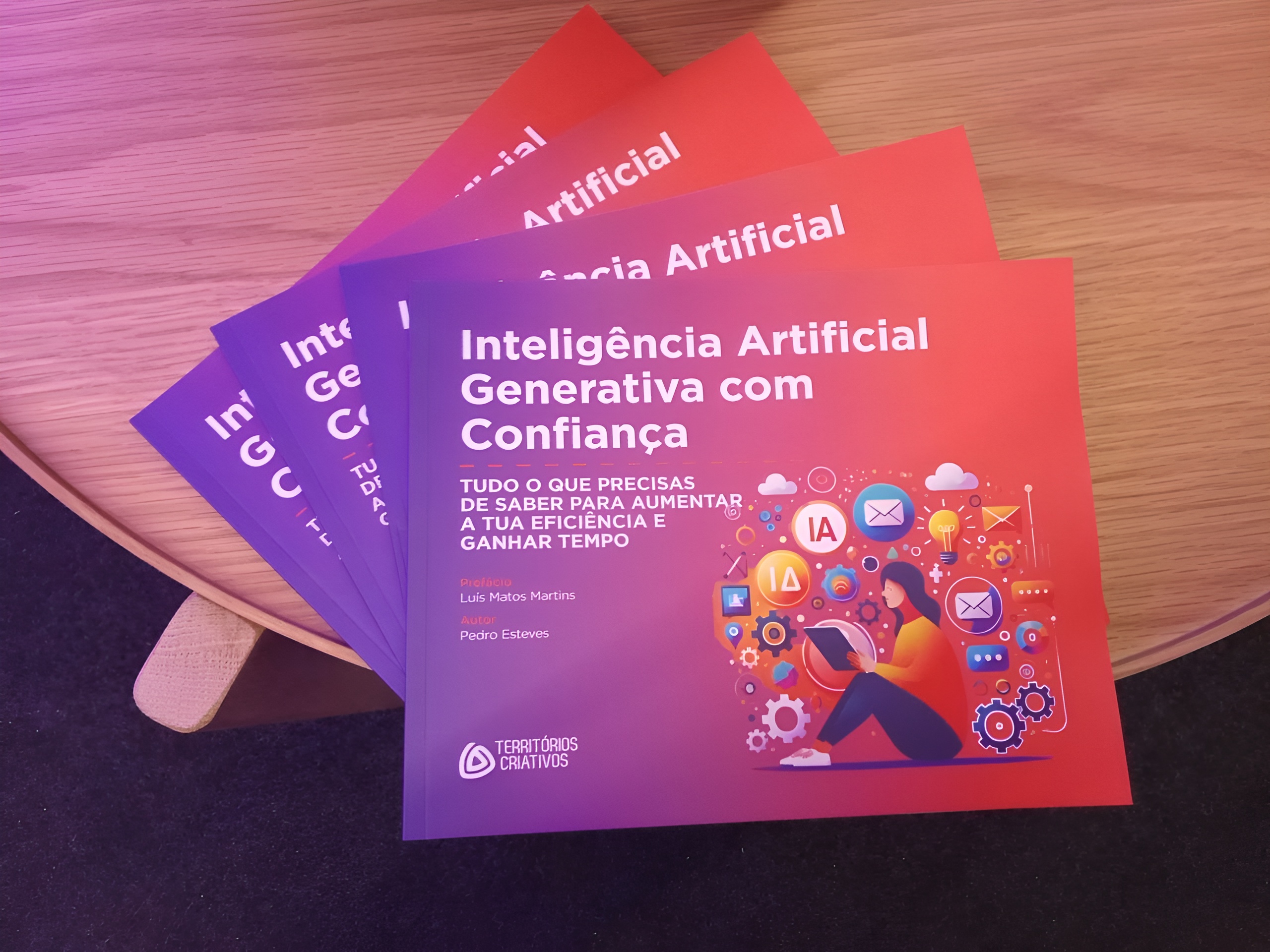
The book explores how to use AI responsibly and transparently, especially in education and business. It also became a test of my own ideas: using AI not to skip work, but to think better, organise content, and refine arguments.
This work has since become a reference for the ecosystem I’m building in Portugal, showing that it’s possible to use AI as both a creative partner and a tool for accountability.
From no-code to copilot
Before AI, I used no-code tools to build and automate processes. Now I use AI to design the systems themselves and to teach me how to improve them.
Back then I spent hours searching through blogs and YouTube tutorials. Now I can ask my AI assistant to guide me, explain code or write a first draft that I later refine. The answers aren’t always perfect, but they’re fast, contextual, and usually good enough to unlock new ideas.
This has completely changed my ability to build digital tools, even in areas where I’m not naturally skilled, like design.
Today, my projects, from Ferramenta IA para Empresas to Treinador de Prompts, are examples of how AI can help professionals and teams make decisions faster and learn more effectively, all in Portuguese.
I also created AQIA, an academy that helps professionals and companies integrate AI into their workflow through short, practical training. From start to pro.
All of these projects share the same idea: AI as a copilot. Not something that replaces us, but something that expands what we can do.
Closing thoughts
Generative AI didn’t just change how I think, it changed how I work.
Take websites, for example. Until recently, I needed someone skilled in HTML, CSS, and JavaScript to bring an idea to life. Now, I can design and build my own interactive pages using AI as a coding partner.
It’s not about replacing web designers or developers, but about merging roles that used to be separate. I can now do what once required two or three people, and do it faster, without losing quality.
The real change, however, is in the mindset. AI allows us to move from dependency to autonomy, from waiting for technical capacity to having creative immediacy.
This shift is especially clear in product management. In the near future, product sprints will involve fewer tech-heavy teams.
Engineering will remain essential, but focused on building robust, high-performance systems rather than producing every prototype or experiment. As operational teams gain agility with AI, they can now manage the full cycle, from idea to prototype to MVP, before handing projects over to tech for scaling.
And yet, even with all this progress, product management remains as relevant as ever.
Because building products is not about creating as many as possible or launching them faster. It is about creating the right products for the right market.
That principle does not change. What changes is how quickly we can get there.
To me, that is what living with a personal assistant really means: using AI not to replace expertise, but to enhance clarity, speed, and purpose in everything we build.
About the author:
Pedro Esteves is an educator specialized in entrepreneurship, business prototyping, and artificial intelligence. Holding a master’s in SME Management from the University of Algarve, he uses no-code and generative AI tools to help entrepreneurs prototype and validate ideas.
He serves as product manager at Artificial Intelligence Today (Inteligência Artificial Hoje), a platform connecting people and businesses to AI, and authored Generative Artificial Intelligence with Confidence (Inteligência Artificial Generativa com Confiança), a guide to using AI safely and effectively.
Featured image: Pedro Esteves, author and product manager at Inteligência Artificial Hoje (Photo courtesy of Pedro Esteves/LinkedIn)
Disclaimer: The opinions expressed in contributed opinion pieces are those of the authors and do not necessarily reflect the views of Portugal Startup News.

 Portugal Startup News