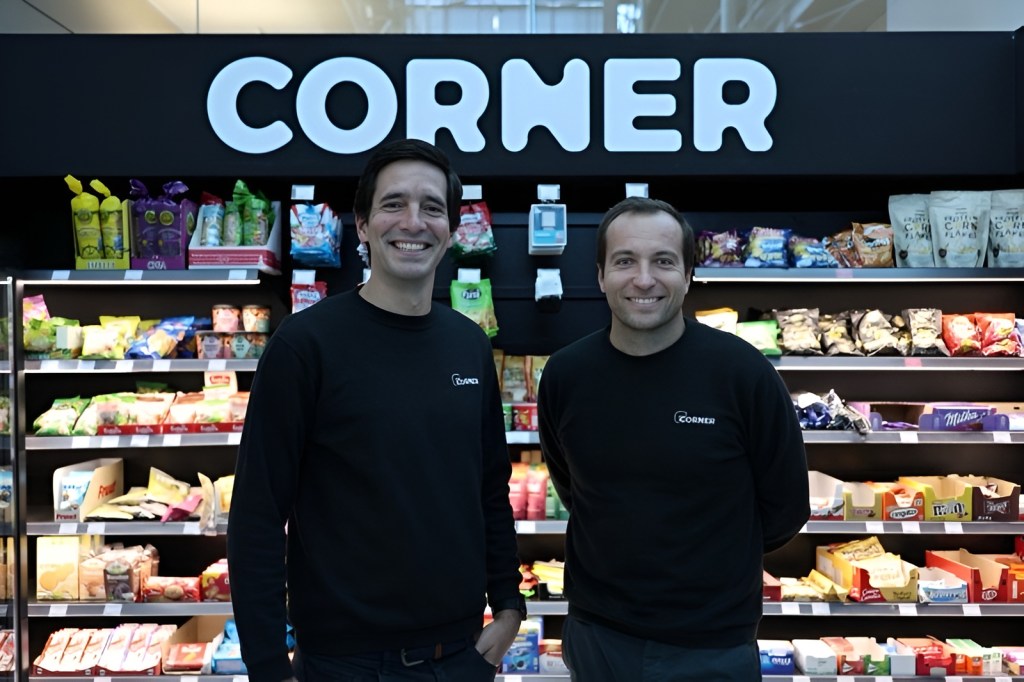
After validating its autonomous micro-market model in offices and residential buildings and expanding beyond Lisbon, Just Around The Corner has moved out of the bootstrapped phase to support consolidation and growth.
“Completing our initial phase with 100% founders’ capital and initiating the process of securing our first bank financing to fuel the next stage of growth was one of the key milestones in 2025,” co-founder Miguel Murta Cardoso told Portugal Startup News. Further details were not specified.
Founded in 2025, Corner operates autonomous convenience stores inside office buildings and residential condominiums, offering 24/7 access to everyday essentials including fresh and frozen food, groceries, beverages, hygiene, and cleaning products.
The company positions its micro-markets as a modern alternative to traditional vending machines, bringing convenience-store variety and flexibility directly into living and working environments.
Corner is led by a complementary founding team. Cardoso is involved full time, bringing extensive experience in the retail sector, with leadership roles spanning strategy consulting, operations, marketing, and retail technology.
In addition, co-founder José Pedro Granate contributes strategically while maintaining a parallel professional role, drawing on prior experience in strategic consulting and operations at companies such as Amazon.
According to Cardoso, 2025 marked a decisive shift for the company. “It was the year Corner moved from vision to reality. What started as an idea became a fully operational network of autonomous micro-markets in office spaces and residential buildings.”
The company also expanded into new geographies, including a successful launch in Porto, which Cardoso said demonstrates that its model is scalable not only across Portugal, but also internationally.
Behind that momentum was a strong emphasis on execution to ensure a “consistent and reliable” user experience, he noted. “We focused heavily on building robust operational processes, from daily replenishment and quality checks to inventory control and maintenance.”

Cardoso added that the company also saw strong validation from both corporate and residential users, with high engagement and recurring usage across locations.
Built around adoption, not friction
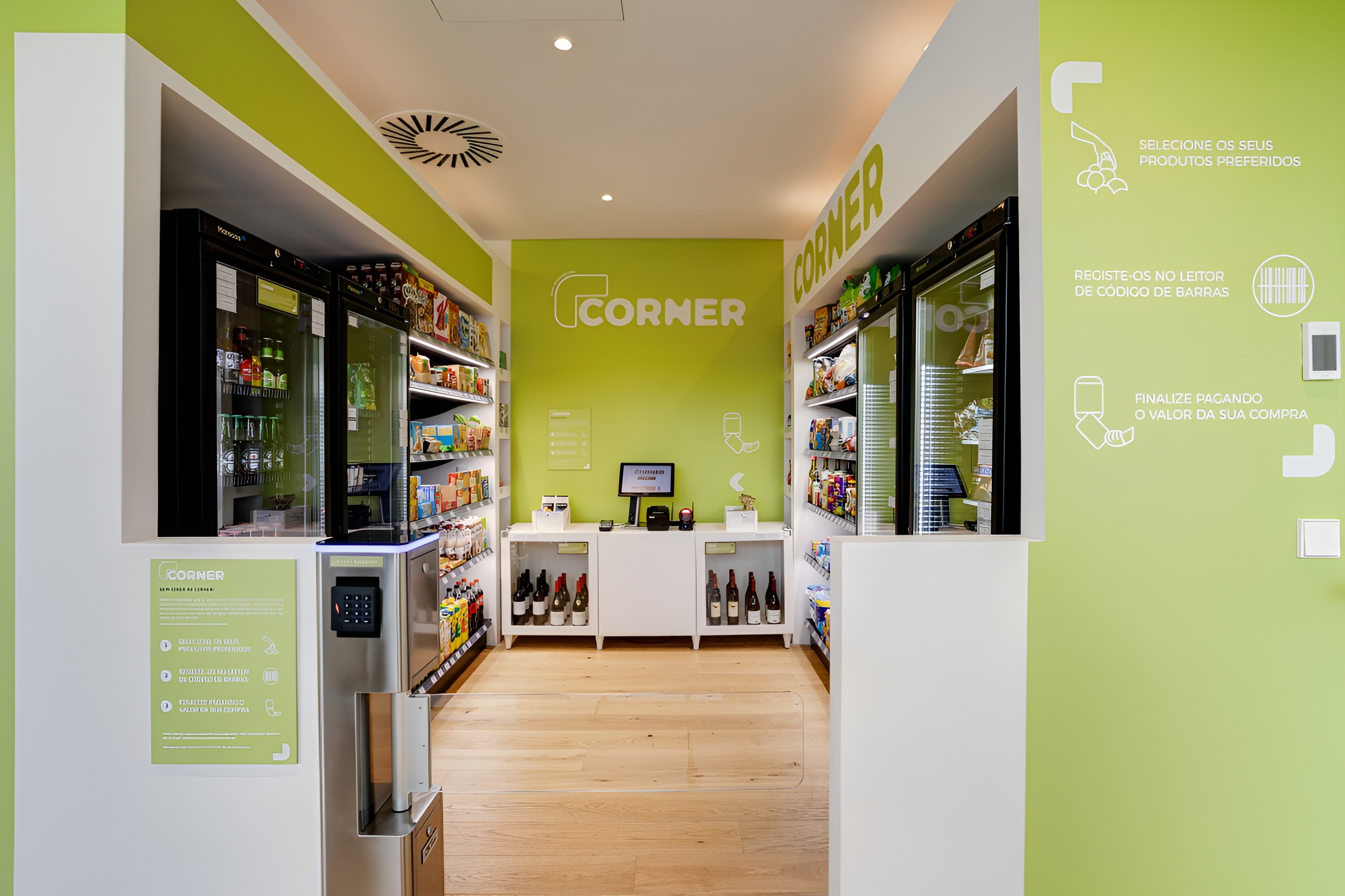
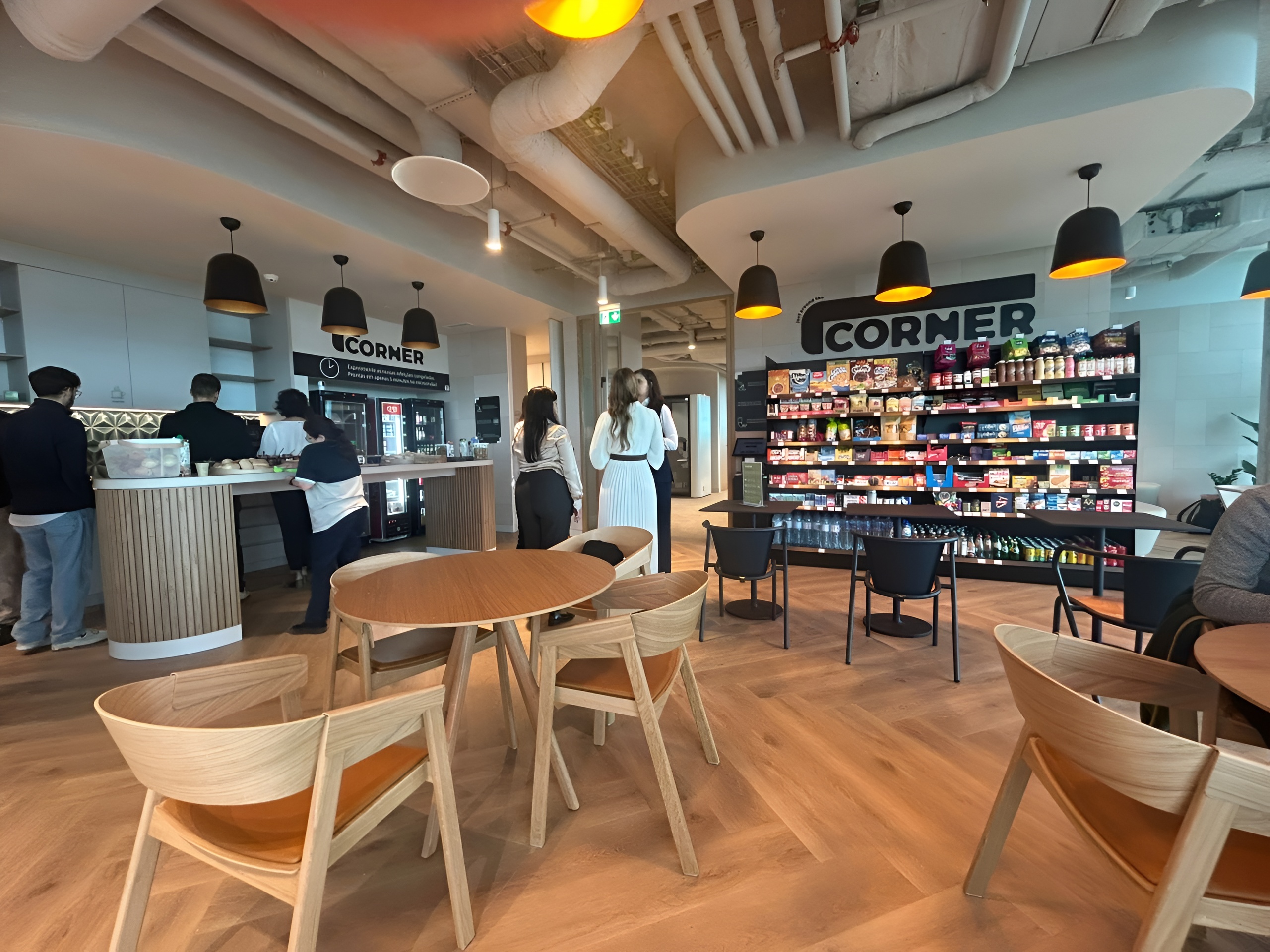
Corner’s stores typically occupy between 12 and 16 square meters and operate through a self-checkout system that integrates automated payments, remote monitoring, and inventory management. They fit flexibly into underutilized spaces.
Corner has hundreds of products registered across its stores, reflecting a broader and more curated assortment than traditional vending formats.
A defining feature of the model is its low barrier to adoption for property owners. Corner requires “zero upfront investment” from office buildings or residential condominiums, handling equipment, installation, replenishment, operations, and ongoing maintenance end to end.
Its client base includes Infinity Tower, Ernst & Young, Millennium bcp, Impresa Group, OutSystems, and Siemens.
Micro-market growth within unattended retail
Corner’s expansion comes as micro-markets and smart stores continue to gain share within the global unattended retail sector, driven by broader assortments, higher-value transactions, and expanded use cases beyond traditional vending.
Industry data shows that a typical micro-market carries 150 to 400 products, compared with around 40 in a vending machine, enabling a stronger mix of fresh and ready-to-eat food. As a result, nearly 30% of micro-market sales in 2024 came from higher-ticket categories, versus 16% for vending.
Estimates also suggest that micro-markets can generate more than 10 times the sales volume of a traditional food and beverage vending machine. This uplift is supported, in part, by higher spending per visit, with the average ticket size for a micro-market around 27% higher than that of a vending machine.
Although still early stage globally, with fewer than 200,000 micro-markets worldwide, adoption is accelerating in Europe as well, where newer unattended formats are expanding faster than the broader vending market.
Entering a consolidation phase
Cardoso said Corner saw stronger-than-expected results in 2025. “Our first-year store performance has, on average, exceeded our own business plan expectations,” he said, without elaborating further.
According to him, the early traction points to both the robustness of the model and the size of the market opportunity.
Looking ahead, the company sees 2026 as a year focused on “consolidation and responsible scaling.”
Corner’s co-founder says priorities include deepening the company’s presence in residential buildings, where adoption has been particularly strong, and expanding further into office environments in response to growing demand for autonomous and healthy convenience solutions.
Operational efficiency will remain central. “We’re focusing on inventory accuracy, logistics optimization, and reducing waste,” he said, adding that strengthening and stabilizing operations in current geographies is essential before broader expansion.
While Portugal remains the immediate focus, the company has previously said it believes the model is well suited to other dense urban markets, with potential in cities across Spain, France, and Central Europe, as well as interest expressed from countries such as Switzerland and Cape Verde.
“Corner is something people don’t yet know they need, but once they try it, they can’t imagine living without it. It brings convenience and simplicity into daily life in a way that quickly becomes essential,” Cardoso said, adding that the company’s next phase will be anchored in “execution, operational discipline, and customer proximity.”
This article was updated on January 11 to clarify that Corner is pursuing bank financing rather than an equity fundraising round.
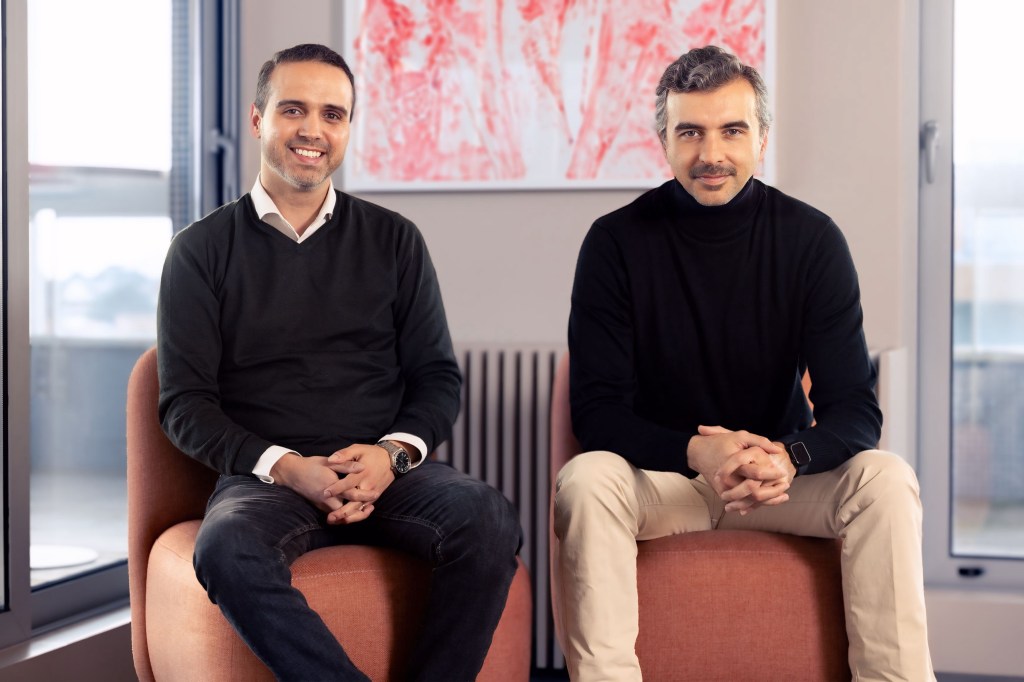
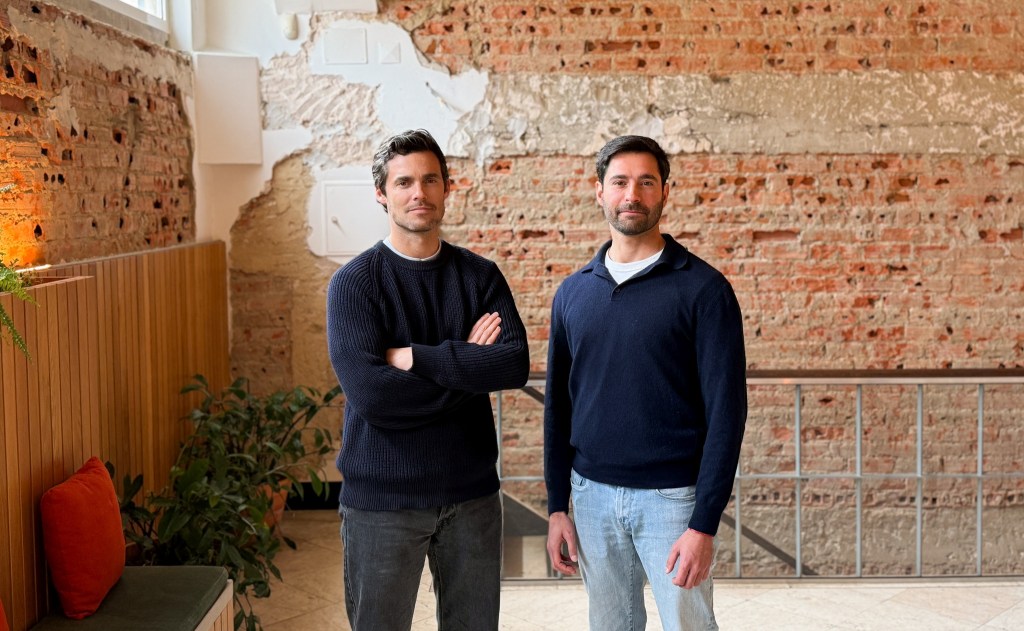
Featured image: Miguel Murta Cardoso (left) and José Pedro Granate, co-founders of Just Around The Corner, lead the company’s vision of making everyday convenience more accessible. (Photo courtesy of Corner)


 Portugal Startup News