
Spinnable, the “AI worker” platform founded by former Unbabel CEO Vasco Pedro, has removed its waitlist and opened public access to its product, which aims to help companies scale without increasing headcount.
In a LinkedIn post, Pedro, CEO of Spinnable, said users can now sign up and create their first AI worker “in minutes,” marking the company’s transition from private beta to broader availability.
The problem Spinnable is trying to solve is that growing teams often means higher costs and added complexity, while repetitive administrative work pulls focus from higher value tasks.
And it distinguishes itself from generic AI tools by going beyond simple prompt-based assistance.
“Today’s AI tools wait to be told what to do. They can’t own a process, follow up on their own, or show up where your team works,” the company notes on its website, positioning its solution as a more autonomous alternative that requires no technical expertise or technical setup.
From private beta to wider launch
Pedro said Spinnable initially launched in private beta several months ago with a selective group of founding users.
The product concept, he wrote, was based on a specific question: whether businesses could hire an AI that behaves like a teammate rather than a chatbot, taking ownership of tasks across channels such as email, Slack, and LinkedIn.
According to Pedro, feedback from those early users shaped the platform’s product direction, leading to what the company is now calling Spinnable 2.0.
Spinnable 2.0 and new product updates
Pedro described Spinnable 2.0 as “faster, more stable, easier to use, and more powerful,” highlighting several product additions.
These include Worker Templates, which Pedro said are designed to help users get an AI worker in minutes rather than spending hours on setup. He also pointed to Webhooks, aimed at allowing workers to react automatically to real-world events.
Another addition is an Oversight Dashboard, intended to give users visibility into what their AI workers are communicating.
Pedro also introduced a Skills Section, meant to clarify what workers can do and how they develop over time, as well as One-Click Tool Setup, which he said is designed to reduce friction in connecting tools.
What Spinnable’s AI workers can do
The company says its AI workers are designed to learn how a business operates, communicate with team members, and complete tasks without constant supervision.
Spinnable also emphasizes autonomy as a core feature, stating that its workers can schedule tasks, start conversations, check calendars, send emails, run recurring tasks, and take action after being set up.
Communication channels and integrations
Spinnable says its workers easily integrate into and operate inside existing business channels, without requiring users to learn new tools or switch to new tabs.
The company lists integrations with tools including Gmail, Google Calendar, Google Docs, Notion, Slack, WhatsApp, HubSpot, and Excel, and says additional integrations are being added over time.
How the onboarding process works
Spinnable’s onboarding flow is structured as a three-step process: users describe the role they want, the platform matches them with an AI worker, and then users delegate tasks and iterate by giving feedback.
The company positions its platform as a multi-worker system rather than a single AI assistant. Users can hire workers for different roles, such as an executive assistant, sales representative, or research and data analyst, each with their own context and tools.
Spinnable offers paid plans starting at $50 per month, according to its website, with higher tiers also available, offering increased limits and, at the top tier, unlimited active AI workers and priority support.
Permissions and security model
The company also highlights access control as part of its product design. Users can configure permissions per worker and choose whether each worker uses its own account or accesses tools through the user’s account.
Spinnable presents this as a way to limit access and enhance security depending on each worker’s responsibilities, stating, for example, that a sales worker may not need access to a calendar, and a scheduling worker may not need access to a CRM.
Pedro framed the waitlist removal as a milestone, describing Spinnable’s direction as building “the future of work,” a goal the company aims to achieve “one AI worker at a time.”
See also: Ex-Unbabel CEO launches Spinnable to help companies hire AI agents
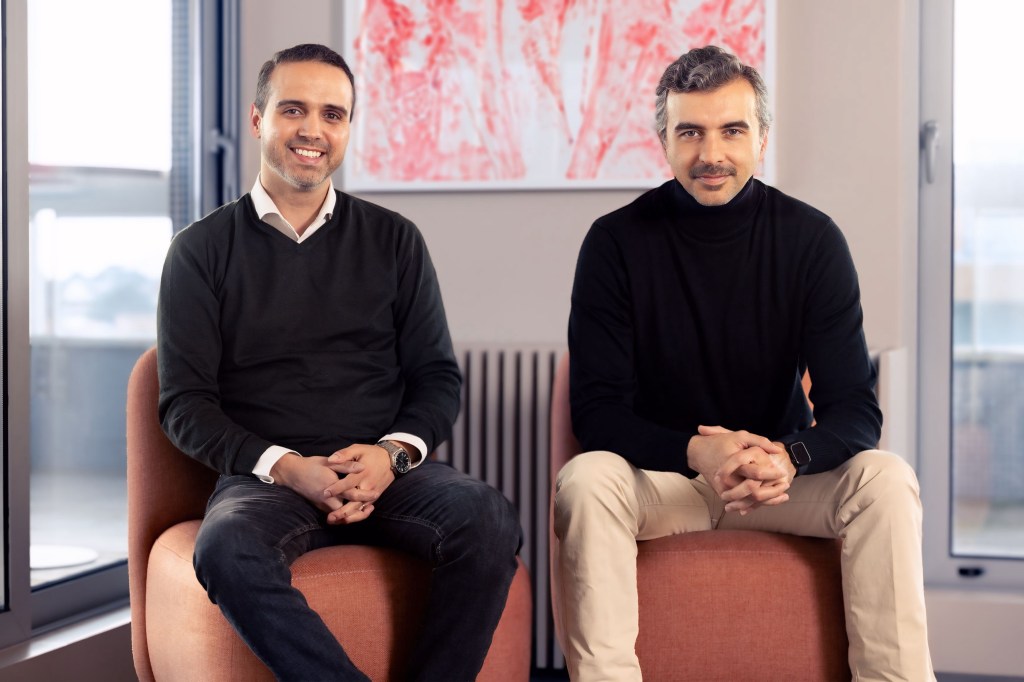
Featured image: Spinnable co-founder and CEO Vasco Pedro (Photo courtesy of Vasco Pedro/LinkedIn)


 Portugal Startup News