
Your supermarket basket reveals your habits, shapes markets, and may even hint at how you age. Yet most of that insight remains invisible to you and the businesses trying to understand you.
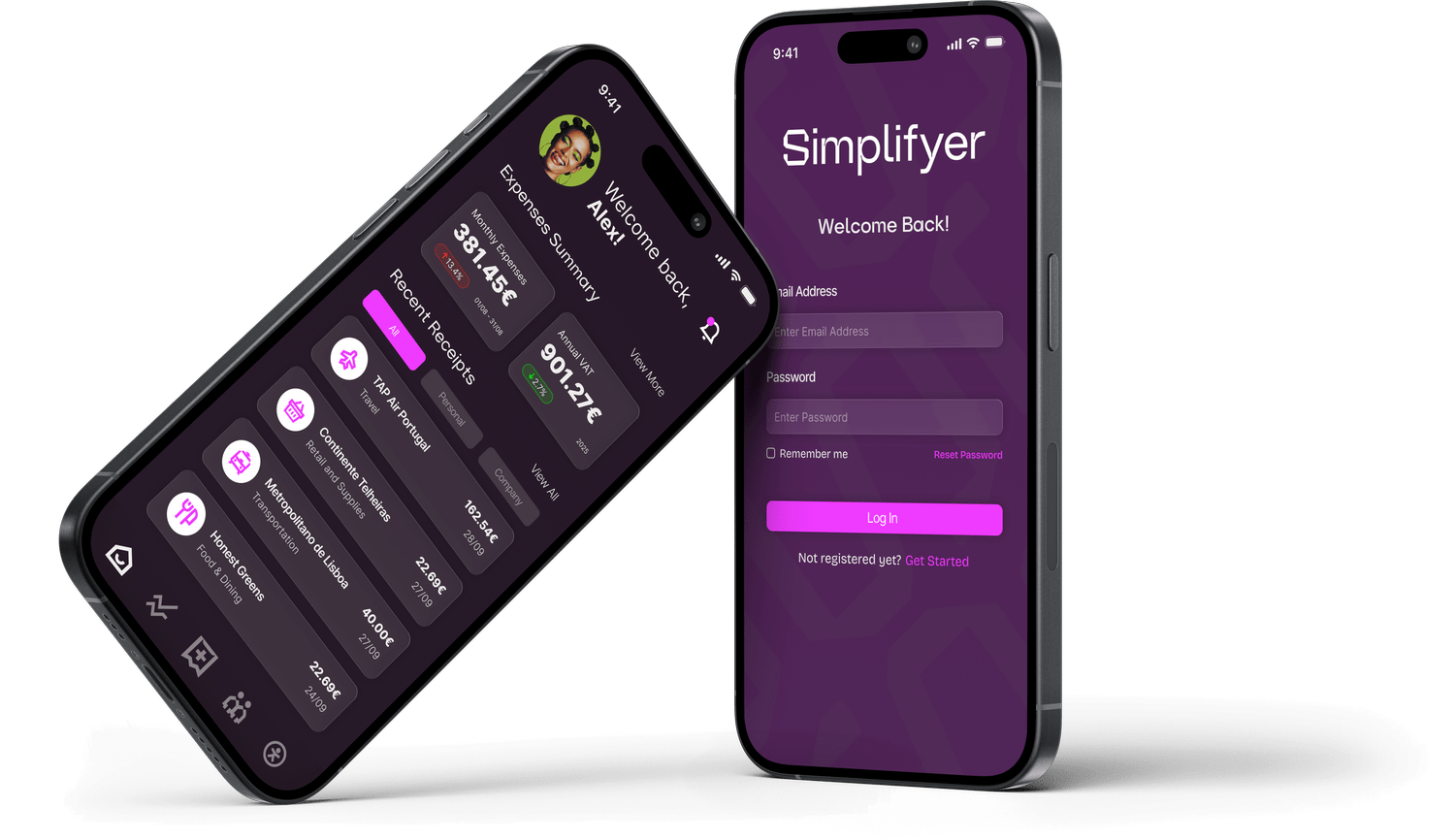
Simplifyer is trying to change that. Founded by Isabel Carapeta, the platform is building what she describes as “an AI-native system to understand real-world consumption.”
Traditional finance tools, she told Portugal Startup News, “typically show spending at the merchant level, not at the product level.” By contrast, Simplifyer focuses on item-level data, turning everyday purchases into structured intelligence that reflects real behavior rather than high-level summaries.
This approach reveals patterns in habits, routines, and preferences over time. The goal, particularly for Gen Z users, is not rigid budgeting, but information and autonomy.
“The mission is less about controlling spending and more about making financial behavior visible,” says the CEO of Simplifyer, noting that once people understand how they consume, more conscious decisions tend to follow.
Beyond the individual, Simplifyer is positioning itself as a consumer intelligence layer. The same data that helps users understand their lives can be aggregated and anonymized to help businesses understand real behavior across markets.
“What many businesses still underestimate is how much intelligence is hidden in everyday transactions outside their own ecosystem,” Carapeta says.
In her view, many companies still rely on surveys or panel data, but transaction data captures what people actually do, allowing trends to be identified much earlier, often before they appear in traditional market research.
Over time, Simplifyer connects consumption to a broader lens on how people live. “Consumption is a lifestyle signal,” she notes, pointing to purchases across supermarkets, pharmacies, and everyday retail that carry implications for wellbeing, prevention, and longevity.
Simplifyer is therefore building infrastructure not only for understanding spending, but for understanding behavior at scale.
Currently focused on Europe, including Portugal, Spain, France, Germany, and the UK, the company is rolling out through iterative beta cycles rather than a single launch, supported by a waitlist of around 25,000 users.
Carapeta – recognized by Forbes Portugal 30 Under 30 in 2025, the Rising Female award by Unicorn Factory Lisboa in 2025, and the Portuguese Women in Tech award in 2023 – frames the vision simply: everyday data should create value for the people behind it, while also benefiting the businesses that serve them.
Read the full interview below for more on Simplifyer’s product vision, AI-driven approach, business model, Gen Z behavior, and its rollout and expansion plans.
What inspired you to create Simplifyer, Isabel?
Simplifyer emerged from a very simple observation: despite living in an increasingly digital economy, the way we understand consumer behavior is still surprisingly incomplete.
Every day, millions of purchase decisions happen in the physical world – in supermarkets, pharmacies, restaurants, retail stores – yet most of the systems companies rely on to understand consumers are built on partial signals: surveys, loyalty programs, panel data, or online tracking. These sources are useful, but they only capture fragments of reality.
Receipts, on the other hand, contain a remarkably rich and underutilized layer of information. They reveal what people actually buy, when they buy it, how much they pay, how their preferences evolve, and how different products interact within the same basket. In other words, receipts are a direct record of real economic behavior and, increasingly, of how people live.
That is where the vision for Simplifyer began. I realized that this layer of information was largely invisible to both consumers and businesses. Individuals accumulate thousands of purchases over time but rarely have a clear view of their own consumption patterns. At the same time, brands and retailers struggle to understand real-world purchasing behavior beyond their own channels.
But there is also a broader implication. Consumption is a lifestyle signal. What people buy in supermarkets, pharmacies, wellness categories, and everyday retail often says a great deal about their habits, routines, priorities, and, ultimately, their long-term health. In that sense, consumption also shapes longevity.
Simplifyer was created to transform this overlooked data layer into structured intelligence. By leveraging artificial intelligence, our platform turns everyday purchases into meaningful insights.
For individuals, that means gaining clarity over spending, habits, and lifestyle, and building a smarter relationship with money and everyday decisions. For brands, retailers, and innovators, it opens a new window into how markets actually move, grounded in real transactions rather than assumptions. And in the longer term, it creates the foundation for understanding not just how people spend, but how they live, age, and make the small decisions that shape long-term outcomes.
At its core, the inspiration behind Simplifyer was the belief that everyday consumption contains one of the most powerful and underused datasets in the economy, and that if we learn how to read it properly, we can generate far better intelligence for business, for individuals, and for the future of longevity.
At first glance, Simplifyer might look like another finance app. What are the top three things that truly set it apart once people start using it?
At first glance, Simplifyer might look like a finance app, but in reality, it has very little to do with traditional personal finance.
We are not building a tool to track money. We are building an AI-native system to understand real-world consumption.
The first thing that sets Simplifyer apart is that it works at the level of what people actually buy, not just where they spend. Most financial apps analyze transactions at a very high level. Simplifyer interprets item-level purchase data, turning everyday consumption into structured intelligence. Over time, the system learns habits, detects patterns, and builds a much deeper understanding of behavior.
The second difference is that Simplifyer is a consumer intelligence layer, not a personal finance tool. The same data that helps individuals understand their lives also creates a completely new dataset about how markets move. When aggregated and anonymized, this becomes incredibly valuable for brands, retailers, and innovators who want to understand real consumer behavior rather than relying on proxies.
The third element, and the most forward-looking, is that Simplifyer connects consumption with lifestyle and longevity. What people buy in supermarkets, pharmacies, and everyday retail is one of the strongest signals of how they live. These patterns go far beyond spending. They reflect habits, routines, and the small decisions that shape long-term health.
So while it may look like a finance app at first glance, Simplifyer is actually building the infrastructure layer for understanding consumption and, ultimately, how people live and age.
Simplifyer was founded in 2025, yet it has already received wide recognition. What do you attribute this recognition to?
I think the recognition Simplifyer has received so far comes from the fact that the problem we are addressing is both extremely obvious and still largely unsolved. Every day, people generate an enormous amount of data through their purchases, yet the world still has a very limited understanding of what consumers actually buy, how habits evolve, and what those patterns reveal about behavior, markets, and even lifestyle. When people grasp that this intelligence has been hiding in plain sight, the opportunity becomes immediately compelling.
I also believe the vision resonates because Simplifyer sits at the intersection of several major shifts. On one side, artificial intelligence is making it possible to structure and interpret complex real-world data at scale. On the other, there is growing demand for better consumer intelligence, greater transparency around data, and new ways of understanding how people actually live. Increasingly, there is also interest in the relationship between consumption, wellbeing, and longevity. Simplifyer is proposing a new layer of intelligence for understanding everyday life.
Another important factor is execution. From the beginning, I have been very intentional about testing the thesis in real conversations, ecosystems, and markets. We have engaged with users, investors, startup programs, strategic partners, and innovation communities across Portugal, the UK, and Europe more broadly. That continuous exposure has helped refine the company, strengthen the narrative, and create visibility among people who understand the scale of the opportunity.
And finally, I think there is a strong human dimension to the story. Simplifyer is built around something universal: everyone consumes, everyone makes daily choices, and those choices say more about our lives than most systems are able to capture today. When you explain that everyday purchases can become a source of intelligence not only for business, but also for helping people better understand themselves and, over time, even the patterns that shape health and longevity, the vision tends to resonate very quickly.

The app serves both users, especially Gen-Zs, and businesses. Which side do you consider your main focus at this stage – and how do you see the two complementing each other?
At this stage, our main focus is clearly the consumer side, especially Gen-Z users. The reason is simple: Simplifyer’s long-term value comes from building a new layer of intelligence around real-world consumption, and that can only happen if people actively use the product in their everyday lives.
For us, the consumer product is the foundation of the entire system. We need to create something genuinely useful for individuals, a product that helps them better understand what they buy, how they live, and the habits hidden inside their everyday choices. That is what allows the dataset to emerge organically and at scale.
Gen-Z is a particularly important audience because they are digital-native, highly receptive to AI-driven experiences, and far more open to rethinking how their data can create value. They are also a generation that cares deeply about personalization, transparency, self-knowledge, and increasingly, health and longevity. When Simplifyer becomes a meaningful companion for Gen-Z, we are building a highly engaged behavioral data layer from the ground up.
The business side is therefore not separate from the consumer strategy. As the consumer layer grows, Simplifyer begins to generate aggregated and anonymized intelligence about purchasing behavior, lifestyle patterns, category trends, and over time even signals linked to wellbeing and longevity. That becomes extremely valuable for retailers, brands, researchers, and other players trying to understand how people actually live and consume.
So rather than seeing this as two markets, we see it as a compounding flywheel. Consumers get a product that helps them better understand their lives, habits, and decisions; businesses gain access to a new layer of real-world intelligence. The more value we create for users, the stronger the dataset becomes and the stronger the dataset becomes, the more valuable Simplifyer is for the market.
What kind of insights have you gained so far from your waitlist – for example, who are the people signing up, what trends or needs stand out most to you, and if possible, can you share how many people are currently on the waitlist?
Even at the waitlist stage, we’ve already learned quite a lot about who is drawn to the idea behind Simplifyer and what they are looking for. Today, we have around 25,000 people on the waitlist, which has given us a meaningful early signal about how the concept resonates with users.
First, the audience signing up is highly digitally literate and curiosity-driven. Many people on the waitlist are early adopters who are comfortable experimenting with new technology, especially AI-enabled products. A large share comes from younger demographics – students, young professionals – and people working in technology, marketing, consulting, or creative industries. They are used to digital tools, but they often feel that existing finance apps don’t actually help them understand their real behavior.
Second, the strongest signal we see is a shift from control to understanding. Traditional apps tend to focus on controlling, but people are not necessarily looking for stricter budgeting tools. They want clarity, to understand what they buy, how their habits evolve, and how their everyday choices connect to their lifestyle.
We also see a growing openness to AI as a layer that interprets daily behavior. When users realize that their purchases can be transformed into structured insights, the reaction is often curiosity: they want something that can surface patterns, anticipate needs, or simply make sense of everyday behaviours, rather than tracking numbers.
Finally, and this is particularly interesting for our long-term vision, many users intuitively connect consumption with how they live. There is clear interest in understanding not just spending, but habits around food, routines, and wellbeing, which naturally opens the door to insights related to lifestyle and longevity.
So beyond the number itself, what the waitlist shows us is that there is a growing appetite for tools that turn everyday consumption into meaningful, actionable intelligence about how people live.
When do you plan to officially launch, and what are your main priorities before that happens?
We are taking a more progressive approach than a traditional single launch date. Simplifyer is being introduced through soft launches and iterative beta testing, which allows us to learn from real user behavior and improve the product continuously.
Before expanding access more broadly, our main priority is making sure the intelligence layer is highly reliable. Because Simplifyer depends on interpreting complex real-world purchase data, accuracy, consistency, and product trust are absolutely critical.
We are also focused on refining the user experience so that the product feels intuitive, useful, and genuinely valuable in everyday life. At the same time, we are strengthening the underlying infrastructure to ensure the platform can scale in a robust way.
So for us, launch is less about one big moment and more about building a smarter, stronger product through disciplined iteration.
From your experience, what’s the biggest mistake Gen-Z tends to make when managing money – and how does Simplifyer aim to change that?
Contrary to what people often assume, I don’t think the biggest mistake Gen-Z makes is simply overspending. In my experience, the biggest issue is lack of visibility. Many Gen-Z consumers are extremely comfortable with digital payments, subscriptions, and mobile wallets, but that convenience often creates distance from their actual consumption patterns. Money leaves the account quickly and frictionlessly, yet people rarely have a clear understanding of what they are truly buying over time.
Traditional finance apps don’t fully solve this problem because they typically show spending at the merchant level, not at the product level. Seeing that you spent €120 at a supermarket doesn’t tell you whether that went to groceries, cosmetics, ready-made meals, or impulse purchases. Without that level of detail, it becomes very difficult to understand habits, adjust behavior, or make more intentional decisions.
What Simplifyer aims to do is bring clarity to everyday consumption. By using AI to understand behaviour, the platform transforms routine purchases into structured insights. Instead of just seeing where money goes, users start to see patterns: what categories dominate their spending, how their preferences evolve, and how small decisions accumulate over time.
For Gen-Z in particular, the goal isn’t to impose rigid budgeting rules. This generation tends to respond better to information and autonomy rather than restriction. Simplifyer gives us a clearer picture of our consumption and lets us make smarter decisions based on that understanding.
In that sense, the mission is less about controlling spending and more about making financial behavior visible. Once people can clearly see how they consume, more conscious financial decisions tend to follow naturally.
On the B2B side, what do you think businesses most underestimate about the value hidden in everyday financial data?
What many businesses still underestimate is how much intelligence is hidden in everyday transactions outside their own ecosystem.
Most companies analyze consumer behavior through very narrow lenses: their own sales data, loyalty programs, e-commerce analytics, or periodic market research. Those sources are useful, but they only show what happens within a controlled environment. What they rarely capture is how consumers behave across brands, across retailers, and across contexts in the real world.
Everyday financial data – especially at the level of individual purchases – reveals a much richer picture. It shows what people actually buy together, how preferences shift over time, how price sensitivity changes, and how brand choices evolve across different stores and situations. This kind of information is extremely difficult to access through traditional datasets.
Another aspect businesses tend to underestimate is the speed at which consumer behavior moves. Market research panels and reports often arrive months after trends have already started. Transaction-level data, interpreted with AI, can reveal emerging patterns much earlier, whether that’s a new product gaining traction, consumers trading down because of inflation, or shifts in category preferences.
What’s powerful about this type of data is that it reflects real economic behavior rather than stated intentions. Surveys tell you what people say they do; transaction data shows what they actually do.
Our belief is that, as AI becomes better at structuring and interpreting this information, everyday purchases will become one of the most valuable signals for understanding markets. And many businesses are only beginning to realize how much insight has been hiding in plain sight.
What goals did you achieve in 2025 – and what milestones are you aiming for in 2026?
2025 was fundamentally about building the foundations for Simplifyer, both technologically and strategically.
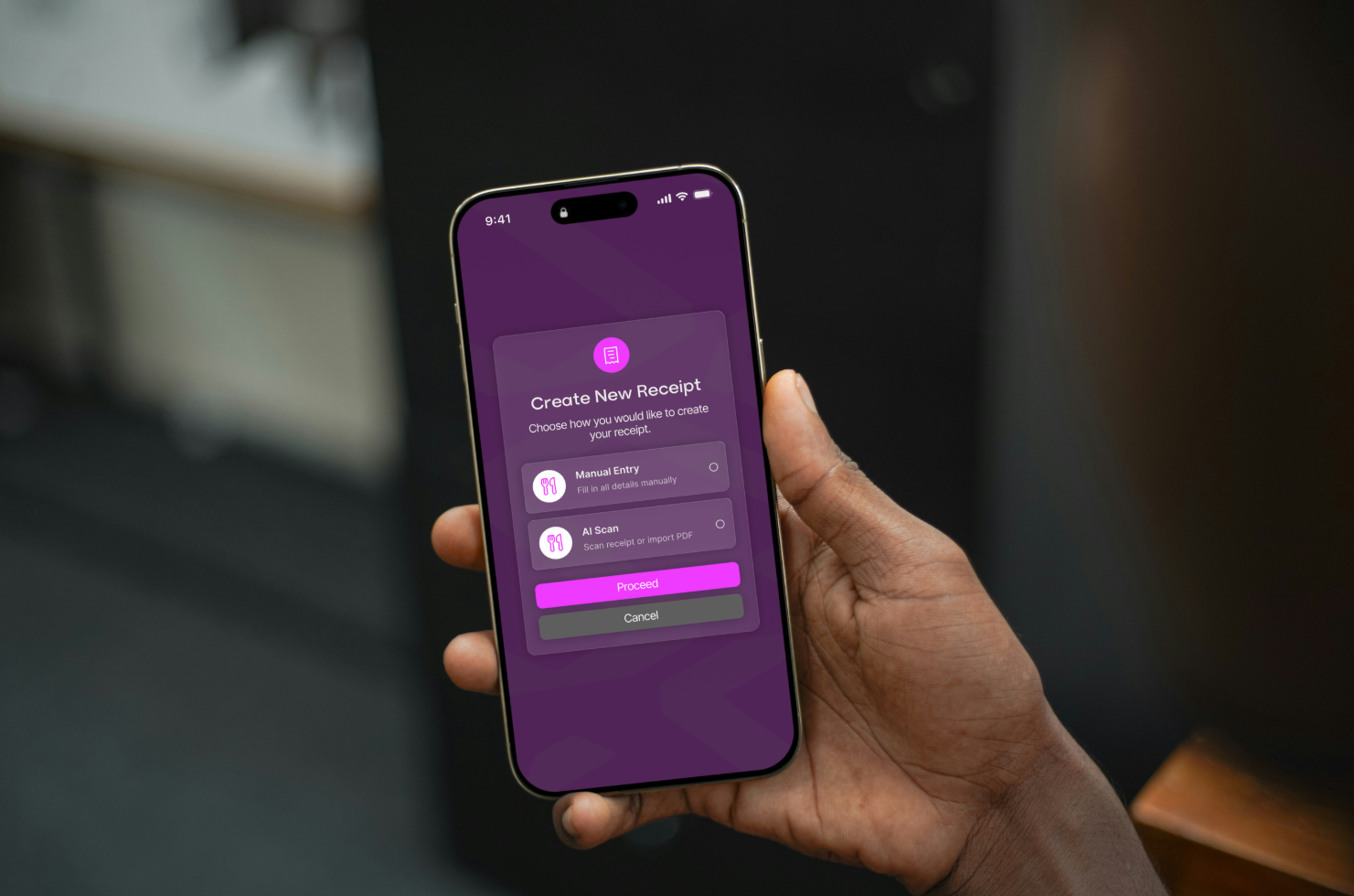
On the product side, our focus was on building the core infrastructure that allows us to transform everyday purchases into structured intelligence. That meant advancing the AI systems behind document interpretation, strengthening the architecture of the platform, and validating how users respond to this new way of understanding consumption. It was also the year in which we began testing the thesis with early users, leading to a waitlist of around 25,000 people.
At the same time, 2025 was an important year for visibility and positioning. Simplifyer gained recognition through startup programs, strategic conversations, and broader industry interest around AI, fintech, consumer data, and the future of how people live and consume. That kind of recognition helped confirm that the problem we are addressing resonates with users, investors, partners, and innovation ecosystems.
Looking ahead, 2026 is about moving from foundations to activation. Our priority is to continue scaling the product through progressive launches and beta cycles, gradually expanding access while making the intelligence layer smarter, more reliable, and more useful in everyday life.
A second major focus is beginning to unlock the business side of the platform more deliberately, turning this emerging data layer into actionable intelligence for companies trying to understand real consumer behavior. And, over time, that same infrastructure can support something even broader: insights into lifestyle, wellbeing, and longevity.
So if 2025 was about proving the thesis and building the system, 2026 is about turning that foundation into scale, growing the user base, deepening the intelligence, and positioning Simplifyer as a new infrastructure layer for understanding how people consume, live, and age.
How is Simplifyer’s model structured for individual consumers and businesses?
Simplifyer is structured as a multi-layer model where the consumer experience and the intelligence layer reinforce each other.
On the consumer side, we follow a freemium approach. The core product is accessible and delivers immediate value by helping users understand their consumption, habits, and everyday decisions. On top of that, we introduce premium features for users who want deeper insights, more advanced analytics, predictive intelligence, and increasingly, insights into lifestyle patterns and how their habits evolve over time.
On the business side, the model is fundamentally different. Companies are not interested in individual data, but in aggregated and anonymized intelligence about how consumers behave across brands, categories, and contexts. Simplifyer provides access to real-world consumption signals, helping businesses understand market dynamics, emerging trends, and behavioral shifts much earlier than traditional methods allow.
Over time, this same intelligence layer can extend beyond commerce into areas such as lifestyle, wellbeing, and longevity, as consumption patterns reveal not just how people spend, but also how they live.
So the model is intentionally complementary: consumers gain clarity and understanding of their everyday lives, while businesses gain access to a new, privacy-first layer of behavioral intelligence built on real consumption.
Which markets are you currently targeting – and where do you see the strongest demand for Simplifyer’s solution?
Our current focus is Europe. It is a very attractive region for Simplifyer because it combines high digital payment adoption, strong retail density, increasing regulatory attention around data and digital receipts, and a growing appetite for more transparent, consumer-centric data models.
We are particularly focused on markets where digital behavior is already mature but the intelligence around everyday consumption is still fragmented. That includes countries such as Portugal, Spain, France, Germany, and the UK. These are markets where consumers generate enormous volumes of purchase data every day, yet very little of that information is translated into meaningful intelligence for either individuals or businesses.
In terms of demand, we see two very clear entry points. On the consumer side, the strongest pull comes from younger, digital-native users who are open to AI-driven tools and increasingly interested in understanding not just their spending, but also their habits, routines, and lifestyle. On the business side, the demand comes from brands, retailers, and insight teams that know their current data only tells part of the story and are looking for a more complete view of real consumer behavior.
Europe is also particularly interesting because the broader conversation is evolving beyond finance and commerce into areas such as wellbeing, prevention, and longevity. That makes it a strong environment not only for Simplifyer’s first applications, but also for the longer-term opportunity of building intelligence around how people live.
So while we are starting in Europe, the problem we are solving is fundamentally global: every market generates consumption data, and almost every market still lacks the infrastructure to truly understand it.
From your experience building Simplifyer, what do you think Gen-Z users value most in a financial app?
What we have observed is that Gen-Z values clarity, intelligence, and relevance far more than traditional financial control tools.
First, they want understanding rather than restriction. Older financial products were often built around rigid budgeting, limits, and discipline. Gen-Z responds much better to tools that help them understand their habits, patterns, and everyday decisions, so they can make smarter choices on their own.
Second, they expect technology to feel intelligent. This is a generation that has grown up with personalized platforms, recommendation systems, and AI-driven experiences. They are not impressed by static dashboards; they want tools that interpret behavior, surface useful insights, and feel genuinely adaptive.
Third, they care a lot about transparency and value exchange. Gen-Z is very aware that data has value, but they are also open to sharing it when the benefit is clear, immediate, and meaningful. If a platform helps them better understand how they spend, how they live, and even how their habits may affect their future, the relationship feels much more balanced.
Finally, they want products that feel intuitive, well-designed, and embedded in everyday life. The experience has to feel less like a traditional finance tool and more like a smart companion that helps them make sense of their world.
In many ways, that is exactly what Simplifyer is being built for: not just to track money, but to interpret consumption, reveal patterns, and help people better understand their habits, lifestyle, and increasingly, the choices that shape wellbeing and longevity.
Is education part of your mission? If so, how do you plan to help users not only track their spending but also build financial confidence and literacy through the app?
Education is absolutely part of the mission, but we think about it less as traditional financial literacy and more as behavioral understanding.
A lot of financial education still lives in static content – articles, tips, courses, or generic advice. Those resources can be useful, but they often stay abstract. People may learn the theory, yet still struggle to connect it to their real daily decisions. Our view is that the most effective education happens when insight is tied directly to lived behavior.
That is where Simplifyer becomes powerful. Instead of teaching people through generic rules, the platform helps them learn from their own consumption patterns. It can show how habits evolve over time, where routines are forming, how small decisions accumulate, and what those choices say not only about spending, but about lifestyle more broadly.
Over time, we see AI playing an important role in this. Not as a lecturer, but as an intelligent layer that helps users interpret what they are doing, spot patterns, and make better decisions with more confidence. That could mean helping someone understand recurring habits, identify opportunities to optimize spending, or even reflect on the relationship between their purchases, routines, wellbeing, and long-term outcomes.
For us, financial confidence comes from visibility. When people can clearly see how they consume, they feel more informed, more intentional, and more in control. So education is embedded into the product itself, through everyday insight.

What’s the best piece of financial advice you’ve ever heard – and how has it influenced your own habits or decision-making?
The best financial advice I’ve heard combines two ideas that, together, have shaped how I think about money: pay attention to the small decisions, and invest in yourself first.
The first part is about recognizing that financial outcomes are rarely driven only by big, occasional choices. Of course, decisions like starting a company, buying a home, or making an investment matter. But in reality, a large part of financial life is shaped by everyday habits – the small purchases, recurring behaviors, and subtle patterns that repeat week after week. When you start paying attention to those patterns, you gain a much clearer understanding of how money actually flows through your life.
The second piece of advice – investing in yourself – has been equally important. Whether it’s education, experiences, relationships, or personal development, the returns from investing in your own skills and perspective tend to compound over time in ways that are often much more powerful than purely financial investments. For me, that has meant continuously learning, surrounding myself with inspiring people, and putting energy into projects that expand my thinking.
Interestingly, those two ideas also influenced how I think about Simplifyer. Understanding everyday financial behavior – those small, repeated decisions – is incredibly powerful. When people can clearly see their habits and patterns, they are better equipped to make intentional choices, including how they allocate resources toward things that genuinely help them grow.
You describe Simplifyer as building “the future of data.” What does that future look like to you?
When I talk about the future of data, I am referring to a fundamental shift in how information is created, understood, and shared.
Today, consumer data is fragmented and siloed. Banks see transactions, retailers see purchases within their own ecosystem, and digital platforms track online behavior. But no one has a unified, real-world understanding of how people actually live, and individuals themselves rarely have access to a clear picture of their own consumption.
The future I see is one where everyday actions generate structured intelligence that is accessible, useful, and meaningful to the individual. Instead of data being scattered and abstract, it becomes something people can use to better understand their habits, decisions, and lifestyle.
At the same time, businesses will move away from assumptions and proxies toward real behavioral signals. Rather than relying on surveys or partial datasets, they will be able to understand how consumers behave across contexts, in real time, grounded in actual consumption.
Another key shift is agency. Individuals will no longer be passive sources of data, but active participants in the data economy. They will have greater transparency, more control, and a clearer exchange of value for the data they generate.
And increasingly, this data will go beyond commerce. Consumption is one of the most powerful signals of how people live – what they eat, how they spend, what habits they build. That means the future of data is not only about understanding markets, but also about understanding lifestyle, wellbeing, and longevity.
What we are building with Simplifyer is a step in that direction: turning everyday purchases into a new layer of intelligence that helps individuals understand themselves, and helps the world better understand how people live and age.
Is there anything else you’d like to add, Isabel?
If there is one thing I would add, it is that Simplifyer comes from a very simple belief: the data generated by everyday life should create value for the people who generate it.
Every time we make a purchase, we leave behind information that is incredibly rich. Historically, most of that value has been captured by institutions, platforms, or fragmented systems, while individuals rarely gain any real understanding or benefit from it. What we are building with Simplifyer is an attempt to rebalance that relationship: giving people more visibility into their own consumption, while creating a more transparent and useful layer of intelligence for the market.
We are still at the beginning of that journey, but I believe the timing is extraordinary. Artificial intelligence, new data infrastructures, and changing expectations around ownership, transparency, and value exchange are creating the conditions for entirely new systems to emerge. Simplifyer is our contribution to that future.
What excites me most personally is that this goes far beyond transactions. Understanding what people buy means understanding habits, routines, preferences, and the small choices that shape everyday life. That has implications not only for commerce and markets, but also for wellbeing, prevention, and longevity.
In the end, Simplifyer is about making the invisible visible by turning everyday consumption into intelligence that helps people better understand how they spend, how they live, and ultimately how they age.
Featured image: Isabel Carapeta, founder and CEO of Simplifyer (Photo courtesy of Isabel Carapeta/LinkedIn)

 Portugal Startup News