
FemTech Portugal has published what it describes as the “first” ecosystem map of femtech in the country, outlining innovators across different categories while pointing to underserved areas, a largely early-stage landscape, and missing conditions for scale.
The map has so far identified 21 innovators across nine categories, as shared by the nonprofit association dedicated to accelerating women’s health innovation in Portugal, created by Lesley Farrah Dorwling-Carter, Isabel Holguera Vera, and Samantha Isola.
Alongside the categories where companies are already active, the map also highlights six areas with no companies represented: chronic conditions, contraception, cardiovascular health, autoimmune, cognitive and brain health, and aging and bone health.
The companies mapped by category
In menstrual health and hormonal wellbeing, the map lists LayaCycle, Habibi Fertility, MADi Health, NORM., and Spongie. In oncology, it lists CleoCare, expressTEC, and BreastScreening-AI.
See also: CleoCare takes early breast cancer detection tech to Capitol Hill
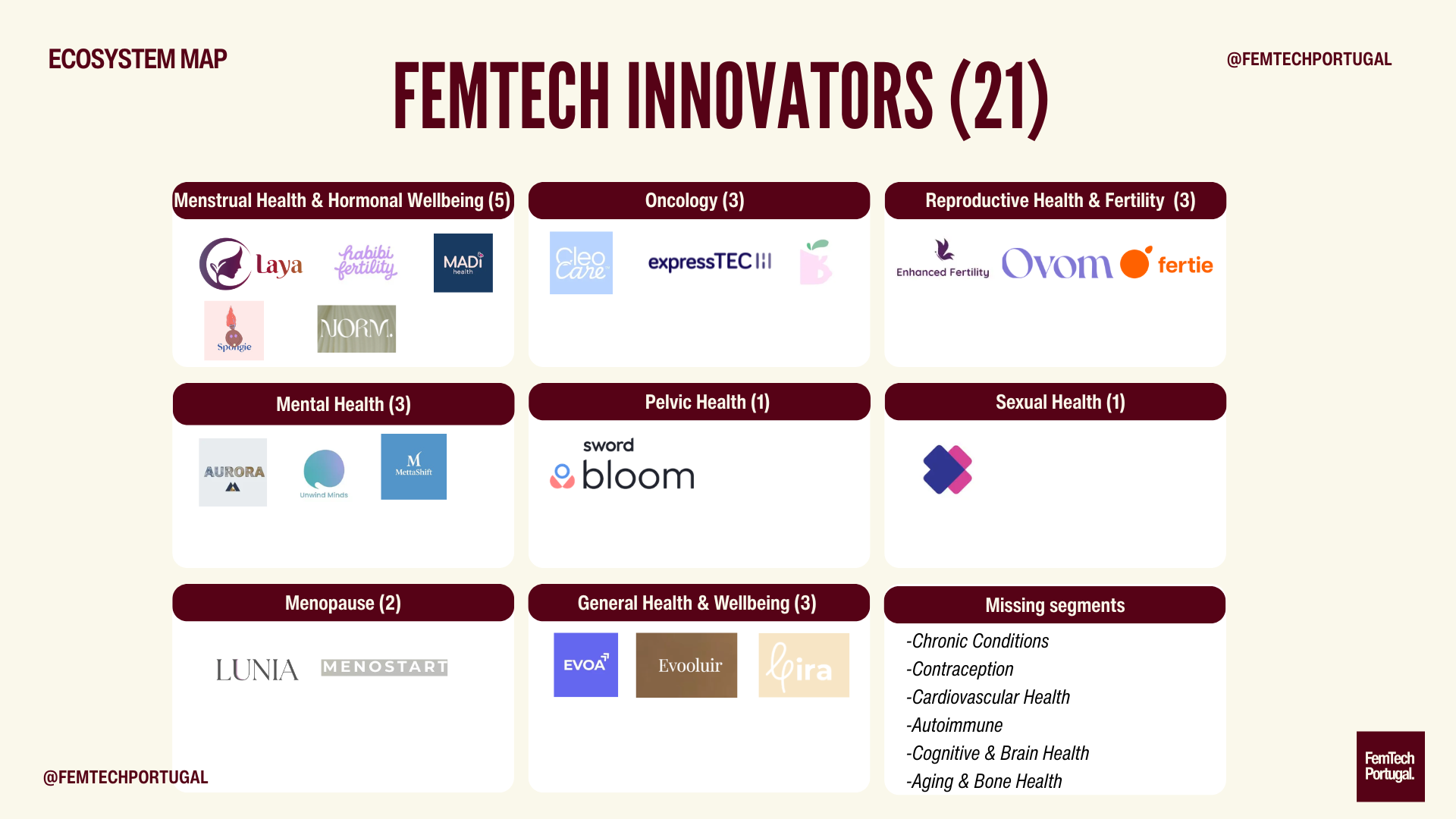
In reproductive health and fertility, it lists Enhanced Fertility, Ovom, and fertie. In mental health, it it includes Aurora, Unwind Minds, and MettaShift. In menopause, it features LUNIA and Menostart.
In the pelvic and sexual health categories, the map lists Sword Bloom and ENDO, respectively. In general health and wellbeing, it names EVOA, Evooluir, and Lira.
See also: World Mental Health Day: Lira launches to support neurodivergent women
A largely early-stage sector
FemTech Portugal found that the overwhelming majority of Portuguese femtech companies sit at idea, pre-seed, or seed stage.
The organization said almost no companies exist between seed stage and unicorn status, with Sword Health’s Bloom presented as the only unicorn. It argued that this reflects a broader structural gap.
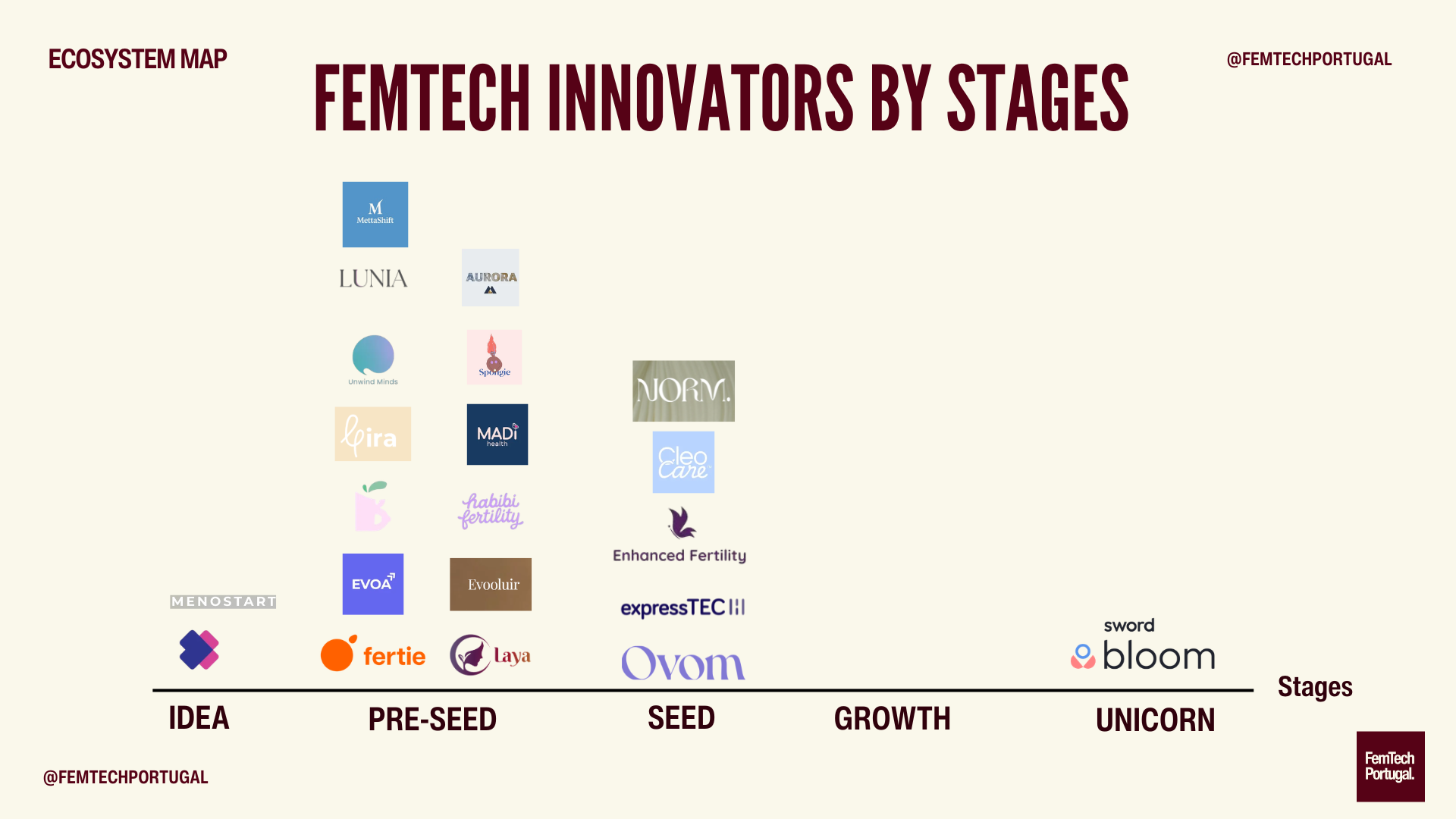
“The infrastructure to move companies from early traction to scale does not yet exist here. There is no shortage of founders with ideas and early momentum. What is missing is the ecosystem around them that turns early-stage ambition into sustained growth,” FemTech Portugal wrote.
Software leads the mix
FemTech Portugal also said 50% of femtech innovation in Portugal is in digital software, data, and AI products. Consumer health and direct-to-consumer products account for 20%, while biotech, therapeutics, and clinical innovation account for 10%.
Diagnostics and testing technologies with virtual services represent 15%, and medical devices, wearables, and hardware represent 5%.
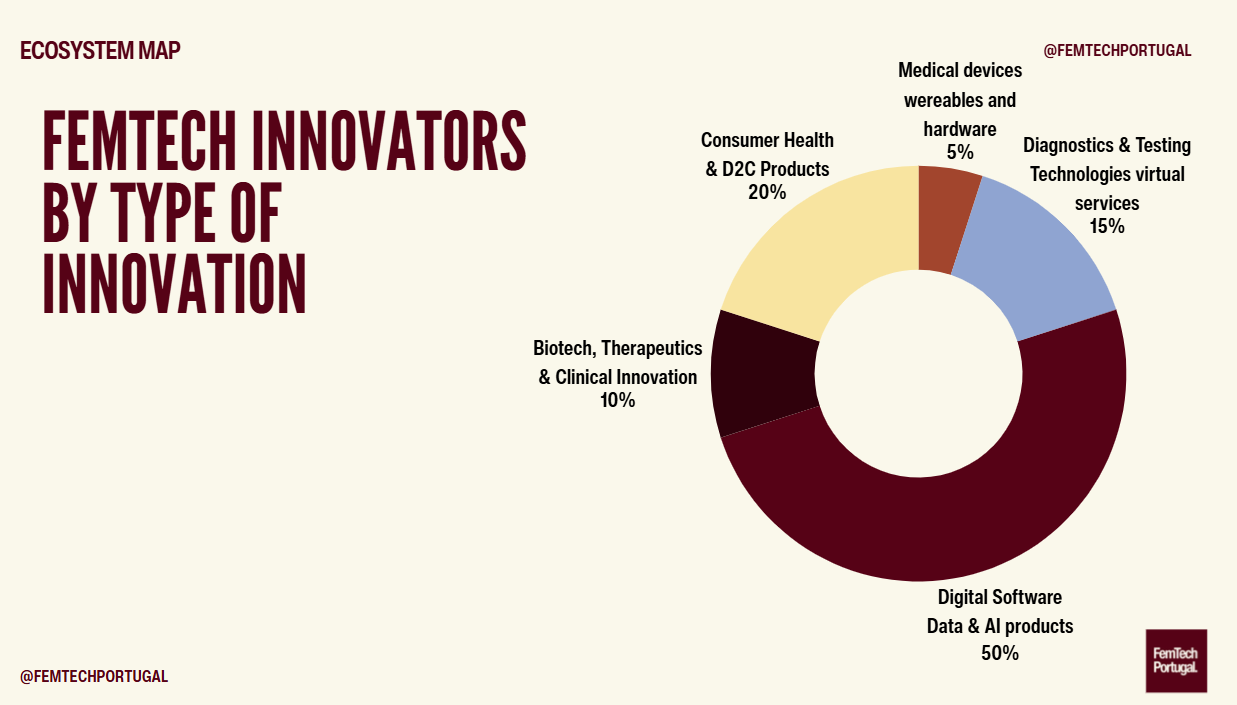
The organization said this reflects a broader global pattern in which software-led innovation is more visible than more capital-intensive areas such as devices, therapeutics, and deeper clinical innovation.
It added that those areas remain constrained by missing conditions, including capital, clinical partnership infrastructure, and the connective tissue needed to support serious development in the sector.
What comes next
According to FemTech Portugal, the ecosystem map is intended to remain a “living document,” with a second iteration planned in the coming months.
The organization said it is sharing the findings to clarify where the gaps remain and to support future development of the ecosystem.
“We are not sharing this to be discouraging. We are sharing it because naming what is missing is the first step toward building it,” FemTech Portugal wrote, adding that the map will itself be one of the tools used to help do that.

Looking ahead, FemTech Portugal plans to hold more events in Lisbon and Porto, provide a space for real, unmediated stories from women navigating healthcare through its “In Her Own Words” Substack series, and continue building partnerships, programs, and infrastructure to support longer-term development.
It also said it is actively fundraising and looking for partners to support what it describes as a “serious” and “sustainable” women’s health ecosystem in Portugal.
Featured image: The founding team of FemTech Portugal, from left: Lesley Farrah Dorwling-Carter, Samantha Isola, and Isabel Holguera Vera. (Photo courtesy of FemTech Portugal)



 Portugal Startup News