By Jorge Rodrigues – Co-founder and CEO of Cloudsweep
In the early days of a startup, every decision feels like a trade-off. You are choosing what to build, what to delay, and what to ignore for the sake of moving fast. But there is one area where moving fast has a price most founders do not see until much later – the way their code behaves in the cloud.
We talk a lot about runway, hiring, product-market fit, and investor expectations. Yet one of the biggest drains on a startup’s survival happens quietly, behind the scenes, inside the code your team ships every day. I call it the hidden cost of cloud software.
It starts small, almost invisible. A feature is rushed to meet a customer deadline, a quick fix is patched at midnight, a workaround is added to bypass an unexpected bug. All harmless in the moment. But as your product grows, these shortcuts build up in ways that directly impact your cloud bill, your performance, and your team’s ability to move fast without breaking things.
Why the cloud often behaves like on-premises hardware
Founders are told that the cloud is elastic – scale up when needed, scale down when not, pay only for what you use. In reality, that promise only holds if your software behaves predictably. Most applications do not.
Three patterns are especially common in scaling startups:
1- Unpredictable resource usage
A single endpoint can behave differently depending on the user. Most users trigger cheap, lightweight operations – but a small percentage hit complex, heavy paths that consume 20 to 50 times more CPU or memory. To protect against outages, your team ends up sizing for the worst-case scenario rather than the average case. This is where cloud costs start rising much faster than your traffic.
2- Performance degradation over time
Memory leaks, unbounded caches, and slow-growing inefficiencies accumulate silently. Your system looks fine at 9 a.m., but by late afternoon you need double the capacity to handle the same load. Autoscaling notices the pressure and spins up more machines, even though demand has not actually increased.
3- Traffic spikes that autoscaling cannot keep up with
Most autoscaling systems take 40 to 180 seconds to respond. Real spikes – campaign traffic, a product launch, a partner integration – happen in seconds. Your infrastructure reacts too late, so the only “safe” option is to permanently overprovision.
Individually, these issues seem like engineering problems. Together, they shape the financial health of your company.
The real cost is not only in dollars – it is in focus
As a company grows, cloud waste becomes more than a line item. It becomes a distraction that slowly pulls the organization away from what matters.
Think about your team’s best engineers. Every hour they spend trying to understand a cost spike, debating provisioning levels, or untangling a performance issue is an hour not spent advancing your roadmap. Over time, this leads to slower iteration, higher stress, and a culture where your technical leaders are forced to act like cost analysts instead of innovators.
When cloud behavior is unpredictable, founders often react by approving ever larger budgets “for safety.” But this creates a cycle – more spending to protect against surprises, more surprises because the root cause is not fixed, and less time for teams to invest in long-term improvements.
Why this matters for startup survival
If you are building a venture-backed startup, you will likely hit one or more scaling moments before reaching profitability. The decisions you make during those phases determine whether your infrastructure becomes a strategic advantage or a barrier.
Efficient systems give you:
- longer runway without raising additional capital
- faster features because engineers spend less time fighting fires
- better reliability for customers
- clarity for finance teams that need predictable forecasting
- a culture where engineering and product remain aligned instead of reacting to surprises
I often tell founders this – cloud efficiency is not a cost problem, it is a predictability problem. When your code behaves consistently, your cloud behaves consistently. When your cloud behaves consistently, your business becomes easier to operate and scale.
What founders can do today
You do not need to become a cloud expert to address this. But you should bring this question into your leadership discussions:
“Do we understand how our code is driving our cloud bill?”
If the answer is no – or if the answer depends on who you ask – it is worth taking action early. Startups that adopt cost-aware engineering practices early gain a permanent advantage. Those who wait often face painful restructuring of systems at the exact moment they are trying to scale.
Encourage your teams to:
- measure variance in resource usage, not just averages
- monitor long-running performance drift
- look at traffic patterns and understand how your system reacts
- treat infrastructure behavior as a product metric, not an operational task
These habits may not sound urgent during the first year of building, but they become decisive in the years that follow.
The bottom line
Startups succeed by focusing intensely on customer value. But ignoring how your software behaves in the cloud can quietly erode that value – through higher costs, slower teams, and unpredictable performance.
Founders who pay attention to this early on build more cost-effective, faster, and resilient companies. Those who do not often discover the problem only when it begins to limit their ability to scale.
Cloud efficiency is not about reducing spend for its own sake. It is about removing the hidden friction that prevents your team from delivering its best work.
About the author:
Jorge Rodrigues is the co-founder and CEO of Cloudsweep, an AI cost engineering platform that analyzes code, infrastructure, and telemetry to identify and eliminate cost-intensive patterns. By optimizing resources and reducing operational overhead, it allows engineering and production teams to work more efficiently and with greater peace of mind.
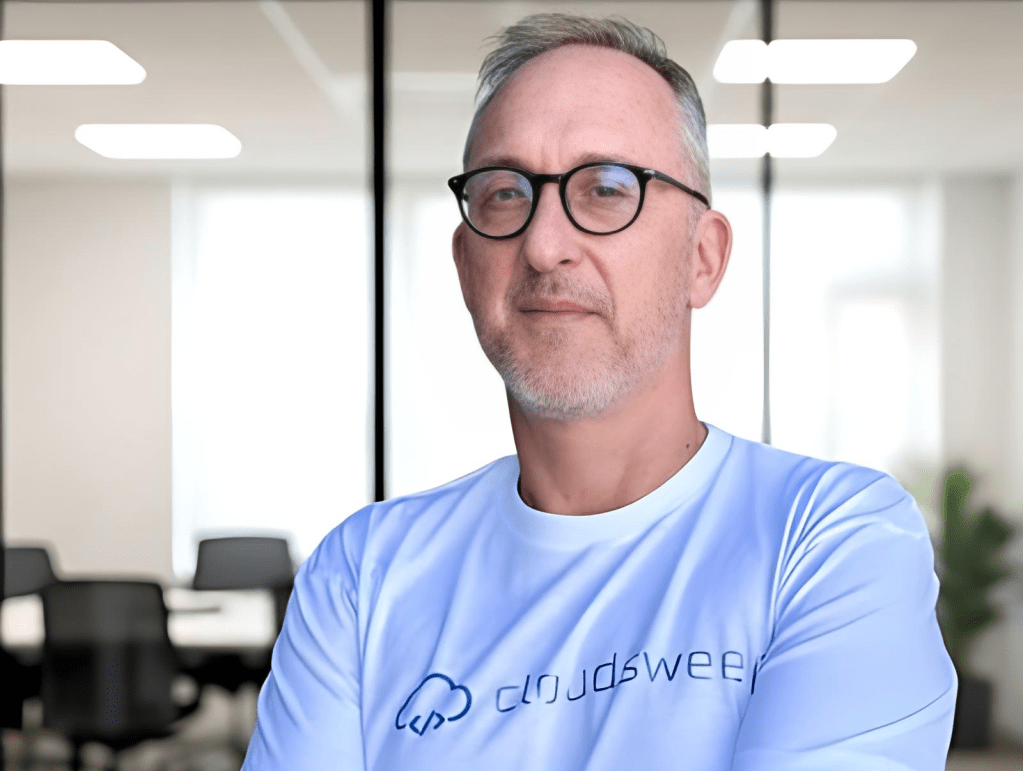
Featured image: Jorge Rodrigues, co-founder and CEO of Cloudsweep (Photo courtesy of Cloudsweep)
Disclaimer: The opinions expressed in contributed opinion pieces are those of the authors and do not necessarily reflect the views of Portugal Startup News.