SpotGov has set its sights on Spain and the UK after building a client base of more than 100 companies in Portugal whose public procurement activity represents around €1.5 billion in public tenders.
The Portuguese startup has developed an AI-powered platform that supports companies throughout the public procurement process, from identifying tender opportunities and analyzing requirements to preparing proposals, reviewing submissions, managing bid workflows, and generating market intelligence.
In an interview with Portugal Startup News, co-founder and CEO João Ramalho Alves said the company’s current customer base includes a “meaningful” share of Portugal’s largest companies.
Looking ahead, SpotGov plans to expand beyond large enterprises by making its platform available to mid-market companies and SMEs.
“Our ambition isn’t to remain an enterprise-only tool. Our ambition is to be the tool of choice for every enterprise company in this space, and from that position expand into mid-market and SMEs as well,” he noted.

Building momentum in Portugal
In its first year of operation, between April 2025 and April 2026, SpotGov reached about €600,000 in annual recurring revenue and achieved profitability without external funding.
“We now work with more than 100 clients in Portugal, and together they account for close to €1.5 billion in public tenders, around 10% of the country’s total public procurement volume,” Alves said.
The company serves organizations across 13 industries, with healthcare, construction, energy, facility services, and transport among the most active sectors.
Despite the growing adoption of AI across enterprise software, Alves believes the biggest barrier to adoption is not the technology itself.
“What holds adoption back isn’t skepticism about AI itself, it’s the habit of treating procurement as a manual, document-heavy task. Once a company sees how much of that can be automated, adoption tends to follow quickly.”
An end-to-end procurement platform
Alves said many AI procurement tools focus on a single stage of the procurement process, while SpotGov was designed to support the entire tender lifecycle.
“That end-to-end approach is what we mean when we describe SpotGov as the operating system for public procurement, a single piece of infrastructure that organizes a fragmented market end to end, instead of solving one isolated step of it.”
According to the company, customers save an average of 125 hours per week using the platform.
Expansion built on a common European framework
Spain and the UK are the company’s first target markets, although Alves said SpotGov is taking a measured approach to its international expansion.
“We’re not committing to a fixed timeline. The priority right now is making sure the product and go-to-market approach are right for each market before we move, but the groundwork is already underway.”
While every country has its own procurement platforms, documentation requirements, and legal framework, Alves noted that the common European procurement directives provide a strong foundation for expanding across the region without rebuilding the platform from scratch for each market.
Following its first year, SpotGov is evaluating funding options to support its next phase of growth. Alves said the company’s immediate priorities remain international expansion, accelerating product development, and continuing to build a product that delivers meaningful value to customers.
Making public procurement more accessible
Alves believes technology can lower the barriers that have traditionally made public procurement difficult to navigate.
In his view, many companies still view public procurement as difficult to access because of its complexity and administrative burden.
“Our mission is not only to help companies win more public contracts but also to democratise access to public procurement, enabling startups, SMEs, and large enterprises alike to participate more effectively.”
He added that the company’s vision extends beyond supporting individual businesses. In the longer term, he believes artificial intelligence can also play a larger role in improving transparency, efficiency, and decision making across the wider public procurement ecosystem.
That vision aligns with a broader trend across Europe. Public procurement represents roughly 13% of GDP across OECD countries, making it one of the largest areas of government spending.
The OECD says artificial intelligence has the potential to improve efficiency, transparency, and decision making throughout the procurement process, an area expected to play an increasingly important role in the digital transformation of public services.
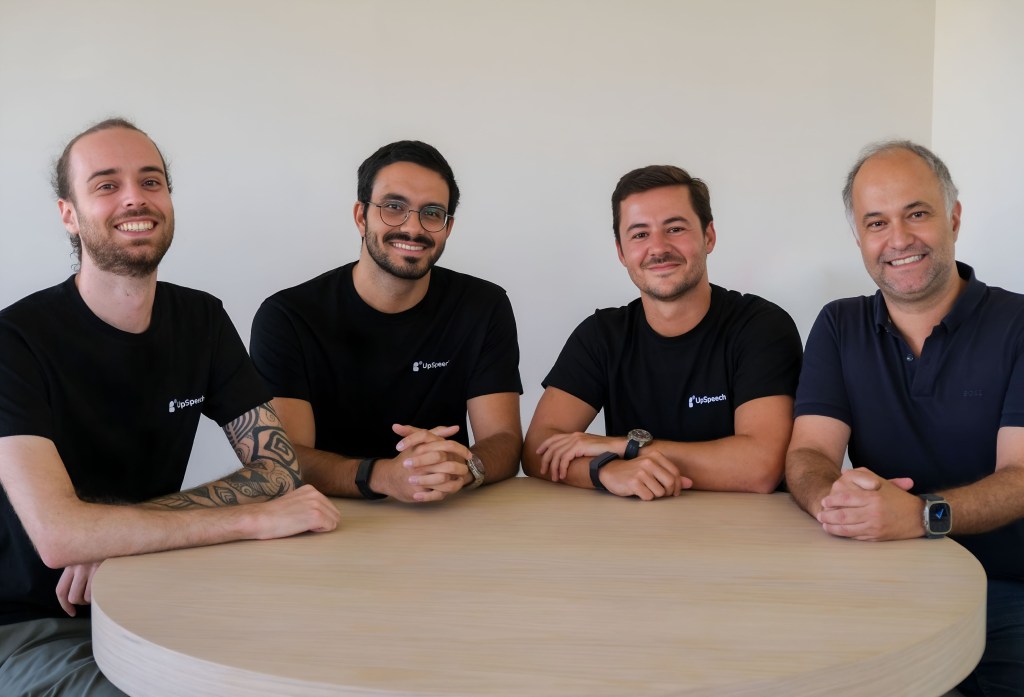
Featured image: The SpotGov team (Photo courtesy of SpotGov)