Técnico spin-off BreastScreening-AI is moving from research and prototype development towards a more defined medical product, backed by nearly €490,000 in EIC Pre-Accelerator funding and a €150,000 investment from Portugal Ventures.
BreastScreening-AI was one of 70 companies selected for the EIC Pre-Accelerator. More recently, it was among 14 startups selected for a €150,000 investment through Portugal Ventures’ fifth Call INNOV-ID.
“We are at the transition from research and prototype development toward a more stable product that can be evaluated systematically in real clinical environments,” founder and CEO Francisco Maria Calisto told Portugal Startup News.
The transition comes as breast cancer remains a major global health challenge. According to the World Health Organization’s latest estimates, 2.4 million women were diagnosed with breast cancer and 694,000 died from the disease globally in 2024. WHO says mortality is reduced when breast cancer is detected and treated early.
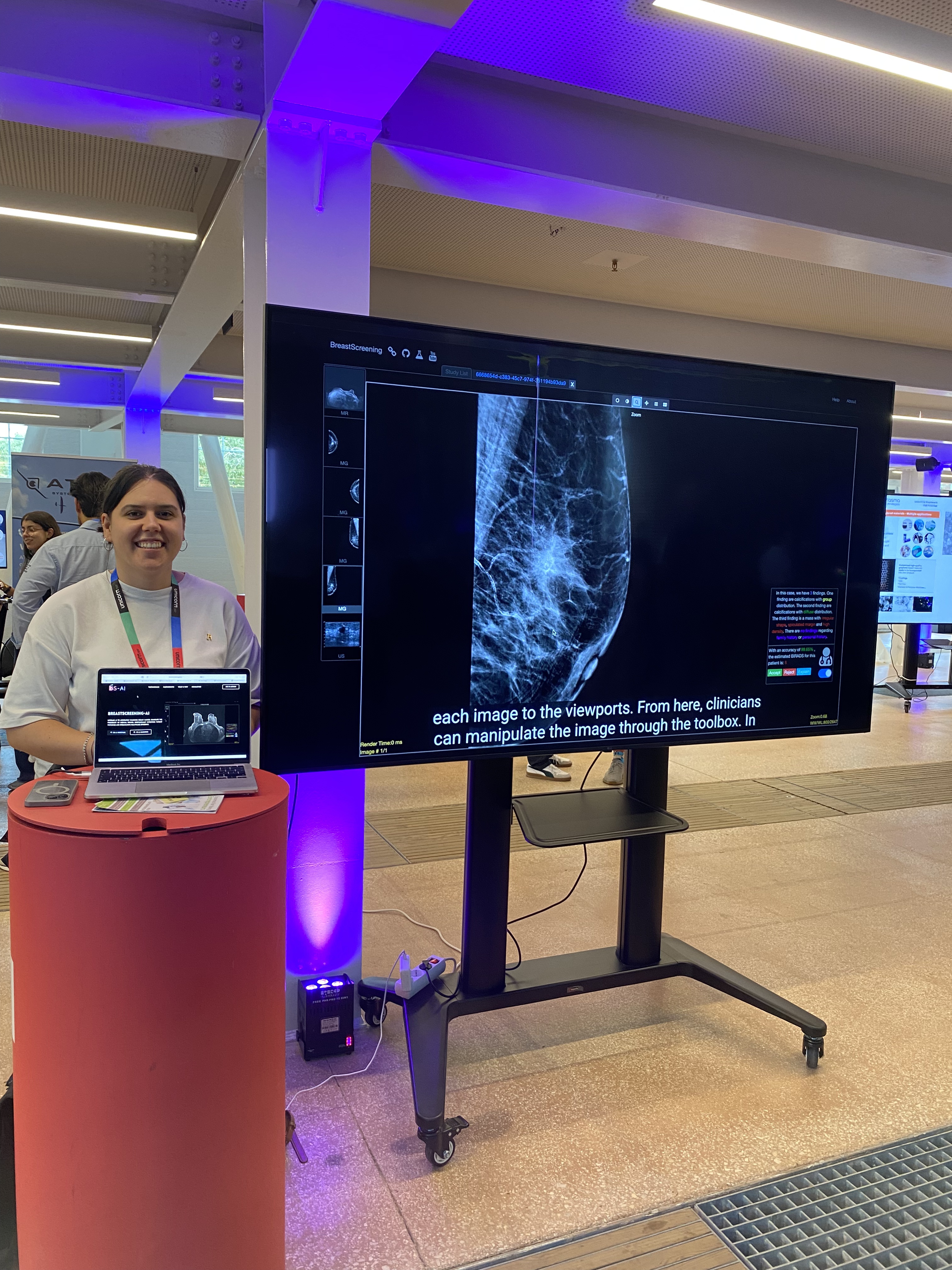
BreastScreening-AI is developing AI designed to support radiologists across breast imaging, with a longer-term vision of combining information from mammography, ultrasound, MRI and relevant clinical data.
Calisto describes the technology as a “second reader,” providing radiologists with an additional AI-supported assessment while keeping clinicians responsible for the final interpretation.
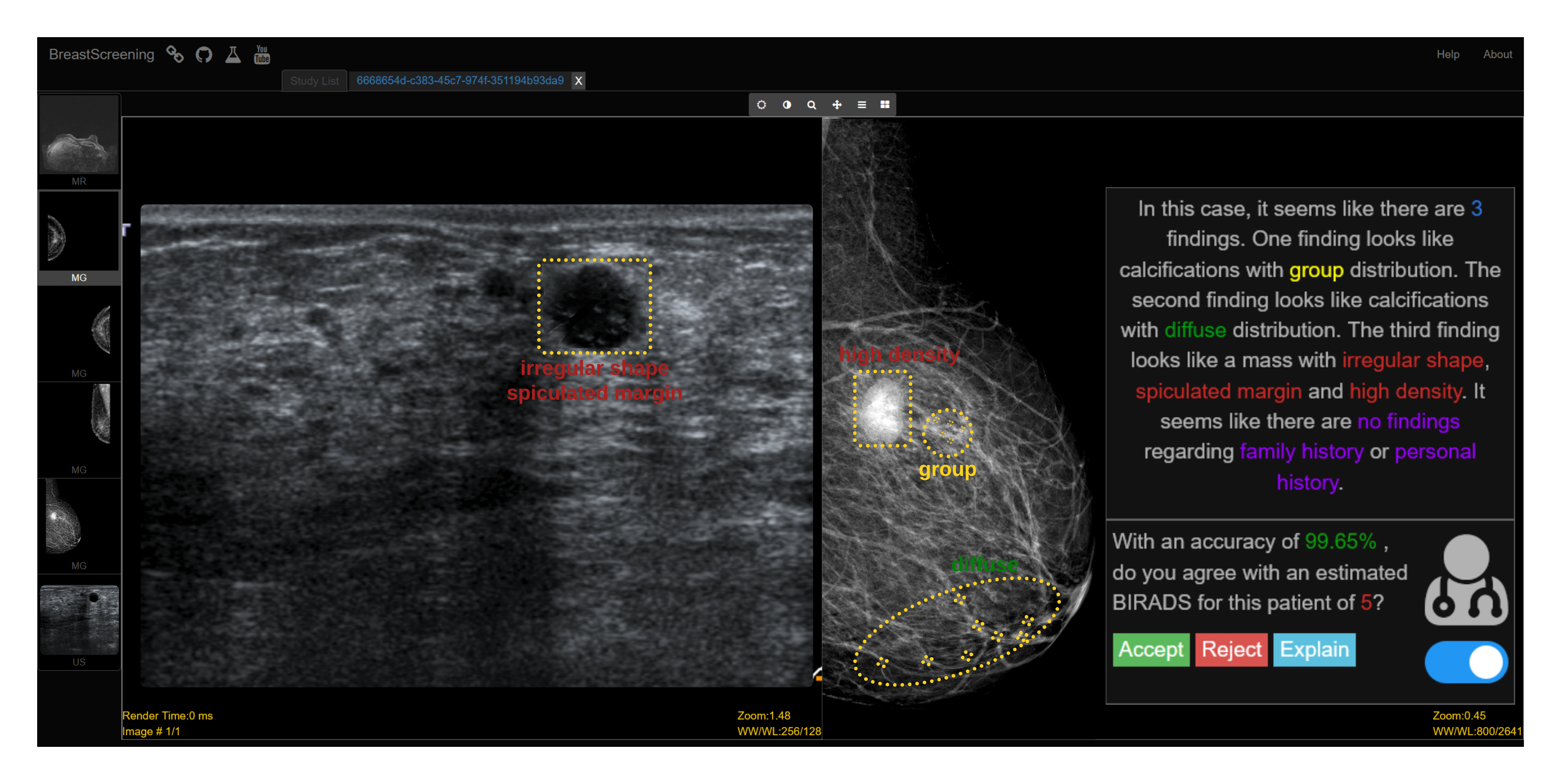
The company also puts significant emphasis on how clinicians interact with the AI, including what information they see, how uncertainty is communicated, and whether the system supports decision-making without adding cognitive load.
For the next phase, the company is deliberately narrowing its focus. “The next 12 to 18 months are mainly about reducing uncertainty,” Calisto said, with priorities including defining the product’s clinical purpose, expanding hospital evaluations, strengthening external clinical validation and building the regulatory and quality foundations required for commercialization.
“For now, strong evidence and clinical fit take precedence over rapid geographic expansion,” he added.
Read the full interview below to learn about BreastScreening-AI’s technology, clinical validation strategy, hospital collaborations, regulatory roadmap and long-term plans.
1- What problem in breast cancer diagnostics is BreastScreening-AI primarily trying to solve today?
Breast cancer diagnosis is rarely based on a single image or a single source of information. Radiologists may need to integrate mammography, ultrasound, MRI, prior examinations, and clinical context, often under significant time pressure.
At BreastScreening-AI, we are trying to make that process easier to manage. Our goal is to help radiologists bring relevant information together, highlight what deserves attention, and support more consistent and efficient diagnostic reasoning.
The radiologist remains in control. We are not trying to replace clinical expertise. We are building AI to support it.
2- What makes your approach different from other AI systems in breast imaging, especially in terms of multimodal analysis and clinical integration?
What differentiates our approach is the combination of multimodal analysis, human-centered design, and clinical workflow integration. Many AI systems in medical imaging focus on a single modality or a specific prediction.
Our longer-term vision is to help radiologists reason across information from mammography, ultrasound, MRI, and, where appropriate, relevant clinical information.
But the algorithm is only part of the problem. My background is in human-computer interaction, so we also focus heavily on how clinicians actually interact with the AI: what information they see, when they see it, how uncertainty is communicated, and whether the system genuinely helps rather than adding more cognitive load.
For us, building a strong AI model and building a useful clinical product are two different challenges. We need to solve both.
3- How does the system support radiologists in practice, and what role does explainability play in building trust and ensuring usability?
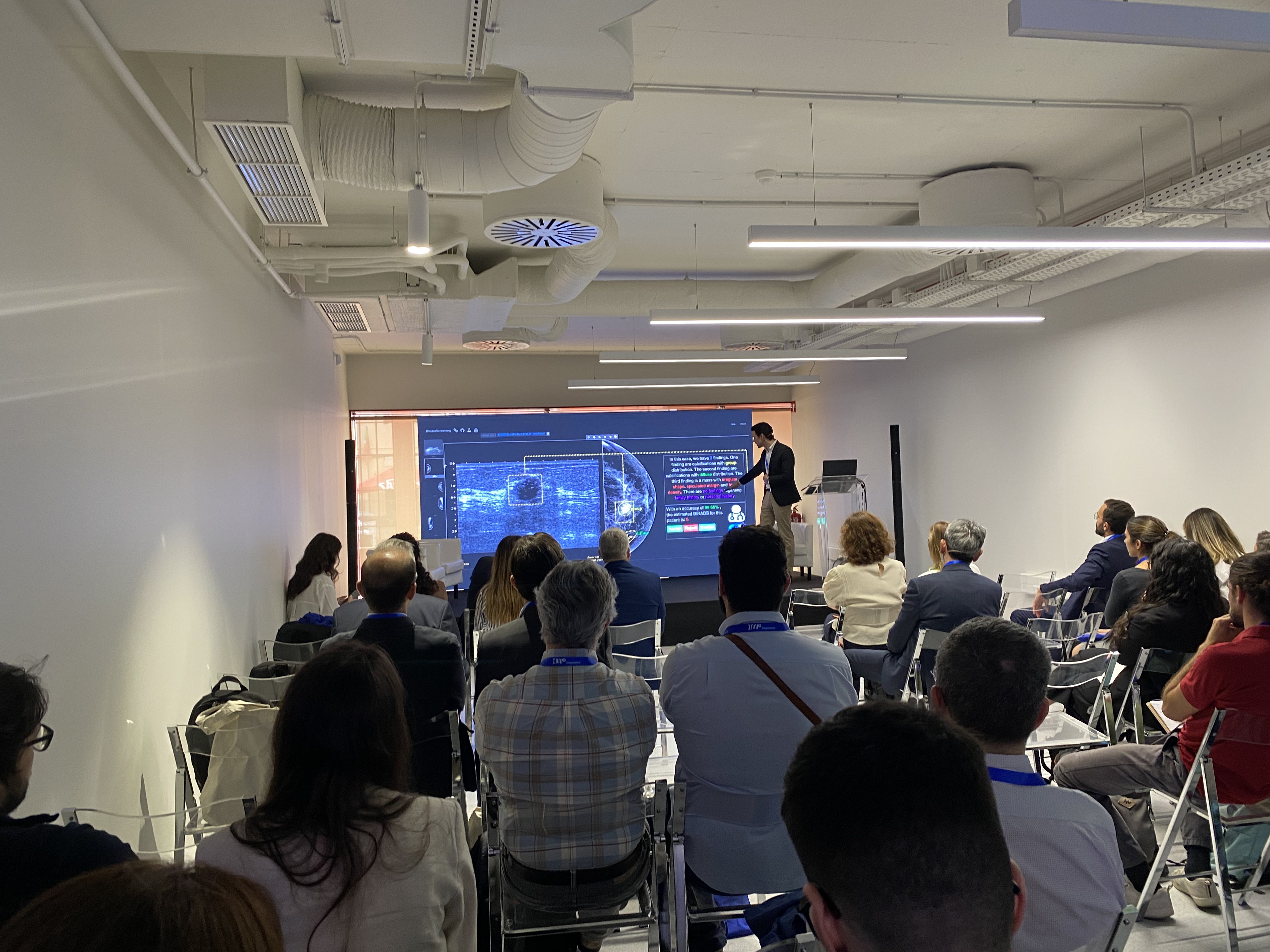
I like to think of BreastScreening-AI as a second reader. The system is designed to help radiologists identify and organize relevant information and provide an additional AI-supported assessment that they can compare with their own interpretation.
Explainability is essential because simply giving a probability or recommendation is not enough in clinical practice. A radiologist needs to understand what the system is reacting to, where the relevant evidence is, how confident it is, and whether that interpretation makes sense in the context of the examination.
For me, trust does not mean making the AI appear more confident. It means giving clinicians enough information to decide when the AI is useful and when they should disagree with it.
4- What stage is the technology at right now, and what are the next key milestones you are working toward?
We are at the transition from research and prototype development toward a more stable product that can be evaluated systematically in real clinical environments.
We have explored many capabilities through our research, but one of our current priorities is deliberately narrowing the first version rather than trying to include everything at once.
The next key milestones are to stabilize that product scope, strengthen external clinical validation, continue working with hospital partners, mature our quality and regulatory processes, and prepare the company for the next stage of clinical and commercial development.
The broader multimodal vision remains important, but we want each step toward it to be supported by evidence.
5- Can you walk us through your roadmap for the next 12 to 18 months, particularly around prototype completion, clinical validation, and pilot expansion?
The next 12 to 18 months are mainly about reducing uncertainty. First, we want a stable product with a clearly defined clinical purpose. Then we need to evaluate it across independent clinical environments and understand how it performs with different clinicians, institutions, workflows, equipment, and patient populations.
We also want to expand our hospital evaluations and move beyond asking whether clinicians find the technology interesting. We need stronger evidence about whether it is genuinely useful during their work, how it affects usability and workload, and whether it supports clinical decision-making.
In parallel, we will continue strengthening the engineering, regulatory, quality, and organizational foundations needed to turn a research-driven technology into a medical product that can scale responsibly.
6- What does your clinical validation strategy look like, and how are real-world hospital collaborations contributing to it?
For us, clinical validation is not simply running an algorithm against a retrospective dataset and reporting an accuracy number. We want to evaluate both the technology and the interaction between the technology and the radiologist.
That means looking at clinical performance, as well as questions such as workload, usability, reading time, confidence, decision-making, and whether clinicians agree or disagree with the AI.
Real-world hospital collaborations are essential because clinical environments are not identical. Different institutions have different equipment, workflows, patient populations, and ways of working.
Those differences help us discover problems that would be very difficult to identify in a laboratory. That feedback has been an important part of how BreastScreening-AI has evolved.
7- Which markets or types of hospitals or partners are you focusing on first, and what is driving those priorities?
At this stage, I care more about finding the right clinical environments than simply entering as many markets as possible. Breast-imaging centers, academic hospitals, and institutions with experienced radiologists are particularly valuable because they can help us evaluate the technology rigorously and provide detailed clinical feedback.
As the product matures, larger hospital and imaging networks become important because they allow us to understand deployment and integration at scale.
We are also interested in working with imaging and healthcare technology companies, as integration is crucial in medical imaging. A good AI system that does not fit into the existing hospital workflow is much harder to adopt. For now, strong evidence and clinical fit take precedence over rapid geographic expansion.
8- What are your expected timelines for regulatory milestones such as CE marking and FDA clearance?
We are actively developing our regulatory strategy. The timing depends on several factors that still need to be properly locked down, including the final intended use of the product, the required evidence, the quality-management process, and the regulatory pathway itself.
Our objective is to progress toward the appropriate US and European regulatory milestones as the product and clinical evidence mature.
9- How are you using the EIC Pre-Accelerator funding at this stage, and what has it enabled that was not possible before?
The EIC Pre-Accelerator support is particularly important because it helps us transition from a research-intensive project to a company preparing for clinical validation, regulatory approval, and commercialization.
It allows us to work more systematically on product engineering, clinical evidence, regulatory preparation, quality processes, and the team and capabilities needed around the technology.
Research gives you the freedom to explore many possibilities. Building a medical technology company requires you to make choices, document them properly, validate them, and create scalable processes. The EIC support is helping us make that transition with greater structure and ambition.
10- What have been the most important achievements or validation signals so far?
There have been several important signals: our scientific work, the intellectual property developed around the technology, recognition through innovation programs, our selection for the EIC Pre-Accelerator, and the relationships we have built with clinicians and healthcare institutions.
Personally, one of the signals I value most is that clinicians have repeatedly been willing to spend time with us. Radiologists are extremely busy. When they sit with you to test a prototype, tell you what is wrong, suggest improvements, and then come back to evaluate another version, that tells you you are working on a problem they consider relevant.
Awards and programs are valuable external recognition. The next, and more important, validation signals need to come increasingly from independent clinical evidence, successful hospital evaluations, regulatory progress, and, eventually, real adoption.
11- Is there any misconception about AI in medical imaging that you think is important to correct?
Probably the biggest misconception is that the end goal of AI in medical imaging is to replace radiologists. I do not think that is the most interesting future. AI is very good at processing large amounts of information and identifying patterns.
Radiologists bring clinical judgment, experience, context, responsibility, and an understanding of the patient that goes far beyond what an algorithmic prediction can provide.
The interesting challenge is designing systems where those strengths complement each other. I would much rather build AI that helps a good radiologist make better-informed decisions than build technology around the idea that the radiologist should disappear.
12- Is there anything else you would like to add about your vision for BreastScreening-AI, the future of AI in breast imaging, or any other relevant point?
One thing I have learned throughout this journey is that medical AI is ultimately a human problem as much as it is a technical one. You can build an impressive algorithm, but if clinicians do not understand it, cannot integrate it into their workflow, or do not know when to trust it, its real-world value will always be limited.
My long-term vision for BreastScreening-AI is therefore not simply to build another breast cancer algorithm. I want us to help create a better way for clinicians and AI to work together.
Breast diagnosis involves multiple imaging modalities, clinical evidence, uncertainty, and a great deal of human judgment. The technology should respect that complexity rather than pretend it does not exist.
If we can build something that radiologists genuinely want to use, that hospitals can realistically integrate, that regulators can evaluate rigorously, and that patients can ultimately benefit from, then I think we will have built something meaningful.
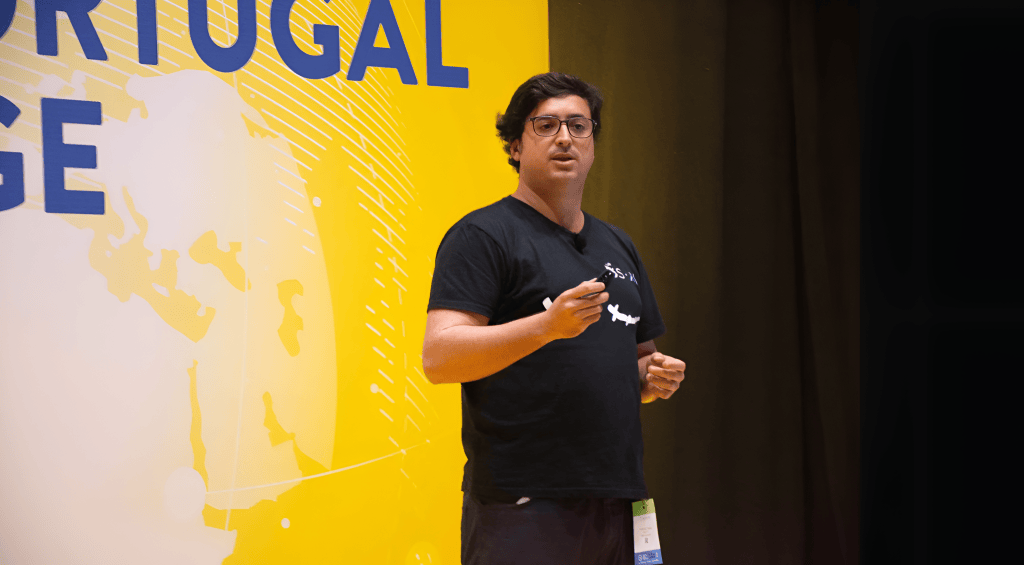
Featured image: BreastScreening-AI founder and CEO Francisco Maria Calisto (Photo courtesy of BreastScreening-AI)
 Portugal Startup News