
Humanos has officially launched with a mission to ensure that automated decisions made by AI systems can always be explained, verified, and defended.
As software increasingly acts on its own, the company argues that organizations must be able to prove who approved an action, under what conditions, and why, especially when those decisions are challenged internally, by regulators, or in court.
Humanos is building infrastructure that enables automated systems to verify and request human authorization before acting. Each approval is turned into a machine-verifiable mandate that systems can check in real time. If no valid authorization exists, systems can request one through the API.
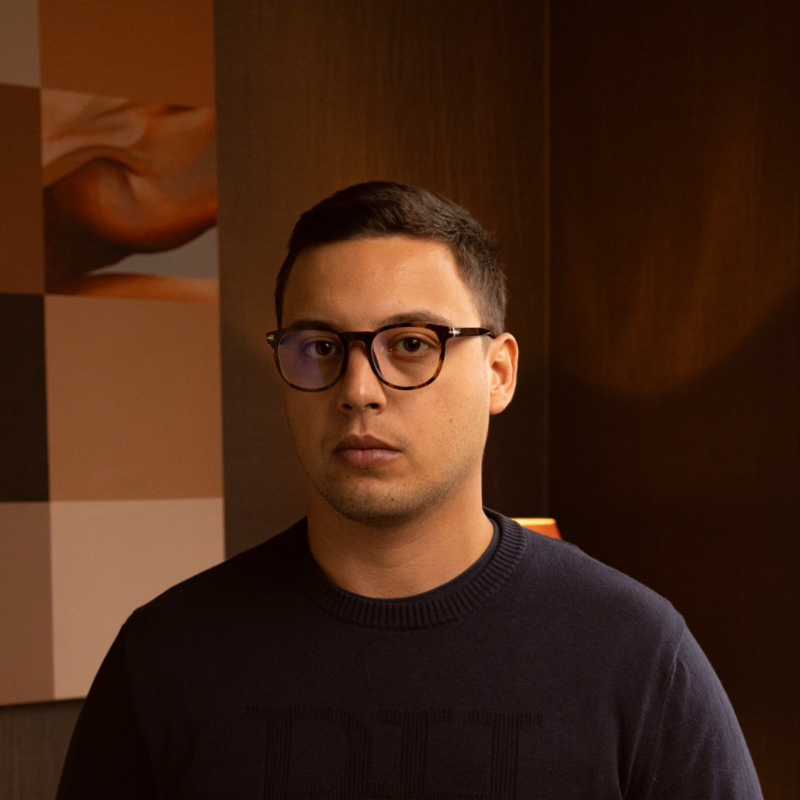
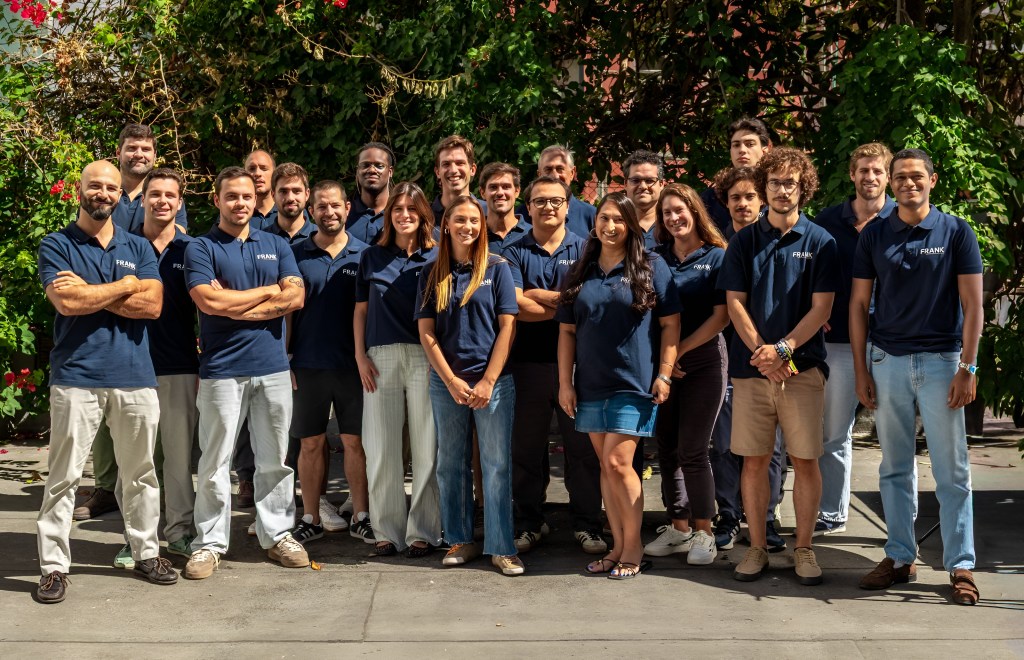
Behind the company is a team of seven repeat founders – Pedro Andrade, Rui Lagos, Artur Goulão, Rodrigo Sarroeira, Gonçalo Almeida, Wilson Gomes, and Pedro Reis – with 19 startups and five exits between them.
Andrade, CEO, has one exit to his name and experience building five brands with products sold in more than 120 countries. He has also been named to the Forbes 30 Under 30 list and was behind Hunter Board, an electric skateboard included in TIME’s 2020 Best Inventions of the Year.
He is also a fellow of the Sigma Squared Society, an invite-only global network of young founders focused on building impact-driven companies.

Solving fragmented human approval in automation
Humanos enters a market where, according to its founders, human authorization remains scattered across emails, PDFs, internal logs, and manual workflows that are difficult to audit or reconstruct when something goes wrong.
“When high-risk systems act automatically, companies must be able to trace every approval behind those decisions,” Andrade told Portugal Startup News.
He added that this challenge becomes more acute as AI systems are increasingly deployed in regulated and sensitive environments, where accountability is not optional.
Humanos is already live in over 350 regulated organizations, including hospitals, insurers, and fintechs, enabling them to automate sensitive decisions safely at scale.
It expects to process “millions” of approvals and verifications before the end of the year as it expands access to its platform.
How the system works
The system is structured around a three-step flow.
First, it captures a human decision from any source, including logs, payments, applications, PDFs, forms, messages, or emails. The company emphasizes that the format is irrelevant. What matters is the decision itself.
Second, it converts that decision into a machine-verifiable authorization rule defining what is allowed, under which conditions, and for how long.
Finally, any connected system can verify that authorization before acting, enabling reuse across workflows, teams, and external partners without re-approvals or duplicated logic.
Lagos, CTO, described the operational model as a “tollgate every AI must pass before moving forward.”
In practice, systems query the API, check whether authorization exists, and either proceed or trigger a real-time request for approval, he added.
Use cases in high-risk automated systems
Humanos is positioning its infrastructure around high-risk automated actions where missing or unclear authorization creates operational, legal, or compliance risk.
These include AI-driven systems, high-risk operational changes, delegated authority, insurance claim payouts, medical data access, agentic payments, enterprise access provisioning, regulatory filings, model deployment approvals, third-party actions, and automated customer decisions.
According to the company, these represent recurring failure points where organizations struggle to prove intent after the fact.
Verification, auditability, and court-admissible proof
A central pillar of Humanos is independent verification. Approvals can be validated without relying on internal logs or vendor systems, reducing dependence on any single source of truth.
Each authorization is tied to specific constraints such as context, scope, time window, and limits, avoiding blanket permissions or implied access.
Humanos also states that approval records are cryptographically sealed and independently verifiable, creating audit-grade proof.
In the event of disputes, the company says organizations retain cryptographic proof of what was authorized, including cases where decisions must be defended in regulated environments or in court.
Open standard VIA and interoperability
The company also uses VIA, an open standard for human authorization in automated systems.
VIA defines how systems request, prove, and verify authorization under explicit conditions. It is designed to make authorization transparent by default, enabling any system to independently verify what was allowed.
The standard is framed as machine-verifiable, condition-based, and vendor-independent, with an emphasis on interoperability across enterprise environments.
Pricing model built for scale
Humanos operates a dual pricing model centered on verification and authorization collection.
Under a pay-as-you-go structure, companies pay per verification when systems check whether an action is authorized. Because approvals are reusable, the same authorization can be verified multiple times across workflows without additional human input.
When approval does not exist, Humanos collects it. Some actions require a new human decision, in which case the company securely requests and issues an authorization through its API, with a separate fee for approval collection.
The company also offers a custom-priced enterprise tier for large-scale, multi-entity, and regulated environments.
As Andrade put it, Humanos wants to make human intent enforceable inside machine systems and create an auditable link between human intent and machine execution, so that “AI can act, but only if it was allowed to.”
Featured image: Humanos co-founders (left to right): Pedro Andrade, Rui Lagos, Artur Goulão, Gonçalo Almeida, and Rodrigo Sarroeira (Photo courtesy of Humanos – Slightly modified for size)





One response to “Humanos launches to enforce human authorization before AI acts ”
[…] Read also: Humanos launches to enforce human authorization before AI acts […]