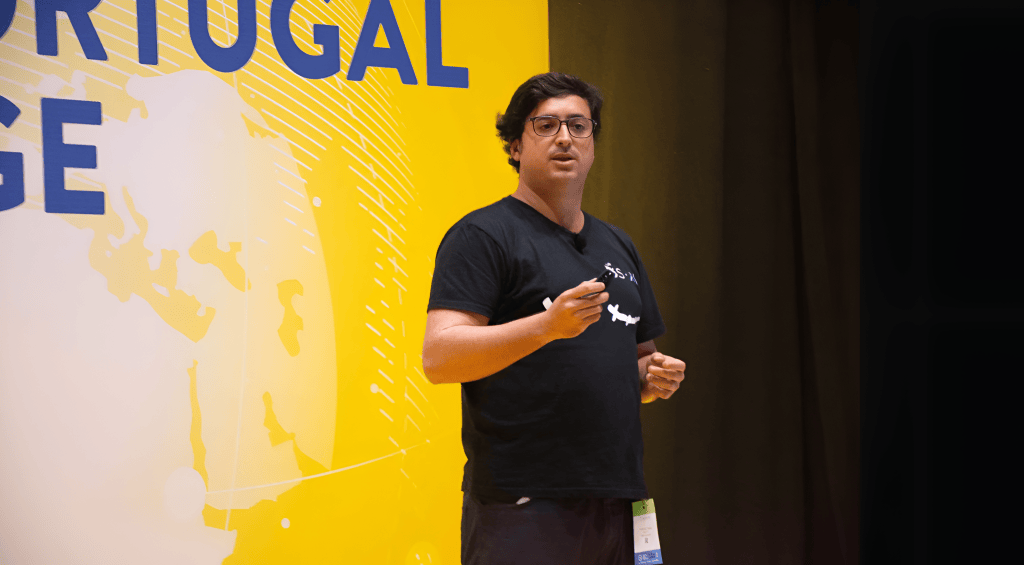
Portuguese speech therapy platform UpSpeech plans to go to market in early 2027 after completing pilots in Portugal and Spain, with its sights set on Brazil and expansion beyond stuttering.
Built around the relationship between the therapist and the patient, the platform focuses particularly on supporting therapy between sessions.
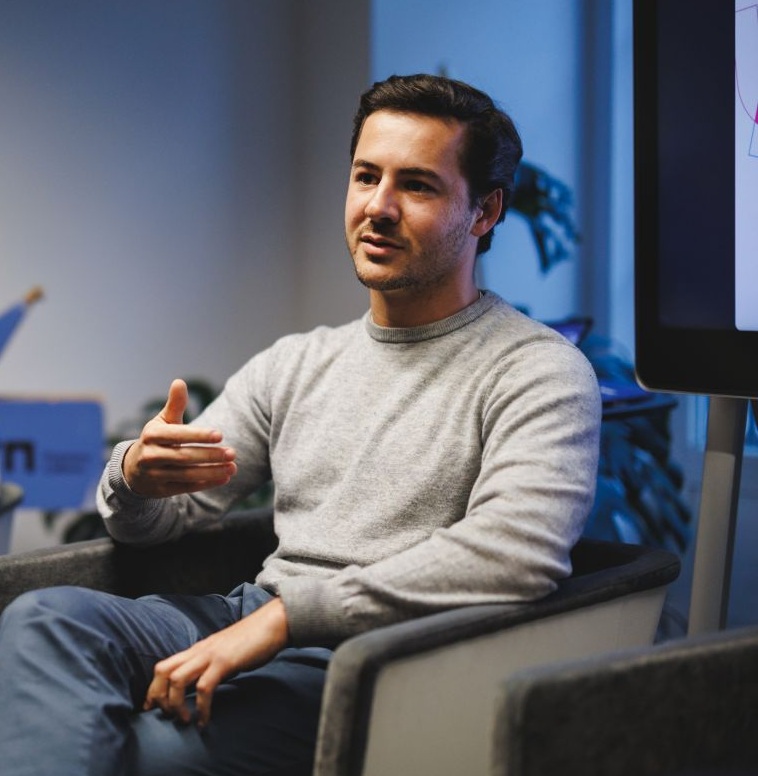
Founder and CEO Rodrigo Figueiredo told Portugal Startup News that UpSpeech was inspired by his own experience with stuttering and the difficulty of maintaining effective practice between therapy sessions.
“We are still in the validation stage,” Figueiredo said. The company is now starting its first pilots with children and aims to test the platform across different clinics, age groups, and countries before going fully to market.
According to Figueiredo, patients in its pilots practiced around two and a half times more when therapists responded to their practice.
UpSpeech has raised its first €50,000 investment from Angels Way as it continues to develop the platform and expand its validation work.
Read the full interview below for more on how UpSpeech works, what its early pilots have shown, its goals for 2027, and the areas it wants to expand into over time, including speech sound disorders in children, language development, and voice.
1. What inspired you to start UpSpeech?
UpSpeech was inspired by my own experience with stuttering. I started speech therapy when I was 18 and continued for several years. That experience made me realize how difficult access to specialized speech therapy can be. There are long waiting lists, not enough professionals, and in many places care is mainly private, which makes it expensive and difficult to access.
But the idea for UpSpeech really came from what happened between sessions.
I knew I needed to practice regularly, but doing the same exercises at home every day became repetitive and difficult to maintain. I also had very little structure or feedback. Sometimes I would spend an entire week practising something incorrectly and only realize it at my next session.
What is striking about speech therapy is how much progress can depend on continuous practice at home, while adherence to that practice is often very low. When people struggle to practice consistently, treatment can take much longer and the risk of disengagement or dropout increases.
That made me question something very simple: if so much of therapy depends on what happens between sessions, why does most of the support stop when the session ends?
UpSpeech started from that problem.
2. You describe UpSpeech as a platform that looks at speech, emotion, and social behavior. What does that mean in practice?
Stuttering is not only about how often someone stutters.
A person might barely stutter during a therapy session but spend the rest of the week avoiding phone calls, changing words, staying quiet in meetings, or avoiding situations where they expect to struggle.
If we only measure the stuttering we can hear, we miss a large part of what that person is actually experiencing.
On the other hand, someone may stutter more openly but feel confident, participate fully and communicate without avoiding situations.
So we want therapists to understand the full picture: what is happening with speech, how the person feels about communicating, what they are avoiding, and how much they are participating in everyday life.
That gives the therapist a much better understanding of progress than simply counting moments of stuttering.
3. How does UpSpeech differ from existing speech therapy apps and digital tools?
The main difference is that UpSpeech is built around the relationship between the therapist and the patient.
We are not trying to replace the therapist, and we are not simply building software to manage a clinic.
Most tools today solve one part of the problem. Some are apps that patients use independently. Others help people find a therapist or help clinics manage appointments, notes, and administration.
We focus on what happens before, during, and especially between therapy sessions.
The therapist can build and follow the therapy plan, assign activities, review practice, and understand what happened during the week.
The patient gets clearer structure, guided activities and feedback instead of being left alone until the next session.
This is particularly important in speech therapy because progress often depends heavily on consistent practice outside the clinic. If that practice does not happen, treatment can become much longer and patients can gradually disengage.
One result from our pilots illustrates why this matters. When therapists responded to a patient’s practice, those patients practiced around two and a half times more.
That interaction between therapist and patient is a major part of what we are building.
4. How does the technology work, and how does it personalize therapy for each patient?
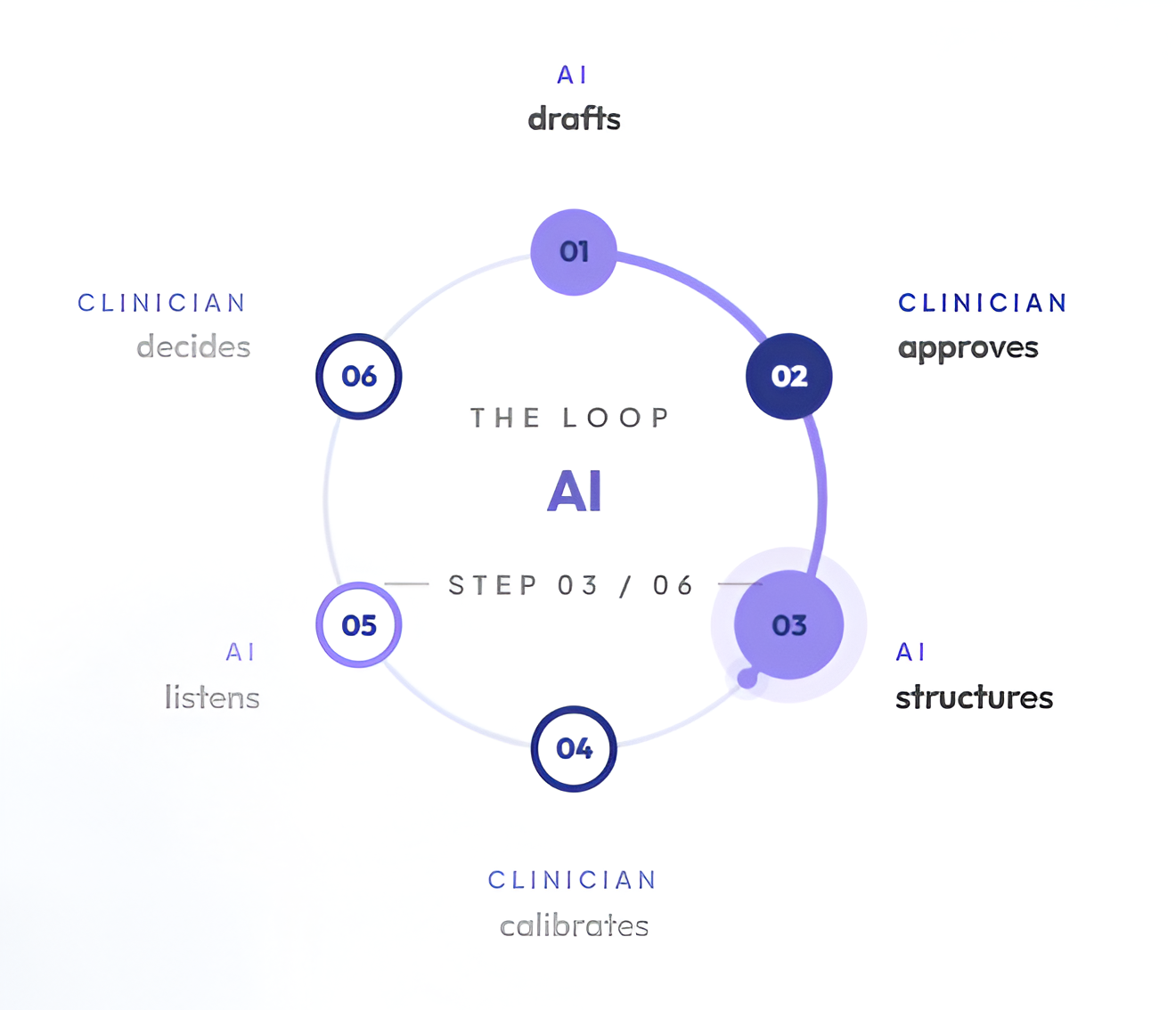
The simplest way to explain it is that UpSpeech helps therapists understand what happens outside the therapy room.
The therapist creates the plan and decides what the patient should work on.
During the week, the patient completes activities and practices real situations. UpSpeech helps capture information about that practice, such as what was completed, where the patient struggled, and how things changed over time.
Before the next session, the therapist has a clearer picture of what happened during the week instead of starting every session by asking the patient to remember everything.
We also analyze speech and video when relevant.
A transcript can tell you what someone said, but it may not capture a block before a word, physical tension, or when someone changes a word to avoid stuttering. That is why we look at more than the transcript alone.
The technology helps organize that information for the therapist.
The therapist always makes the clinical decisions. UpSpeech supports their work, but it does not diagnose or decide treatment independently.
5. What kinds of insights does UpSpeech provide therapists that they typically would not have between sessions?
We look at four main areas.
The first is speech itself: how often stuttering happens, how long moments last and what physical behaviors appear around them.
The second is the person’s experience: how much effort speaking requires, what they anticipate, what words or situations they avoid, and how they feel about communicating.
The third is participation: whether they are speaking up at school or work, making phone calls, entering difficult situations, and communicating more freely in everyday life.
The fourth is the environment around them, particularly for children: what parents are observing, what is happening at home, and how teachers or other people around the child are responding.
This matters because two people can show exactly the same amount of stuttering but have completely different experiences.
One might be communicating freely and participating in everything. The other might be avoiding most speaking situations.
If you only look at speech inside the therapy room, those two people can look very similar. In reality, they may need very different support.
6. At what stage of development is UpSpeech today?
We released our first version at the beginning of this year and have already completed pilots in Portugal and Spain with six specialists and around forty patients.
We are now starting our first pilots with children.
The team has grown to six people, and we were selected by Unicorn Factory Lisboa as one of Portugal’s promising startups.
We are still in the validation stage.
The product is already being used by real therapists and patients. Our focus now is to test it across different clinics, age groups, and countries before going fully to market.
7. How many clinics and speech therapists have joined the waitlist so far?
We currently have around twenty specialists in Portugal waiting to test UpSpeech.
Together, those specialists work with a much larger patient population, around 400 patients, which gives us strong potential for future pilots.
We are also starting conversations with clinics in Brazil.
8. When do you plan to officially launch?
We plan to go to market at the beginning of 2027. Until then, our focus is validation. We are running more pilots, including our first work with children, and collecting evidence from real clinical settings.
We want to launch once we are confident that the product works well across different clinics, therapists, and patient groups.
9. Do you plan to market UpSpeech directly to patients, or will therapists and clinics remain your primary customers?
For now, our focus is therapists and clinics. That is deliberate because we believe the therapist needs to remain at the center of care.
We do not want UpSpeech to become another app where someone is expected to manage their speech therapy alone.
The value comes from connecting what the therapist is doing in the session with what the patient is doing during the rest of the week.
In the future, we do want to find ways to support people who cannot easily access a specialist because of cost, geography, or lack of available professionals.
But first we want to build the clinical side properly.
10. Have you raised any funding or received grants to support UpSpeech’s development?
We raised our first €50,000 with Angels Way. We plan to raise additional funding to continue developing the product, strengthen our speech technology, expand our clinical validation, and prepare for market entry.
The priority is to use that capital to prove the product works consistently across different clinical settings before scaling commercially.
11. Which markets are you planning to launch in first, and why?
Portugal comes first, followed by Spain and Brazil.
Portugal is our home market. Our clinical network is here and being close to our first clinics allows us to learn quickly and work directly with therapists.
Spain is the natural next step. It has a much larger speech therapy market, has a strong private care sector, and is geographically and culturally close to Portugal.
Brazil is particularly interesting because it is a very large Portuguese-speaking market with a significant speech therapy community.
The idea is to expand gradually into markets where we can maintain strong clinical relationships while growing.
12. Your current focus is on stuttering. Do you see UpSpeech expanding to other areas of speech therapy?
Yes. Stuttering is where we started, but UpSpeech was never intended to be only a stuttering product.
We started there because it is an area I know personally and because it is a complex condition.
To understand progress in stuttering, you cannot only look at speech. You also need to understand avoidance, confidence, emotions, participation, and what happens in real situations.
If we can build something that works well for a condition where speech, behavior, emotions, and everyday participation are so closely connected, we create a strong foundation for other areas of speech therapy.
Over time, we want to expand into areas such as speech sound disorders in children, language development, and voice.
13. What has been the biggest challenge in building UpSpeech so far?
Awareness. Most people do not really understand what speech therapy covers.
They often associate it only with pronunciation or children, while the profession works across areas such as stuttering, language disorders, voice, swallowing, and communication after a stroke.
That means we often have to explain the problem before we can even explain the company.
So part of what we are doing is not only building awareness around UpSpeech, but around speech therapy itself and the role communication plays in health and everyday life.
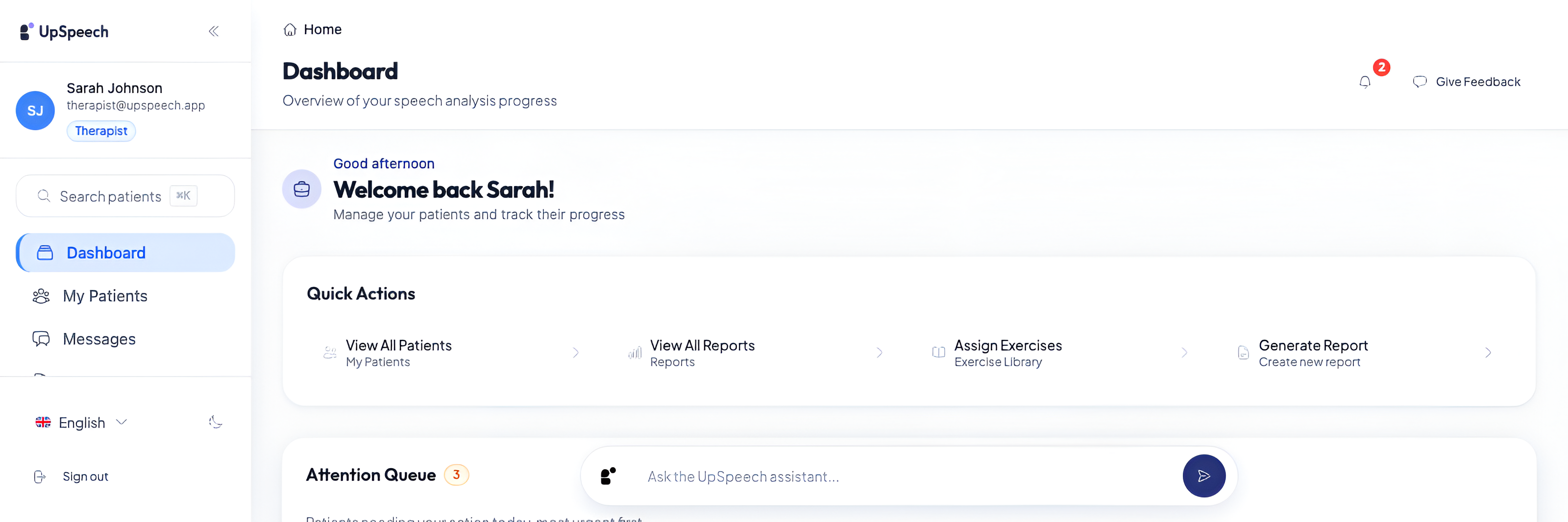
UpSpeech’s therapist dashboard brings patient management, progress tracking, reports, and exercise assignment into one place. (Photo courtesy of UpSpeech)
14. What is the next major milestone you are working toward in 2026?
Our main goal is to reach five pilots by the end of the year. We want those pilots to cover different clinics, countries, and patient groups, including both adults and children.
The objective is not simply to increase the number of pilots. We want to understand whether the results we are seeing can be repeated across different settings and where the product still needs to improve.
Alongside that, we are preparing for our next funding round at the beginning of 2027.
15. What are your main priorities for 2027?
Evidence and revenue.
On the evidence side, we want to turn what we are learning from the pilots into solid data and publish the results where possible.
That is important for therapists, clinics, and anyone evaluating whether the product genuinely adds value.
On the business side, 2027 is when we want to start converting pilots into paying customers and begin growing commercially across Portugal, Spain, and Brazil.
Until now, the priority has been proving that therapists and patients find the product useful. The next step is proving that clinics are willing to adopt it and continue using it.
16. Is there anything about UpSpeech that people often misunderstand?
There are two things.
The first is that UpSpeech is simply a stuttering app.
Stuttering is where we started, but the platform is being built for a much broader range of speech therapy needs.
The second misunderstanding is about stuttering itself.
People often think it is simply about being nervous, speaking too quickly, or needing to relax.
But the impact can go far beyond the moments when someone visibly stutters.
It can affect whether someone makes a phone call, speaks in a meeting, introduces themselves, applies for a job, or participates in a social situation.
That wider impact is one of the reasons we believe therapy needs to look beyond what happens inside the clinic.
17. Is there anything else you would like our readers to know?
I would like people to understand that speech and communication are a much bigger part of health than most of us realize.
Communication affects how we participate at school, at work, in relationships, and in everyday life.
But access to specialized support is still very limited for many people.
There is also a personal side to this for me. For many years, I saw my speech as something I needed to hide. Today I am building a company around that experience and giving interviews about it.
UpSpeech exists because I eventually had access to the right support, and I want more people to have that opportunity.
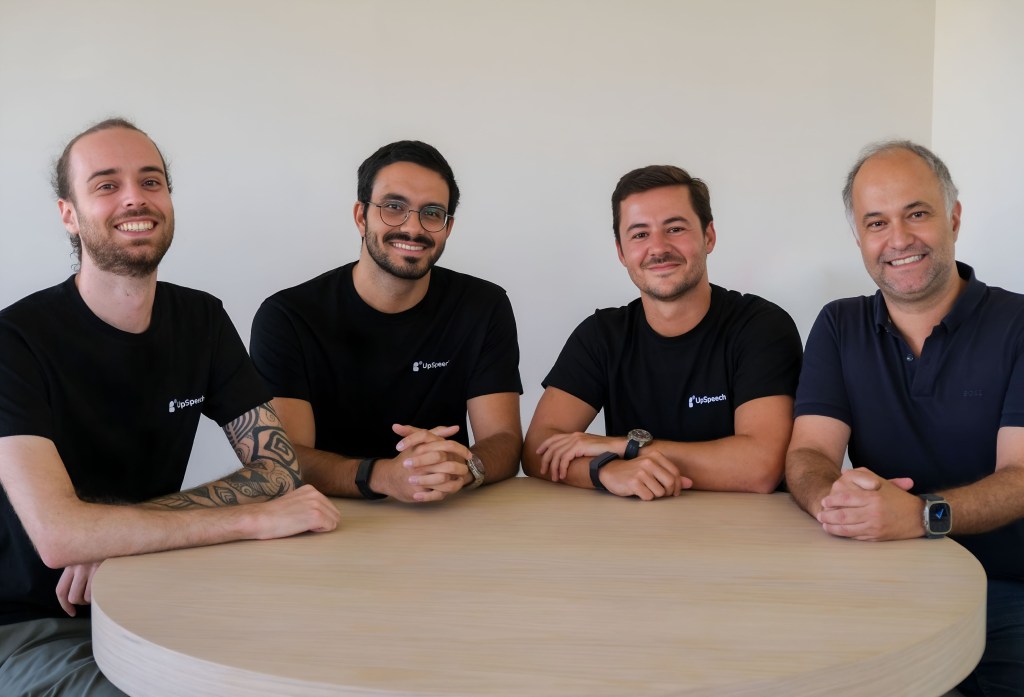
Featured image: UpSpeech team, from left: Afonso Froes (head of data and innovation), Vasco Kaufmann Figueiredo (CTO), Rodrigo Figueiredo (CEO), and Gonçalo Leal (clinical lead) – Photo courtesy of UpSpeech